

You start a freelance web developer business from scratch by choosing a clear service niche, building a portfolio that proves real capability, setting up the right business structure, pricing your services properly and marketing yourself consistently until client work becomes steady rather than occasional. At Skillsheaven, we work closely with freelancers and small web development businesses on the marketing and visibility side of things, and the pattern shows up again and again. Technically skilled developers often struggle simply because the business side, pricing, positioning and outreach, was never built with the same care as their code. This guide walks through every stage of how to start a freelance web developer business from scratch, from landing your first client through to growing something that could eventually become a full company.
Choosing Your Niche Before Anything Else
Before writing a single line of code for a paying client, it helps enormously to decide what kind of web development work you genuinely want to focus on. Trying to be everything to everyone remains one of the most common reasons new freelancers struggle to land consistent work in the first place.
A few niche directions worth considering include:
- Building websites for a specific industry, such as restaurants, clinics or local service businesses
- Specializing around a platform like WordPress, Shopify or a specific JavaScript framework
- Focusing on a particular service type, such as landing pages, e-commerce builds or web applications
- Positioning around a specific outcome, like conversion focused websites or fast loading performance builds
A defined niche sharpens your marketing messaging, focuses your portfolio, and makes your pricing easier to justify, since clients within that niche tend to immediately recognize that you understand their specific situation better than a generalist would.

Building a Portfolio With Little or No Experience
One of the biggest hurdles when figuring out how to start a web development business from home is simply having nothing to show prospective clients yet. A few practical ways around this early on include:
- Building one or two personal projects that demonstrate real, functional skill rather than a basic template copy
- Offering a discounted or free build to a friend, family member or local nonprofit in exchange for a strong testimonial and permission to showcase the work publicly
- Recreating a well known website’s design as a personal exercise to demonstrate technical ability, clearly labeling it as a practice project rather than client work
- Documenting your process, not just the final result, since explaining your thinking behind decisions builds trust with potential clients faster
A small but genuine portfolio almost always outperforms an empty one, and it remains one of the most important early steps when you start a freelance web developer business from scratch with little to no prior client work behind you.
Starting From Home With the Right Foundation
Most freelance web development businesses begin from home, and there is no real need for a physical office to operate professionally in this field. What actually matters at this early stage is setting up a few basics that let the business function smoothly day to day.
- A dedicated business email address rather than a personal one
- A simple, professional looking personal website that serves as both portfolio and storefront
- A basic system for invoicing, contracts and time tracking
- A separate bank account, even while operating as a sole proprietor, to keep business and personal finances clearly separated
Working from home keeps overhead low during these early stages, giving you more flexibility to set competitive but sustainable pricing while you steadily build out a real client base.
How to Register a Web Development Company
Once you begin earning income consistently, formalizing your business becomes genuinely worthwhile, both for legal protection and for added credibility with larger clients. The right structure depends heavily on your location and growth plans, but the common options generally include the following.
- Sole proprietorship, the simplest and fastest option for solo freelancers, though it offers no separation between personal and business liability
- Limited Liability Partnership, a popular middle ground for freelancers and small teams seeking liability protection alongside lower compliance requirements than a full company structure
- Private Limited Company, suited to businesses planning to scale, hire a team, or eventually seek outside investment, offering stronger credibility with larger enterprise clients
In India specifically, registering a web development company typically involves choosing your business structure, registering through the Ministry of Corporate Affairs portal, obtaining the required digital signature certificate, applying for PAN and GST registration once turnover crosses the applicable threshold, and completing the standard incorporation forms for an LLP or Private Limited Company. Many freelancers begin as a sole proprietorship and transition into an LLP or Private Limited structure once income and client demand justify the added compliance work.
How to Price Web Development Services
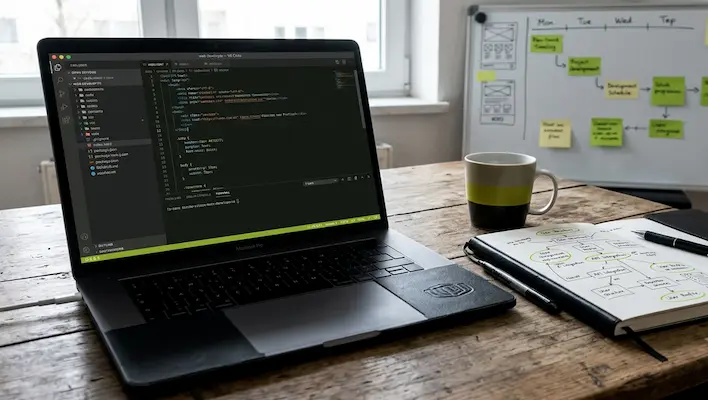
Pricing remains one of the most common struggles among new freelancers, and getting this right early tends to prevent years of undervaluing your own work later on.
The three most common pricing models worth understanding are:
- Hourly pricing, straightforward and easy to start with, though it can penalize efficiency since faster work simply means lower pay for the same outcome
- Project based pricing, a fixed fee tied to clearly defined deliverables, which rewards skill and speed but requires accurate scoping to avoid losing money on a job that runs longer than expected
- Retainer or modular pricing, a recurring monthly fee covering ongoing work, maintenance or a defined set of deliverables, which creates far more predictable income over time
When working through how to price web development, a genuinely useful starting point is working backward from your desired annual income, while accounting for the fact that freelancers rarely bill every working hour, since time is also needed for finding clients, handling administration and managing existing projects simultaneously. Many established freelancers eventually shift toward project based or retainer pricing once they can estimate projects accurately, since this structure rewards efficiency instead of quietly punishing it.
How to Write a Web Development Proposal
A strong proposal does considerably more than simply list a price, it demonstrates that you genuinely understand the client’s actual problem. An effective web development proposal typically includes the following elements.
- A brief summary of the client’s goals written in your own words, showing you listened carefully during the discovery conversation
- A clear breakdown of the proposed solution, including specific features or pages included in the build
- A realistic timeline with defined milestones rather than a single vague delivery date at the end
- Transparent pricing tied directly to the value being delivered, rather than just a bare number with no context
- Clear terms covering revisions, scope changes and the agreed payment schedule
Framing the proposal around the client’s intended outcome, rather than simply listing hours or technical tasks performed, tends to convert significantly better, since clients are ultimately paying for results rather than code itself.
How to Advertise and Market Web Development Services
Marketing yourself as a web developer matters just as much as the development work itself, since even excellent technical skills go unnoticed without genuine visibility. Effective ways to advertise web development services include:
- Building a strong personal website optimized around relevant local or niche search terms
- Sharing case studies and clear before and after examples on platforms like LinkedIn
- Networking directly with local businesses that may need affordable, reliable technical help
- Participating actively in online developer communities where potential referrals and collaborations often emerge naturally
- Asking every satisfied client for a referral or testimonial immediately after project completion
- Running targeted ads for a very specific niche once you have clear positioning and proven results worth showcasing
How to Sell Web Development Services Effectively
Selling web development is fundamentally about communicating outcomes rather than listing technical features. Instead of leading conversations with specifications, focus on what the client will actually gain, more leads, faster load times, a more credible brand presence, or a noticeably smoother customer experience overall.
A few habits consistently improve conversion in this area:
- Ask thorough discovery questions before quoting, so your proposal genuinely reflects their actual situation and needs
- Present pricing within context, explaining what is included and why, rather than sending a bare number without explanation
- Offer a small number of clear package options instead of overwhelming clients with too much customization upfront
- Follow up promptly and professionally after sending a proposal, since slow follow up often quietly loses otherwise interested clients
Managing a Web Development Project From Start to Finish
Once you start landing clients, managing each project well becomes the real factor determining whether they return or refer you to others. A reliable workflow typically includes the following stages.
- A discovery and planning phase that defines scope clearly in writing before any work begins
- A design or wireframing stage the client formally approves before development gets underway
- Development broken into clear milestones with regular client check ins along the way
- A thorough testing and review phase before the final launch
- A clear handoff process, including training the client on basic updates where relevant
- A defined post launch support period or an ongoing maintenance offer presented at completion
Using a simple project management tool, even a basic shared document or visual board, helps keep scope, deadlines and communication organized as you gradually take on more clients at the same time.

Is Freelance Web Development Worth It and Is It Dead
Freelance web development is not dead, though the market has genuinely shifted in recent years. No code tools and AI assisted development have changed which tasks clients expect a developer to handle manually, but demand for custom builds, integrations, performance optimization and ongoing technical support remains strong, particularly for businesses needing something beyond a generic template solution.
Freelance web development tends to be worth it for developers who treat it as a real business rather than a casual side hobby, meaning they invest time in marketing, pricing properly and building genuine client relationships rather than competing purely on the lowest possible price. Developers who only compete on cost tend to struggle the most over time, while those who position around specialization and measurable outcomes continue to find consistent, well paying work.
Is Web Development a Good Business or a Good Side Hustle
Web development works well both as a full business and as a side hustle, depending on your current goals and available time. As a side hustle, it offers a flexible way to earn additional income using a genuinely high income skill without needing significant upfront investment, since most of what is needed is simply a laptop, some software tools and consistent time.
As a full business, web development is profitable for many freelancers and small companies, since demand for new websites, redesigns and ongoing maintenance remains consistent across nearly every industry imaginable. Profitability scales primarily with specialization, the strength of client relationships, and how efficiently a freelancer or small team can deliver quality work, rather than simply how many hours get billed each month.
How to Grow a Web Development Business
Once you move past your first handful of clients, growth typically follows a fairly similar pattern across most successful freelance businesses and small companies in this space.
- Raise your rates gradually as your portfolio and demand both strengthen, rather than staying anchored to beginner pricing indefinitely
- Introduce retainer based maintenance packages to create predictable, recurring revenue alongside one off project work
- Begin outsourcing smaller or repetitive tasks to other developers or freelancers as your workload naturally grows
- Build referral partnerships with designers, marketers or agencies who regularly need development support for their own existing clients
- Invest consistently in your own marketing and visibility, rather than only ramping it up whenever work happens to slow down

Running a Web Development Company and Retaining Developers
As a freelance practice grows into a small company, running it well requires considerably more structure than solo freelancing did. Clear processes for client onboarding, project management and quality control become essential the moment more people are involved in delivering the actual work.
Retaining skilled developers as the team grows typically depends on a few consistent, recurring factors:
- Fair, transparent compensation that genuinely reflects market rates and individual contribution
- Reasonable workloads and realistic project timelines that avoid constant crunch and burnout
- Opportunities to work on varied, genuinely interesting projects rather than repetitive low value tasks
- Clear communication about company direction and growth, so team members feel meaningfully included rather than purely transactional
Companies that invest in these areas tend to retain experienced developers far longer than those competing purely on salary, since skilled developers in this field generally have no shortage of alternative opportunities available to them.
Final Thoughts
Learning how to start a freelance web developer business from scratch comes down to treating it as a genuine business from day one, not simply a collection of coding projects strung together. Choosing a clear niche, pricing fairly, marketing consistently and managing client relationships well are exactly what separate freelancers who struggle from those who eventually grow into stable, profitable companies. At Skillsheaven, we regularly help developers and small web development businesses strengthen this exact side of their operation, since technical skill alone rarely fills a pipeline of consistent, well paying clients on its own.
FAQs
How much should a beginner freelance web developer charge?
Beginners typically start somewhere between a modest hourly rate and a few hundred dollars per small project, gradually increasing rates as their portfolio, testimonials and confidence continue to grow.
Do I need a business registration to start freelancing as a web developer?
Not immediately. Most freelancers start informally and formalize their business structure, such as a sole proprietorship or LLP, once their income becomes consistent enough to justify the added compliance involved.
How long does it take to get your first paying client as a freelance web developer?
This varies widely, but many beginners land their first paid project within a few weeks to a couple of months of actively networking, applying to projects and showcasing even a basic portfolio.
Is web development still considered a high income skill in 2026?
Yes, web development continues to be considered a high income skill, particularly for developers who combine technical ability with genuine business skills like pricing, marketing and client communication.
Should I specialize in one platform or stay a generalist when starting out?
Specializing in one platform or niche generally helps freelancers stand out and command better rates, while staying a broad generalist can work reasonably well in the very early stages while you are still discovering what you enjoy most

Wali Shah is the Founder and CEO of SkillsHeaven, a digital growth agency specializing in Local SEO, Google Ads, and conversion-focused website development. With over 8+ years of experience, he has helped scale 170+ businesses, including 93+ limousine companies globally, by building structured, lead-generating digital systems. His expertise spans local search optimization, paid media strategy, and high-performance website development, all aligned with measurable business growth. Known for a data-driven and ethical approach, Wali focuses on creating scalable marketing systems that increase visibility, generate qualified leads, and drive long-term revenue for service-based businesses.