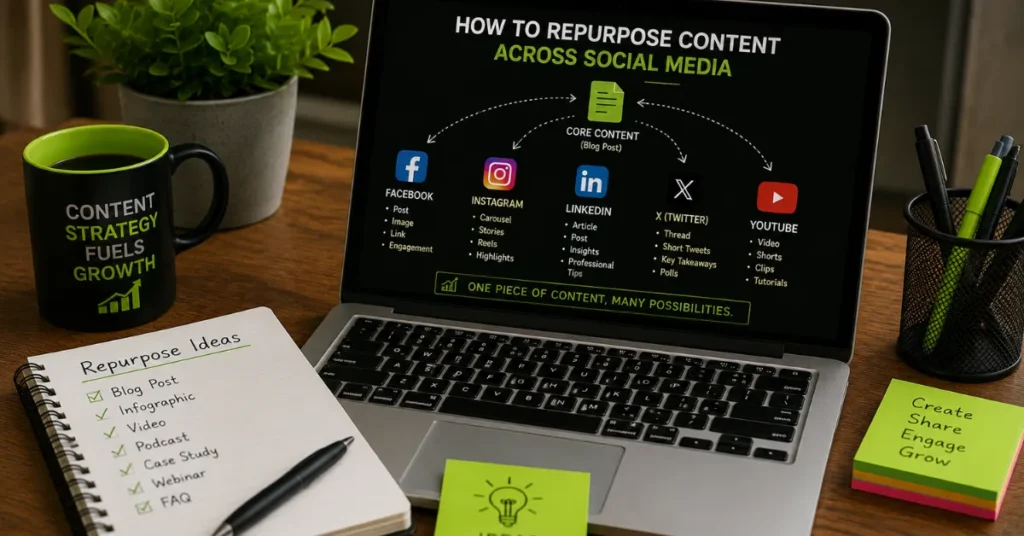
Knowing how to repurpose content across social media is the single most effective way to multiply your brand’s visibility without multiplying your workload. We offer professional content repurposing and cross-platform marketing services that help businesses turn one strong idea into a full month of platform-ready content, driving consistent engagement, organic reach, and meaningful audience growth across every channel where your customers spend their time.
What Is Content Repurposing and Why It Changes Everything
Content repurposing is the practice of taking one original piece of content and transforming it into multiple format-specific assets for different social media platforms. It is not copying and pasting the same caption everywhere. It is strategic adaptation, where the same core message is rebuilt to feel completely native to each platform’s audience, format, and algorithm.
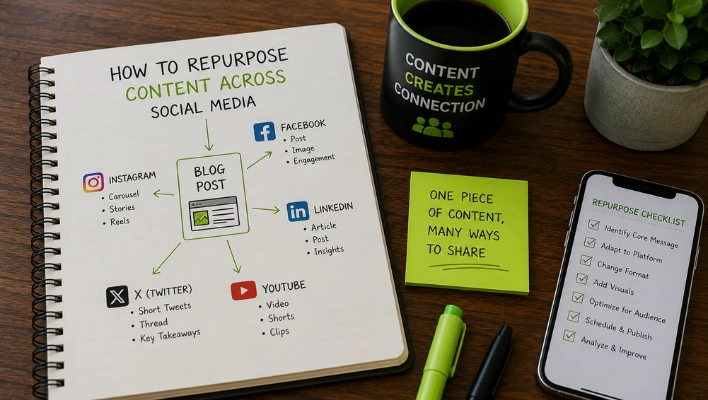
A single well-researched blog post, for example, can become a LinkedIn carousel, a series of Instagram Reels, a Pinterest infographic, a YouTube video script, a podcast episode, and a week’s worth of X posts, all from the same idea, all reaching entirely different audience segments. That is the power of knowing how to repurpose content across social media.
According to industry research, brands that repurpose content strategically can increase their total content reach by up to 300 percent without proportionally increasing the time they invest in content creation. For marketing teams managing tight budgets and limited bandwidth, this approach transforms content from a resource drain into a compounding growth engine.
Related Topic: How To Track Social Media Performance
The Strategic Value of Content Recycling
Content recycling is the foundation of any sustainable social media strategy. It is built on a simple but powerful insight: your audience is fragmented across platforms. Your LinkedIn connections are rarely your TikTok followers. Your email subscribers rarely see your Instagram carousels. Your blog readers rarely watch your YouTube Shorts.
Content recycling ensures that your strongest ideas reach your entire audience, not just the segment that happened to visit your website on the day you published the original piece. Every time you adapt a piece of content for a new platform, you create a new opportunity for discovery, engagement, and conversion.
Content recycling also serves a second purpose that most marketers overlook: repetition builds brand recall. Research in marketing psychology consistently shows that audiences need multiple exposures to a message before it registers and influences behavior. Recycling strong content, updated and reformatted for each platform, reinforces your brand authority every time it appears in a new feed.
The distinction between recycling and repurposing matters. Content recycling refers to bringing existing content back into distribution, either in its original form or lightly refreshed. Content repurposing involves transforming the format or structure more significantly so the asset feels new and native to its destination platform. A complete content strategy uses both, deployed at different stages of the content lifecycle.
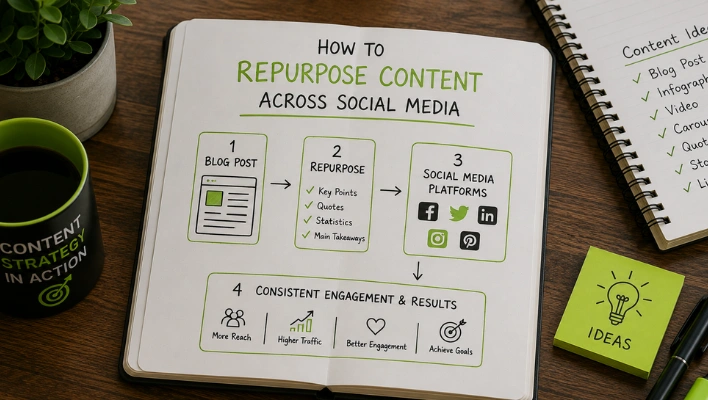
How to Repurpose Content Across Social Media – The Step-by-Step Framework
Understanding how to repurpose content across social media becomes straightforward when you follow a repeatable system. The framework below is the same one professional content teams use to turn a single weekly content asset into dozens of platform-ready posts.
Step One: Create a Strong Pillar Content Asset
Everything in a repurposing strategy begins with one high-quality, substantive piece of content called the pillar piece or cornerstone asset. This is the source from which all derivative content is extracted. The most effective pillar formats include long-form blog posts of 1,500 words or more, full-length podcast episodes, YouTube videos of ten minutes or longer, webinars, research reports, and comprehensive guides.
The rule is simple: the more depth and substance the original piece contains, the more repurposable assets you can extract from it. A 2,000 word blog post typically contains 10 to 15 individual insights, frameworks, data points, or arguments that each stand alone as independent pieces of social content.
Choose pillar topics based on evergreen relevance. Evergreen content addresses questions and challenges that remain relevant to your audience over time, making it possible to repurpose and redistribute the same source material repeatedly, refreshed with updated data and examples as needed.
Step Two: Audit Your Existing Content Library
Before creating anything new, review what you already have. A thorough content audit pulls every existing asset into one place and scores each one for performance using tools like Google Analytics, Google Search Console, and your native social media platform analytics.
You are looking for two categories of content. The first is high-performing content that has already proven its value with your audience and is worth adapting into new formats for new platforms. The second is content that once performed well but has started to lose visibility, which can be refreshed and redistributed through your content distribution channels with updated statistics and new examples.
This audit step is where most businesses discover a goldmine they have been sitting on. Years of blog posts, video content, and social posts contain proven ideas that entire audience segments have never encountered because they only lived on one platform.
Step Three: Extract and Atomize the Content
Once you have identified your pillar piece, go through it and extract every discrete, valuable idea it contains. This process is called content atomization. Each extracted idea becomes a standalone micro-content asset.
From a single blog post, you might extract specific statistics worth turning into quote graphics, step-by-step frameworks worth turning into carousels, counterintuitive insights worth turning into short-form video hooks, questions your audience frequently asks worth turning into conversational posts, and visual concepts worth turning into infographics.
The goal is to have a collection of raw content atoms before you begin adapting anything for specific platforms. Working this way means you build a week or more of social content in one focused session rather than creating each piece individually.
Step Four: Adapt Every Asset to Platform-Native Formats
This is the step where repurposing does its real work. Each platform has its own content language, format expectations, audience behaviors, and algorithmic preferences. Adapting content means rebuilding each atom so it feels completely at home on the platform where it will be published.
This adaptation process is covered in detail in the platform-by-platform guide below. The core principle is always the same: the idea stays consistent, the execution becomes platform-native.
Step Five: Build a Structured Content Distribution Calendar
Content distribution without a calendar is content distribution that eventually falls apart. Once you have your adapted assets, schedule them across platforms using a unified content calendar that staggers publication strategically.
Publish the pillar piece on day one. Distribute the first round of derivative content across platforms during the days and weeks that follow. Space related content pieces at least several days apart on the same platform to avoid audience fatigue. For evergreen pillar content, plan a second round of distribution three to six months later with refreshed data and updated framing.
A well-built content distribution calendar transforms repurposing from a creative exercise into a scalable operational system.
Related Topic: How to Schedule Social Media Posts
Platform-by-Platform Guide to Repurposing Content
Instagram rewards visual storytelling, educational carousels, and short-form video content. A long-form blog post becomes a carousel of 8 to 12 slides, with each slide delivering one clear insight. The first slide functions as a bold headline that earns the swipe. The final slide invites saving, sharing, or following.
The same source material also works as Instagram Reels of 30 to 60 seconds, presenting one strong tip or counterintuitive finding with an attention-grabbing visual hook in the first two seconds. Infographics built from blog data perform well in the feed and earn strong save rates, which signals content quality to the algorithm.
Adapt captions to be conversational and direct. Instagram audiences respond to relatable, human-sounding language paired with a clear call to action.
LinkedIn audiences respond to professional insight, personal experience, and structured educational content. A blog post section becomes a LinkedIn text post with a bold opening line, short scannable paragraphs, and a closing question that invites commentary.
The same content works as a LinkedIn document carousel, which earns significantly higher reach than standard image posts. Longer LinkedIn articles allow you to adapt entire blog posts for an audience that actively seeks in-depth professional content during business hours.
LinkedIn posts that include personal context, such as a lesson learned from client work or a surprising data point from your industry, generate higher engagement than purely informational content because they trigger conversation.
TikTok and YouTube Shorts
Short-form vertical video is the highest-reach content format available to brands in 2026. TikTok and YouTube Shorts both prioritize videos of 30 to 90 seconds that open with an immediate visual or verbal hook, deliver one clear point, and end with a strong reason to follow for more.
A single 15-minute YouTube video contains 8 to 12 short-form clips. Each clip should deliver one standalone insight so it works for viewers who have never seen the original. The most effective clips are the moments where you say something bold, specific, or counterintuitive enough to stop the scroll.
Adapt captions and on-screen text for each platform. TikTok audiences respond to informal, high-energy language. YouTube Shorts audiences often lean toward practical, instructional content presented clearly and quickly.
Pinterest functions as a visual search engine, which means repurposed content here has compounding long-term discoverability rather than the short spike-and-fade cycle of most social platforms. A blog post becomes multiple vertical pin designs featuring key statistics, tips, or step-by-step frameworks, each linked back to the original article.
Pinterest rewards fresh content and penalizes direct reposts, so each pin should feature a unique design even when it links to the same source page. Batch-create pin designs for each blog post so you can distribute multiple pins over several weeks without additional creation effort.
Facebook currently rewards native video and interactive content formats, including polls and question posts. A blog post becomes a Facebook video where you present the key insights conversationally to the camera. The same source material works as a text post presenting one clear opinion or insight with an invitation for community response.
Facebook Groups remain a powerful content distribution channel for brands with an active community. Sharing relevant repurposed content within a group context generates authentic engagement that compounds over time.
Email Newsletter
Email is one of the most effective content distribution channels available because it reaches an audience that has already opted in to hear from you. A blog post becomes the lead article in your weekly newsletter, summarized into the three most valuable insights with a link back to the full piece.
Each newsletter strengthens the content distribution loop by driving traffic back to your original pillar content, which supports its organic search performance and creates additional opportunities for social sharing.
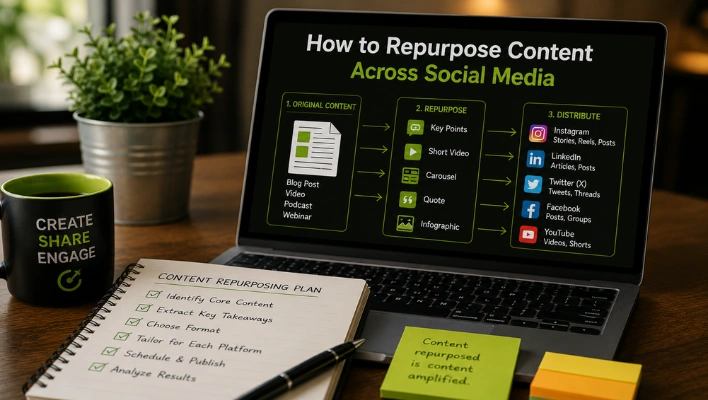
Content Optimization for Every Platform and Every Format
Content optimization in the context of repurposing means ensuring that each derivative piece performs as well as possible on its intended platform, not just that it exists there. True content optimization goes beyond format adaptation.
For every piece of repurposed content, optimize the headline or hook for the attention patterns of that platform’s audience. Optimize the length and pacing so it matches what performs well in that feed. Optimize the call to action to match the conversion behavior typical of that platform’s users. Optimize images and video for the correct aspect ratios, resolutions, and display formats required by each channel.
Content optimization also extends to timing. Each platform has patterns for when its audience is most active and most receptive to content. Publishing optimized content at the right time of day and right day of week consistently outperforms the same content published without strategic scheduling.
Tracking performance at the platform level allows you to refine your content optimization approach over time. Monitor which formats earn the highest engagement, which hooks generate the most clicks, and which topics generate the most saves or shares on each platform. These insights guide your next round of pillar content creation, creating a continuous improvement loop.
Cross-Platform Marketing – Building Brand Authority Everywhere Your Audience Lives
Cross-platform marketing is the strategic discipline of maintaining a consistent brand presence across multiple social media channels while tailoring the content experience to the specific culture and expectations of each platform. It is the context within which content repurposing delivers its greatest value.
Brands that show up consistently across multiple channels generate significantly more engagement and earn greater brand authority than brands that concentrate their efforts on a single platform. Cross-platform marketing also protects your business against platform volatility. Algorithm changes, policy updates, and shifts in platform popularity are constant in social media. A cross-platform marketing approach ensures that your audience reach is never entirely dependent on any single channel.
Effective cross-platform marketing requires a consistent brand voice that translates across formats and platforms while adapting in tone to match each channel’s culture. Your brand on LinkedIn should feel more professional than your brand on TikTok, but both should be unmistakably recognizable as the same entity. Consistency in visual branding, including colors, typography, and logo usage, reinforces this recognition across every platform where your content appears.
A cross-platform marketing strategy also includes intentional audience building on each platform so that your community grows beyond the followers who discovered you on a single channel. Callouts that invite followers on one platform to find you on another expand your cross-platform reach organically.
Related Topic: Best Apps for Making Social Media Videos in 2026
Content Distribution – Turning a Single Asset Into Maximum Reach
Content distribution is the operational side of a repurposing strategy. It is the system that ensures your adapted content reaches your audience across every channel in a coordinated, strategic sequence rather than as a series of disconnected posts.
A strong content distribution strategy begins with a clear goal for each piece of content. Awareness-stage content prioritizes reach and discoverability. Consideration-stage content prioritizes engagement and trust-building. Conversion-stage content prioritizes clear calls to action and direct response.
Align your content distribution approach with the goal of each piece so that each platform receives the version of your content best suited to how its audience engages. A brand awareness campaign distributes broad, high-hook content to TikTok and Instagram Reels. A thought leadership campaign distributes in-depth, expert content to LinkedIn and your blog. A conversion campaign distributes testimonial, case study, and offer-based content to email and retargeting channels.
Track content distribution performance using both platform-native analytics and tools like Google Analytics to understand which channels are driving traffic back to your owned assets. This data connects your social content distribution directly to measurable business outcomes, including website sessions, lead generation, and revenue.
The Content Recycling System That Saves Hours Every Week
The most time-efficient way to implement content recycling is to build it into your production workflow from the beginning of every content project rather than treating it as a separate task you do afterward.
When you begin a new pillar content piece, plan its derivative assets at the same time. Identify which sections will become LinkedIn posts, which insights will become short-form video hooks, which data points will become infographic slides, and which frameworks will become carousels. Record notes or timestamps as you create so extraction takes minutes rather than hours.
After publishing your pillar piece, block two to three hours to produce all derivative assets at once. Batch production is significantly more efficient than creating each piece individually on the day it is scheduled to publish. Once assets are ready, schedule them across platforms using a unified social media management tool so your content calendar fills itself for the week ahead.
Build a repurposing log, a simple spreadsheet where you record which pillar pieces have been repurposed, which platforms received derivative content, and when each piece was published. This log prevents duplication, identifies gaps in your coverage, and makes it easy to plan your next round of redistribution for evergreen content six months later. Skills Heaven provides the best SEO services, especially in the UAE region.
What Separates High-Performing Repurposed Content From Low-Performing Content
The brands that see the greatest results from repurposing are those that treat adaptation as a creative act, not an administrative one. High-performing repurposed content earns strong results because someone made deliberate decisions about how each piece would land on its specific platform, not because a tool cross-posted the same asset to five channels simultaneously.
High-performing repurposed content begins with a strong source. If the original blog post, video, or podcast lacks depth, clarity, or genuine insight, the derivative assets will also lack those qualities. Repurposing amplifies what is already in the source material, which means the source must be worth amplifying.
High-performing repurposed content is genuinely platform-native. The Instagram carousel does not look like a screenshot of a blog post. The LinkedIn text post does not read like a YouTube description. Each piece is rebuilt for its intended environment with the kind of craft that earns saves, shares, and follows.
High-performing repurposed content is published consistently over time. A single week of repurposing activity produces limited results. A six-month repurposing system built on strong pillar content produces compounding reach, growing authority, and an audience that encounters your brand across every platform where they spend their time.
Our Content Repurposing and Cross-Platform Marketing Services
We offer end-to-end content repurposing and cross-platform marketing services for businesses and creators who want to scale their social media presence without scaling their content creation workload.
Our team handles pillar content strategy, content audit and identification, platform-specific adaptation for every major social media channel, content distribution calendar building, and ongoing content optimization based on performance data. Every deliverable we produce is built to feel native to its platform, consistent with your brand voice, and aligned with your audience’s expectations on each channel.
Whether you are starting your repurposing strategy from scratch, looking to improve the performance of your current content distribution system, or ready to scale your cross-platform marketing presence in a structured and sustainable way, we have the expertise to make it happen.
Knowing how to repurpose content across social media is only part of the equation. Having the right team to execute it consistently is what turns strategy into growth. Contact us today for SEO services.
Frequently Asked Questions
What does it mean to repurpose content across social media?
It means taking one core piece of content, such as a blog post or video, and adapting it into multiple formats tailored to each social media platform, so the same message reaches different audience segments in ways that feel native to each channel.
How is content repurposing different from content recycling?
Content recycling brings existing content back into distribution in its original or lightly updated form. Content repurposing transforms the format or structure of the content so it works as a new asset on a new platform. A complete strategy uses both practices at different stages.
How many assets can you create from one piece of content?
A well-structured 1,500-word blog post typically yields 8 to 15 platform-ready assets, including carousels, short-form videos, quote graphics, text posts, infographics, and email newsletter content, all without additional research.
What content works best as a starting point for repurposing?
Evergreen content that addresses consistent audience questions or challenges makes the strongest starting point. High-performing existing content identified through a content audit is also an excellent source since it has already proven its value with your audience.
How does content repurposing support cross-platform marketing?
Repurposing is the operational engine of cross-platform marketing. It allows a brand to maintain a consistent presence and message across all platforms without creating entirely new content for each one, saving time while building brand authority everywhere the audience lives.
What is content distribution and how does it connect to repurposing?
Content distribution is the process of strategically delivering your content to your audience across multiple channels in a coordinated sequence. Repurposing creates the assets. Content distribution determines when, where, and how those assets reach your audience for maximum impact.
How often should repurposed content be redistributed?
Evergreen pillar content is worth redistributing every three to six months with refreshed data, updated examples, and newly adapted formats. Content that performed especially well on one platform is a strong candidate for redistribution to platforms where it has not yet appeared.
What is the biggest mistake brands make when repurposing content?
The most common mistake is cross-posting identical content across all platforms without any adaptation. Each platform has a distinct content language and audience expectation. Content that performs well on LinkedIn will require meaningful creative adjustment to perform on TikTok or Instagram, and vice versa.

Wali Shah is the Founder and CEO of SkillsHeaven, a digital growth agency specializing in Local SEO, Google Ads, and conversion-focused website development. With over 8+ years of experience, he has helped scale 170+ businesses, including 93+ limousine companies globally, by building structured, lead-generating digital systems. His expertise spans local search optimization, paid media strategy, and high-performance website development, all aligned with measurable business growth. Known for a data-driven and ethical approach, Wali focuses on creating scalable marketing systems that increase visibility, generate qualified leads, and drive long-term revenue for service-based businesses.