Digital marketing vs traditional marketing comes down to one simple question: do you want precise, trackable reach online, or broad brand awareness across offline media like print, TV, and radio? For most brands today, digital marketing leads on audience targeting, budget efficiency, and measurable results, while traditional marketing still adds trust and wide visibility. At Skills Heaven, we plan and run both approaches for businesses of every size and industry, so you get the ideal mix for your goals, your audience, and your budget.
Below you will find a clear, honest digital marketing vs traditional marketing comparison so you can choose the strategy that grows your revenue with confidence.
What Is Traditional Marketing?
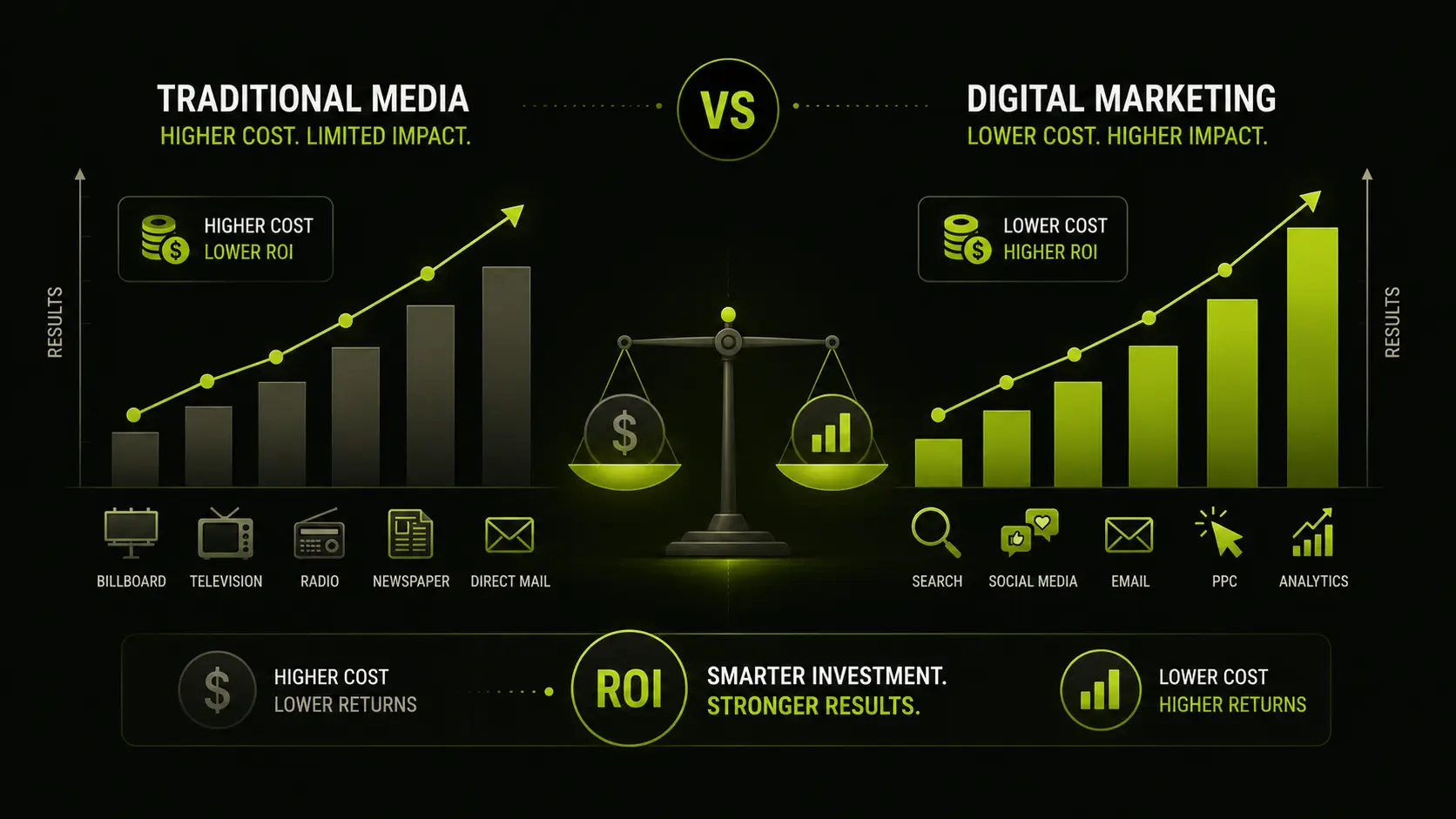
Traditional marketing promotes your brand through offline channels that audiences meet in everyday life. It includes print advertising in newspapers and magazines, TV advertising during popular programs, radio advertising across drive time slots, billboards, brochures, flyers, and direct mail marketing sent straight to homes and offices. These traditional media formats have built brand recognition for decades, and they still create strong recall. Traditional marketing shines when you want broad, tangible visibility and a trusted local presence that people can hold, see, and remember.
What Is Digital Marketing?
Digital marketing promotes your brand through online channels where your customers already spend their time. It covers local SEO services, pay per click ads, social media, email campaigns, content marketing, and video. Because internet advertising runs on data, Google Ads management lets you place the right message in front of the right person at the right moment. You can start with a modest budget, scale what performs, and watch every click, view, and conversion in a live dashboard. This makes digital marketing a flexible, measurable, and highly efficient way to reach both local and global audiences.
Digital Marketing vs Traditional Marketing: A Side by Side Comparison
With global digital advertising spending projected to reach nearly $799 billion in 2025, the shift toward online channels is clear. Here is a clean marketing costs comparison and performance snapshot across the factors that matter most.
| Factor | Digital Marketing | Traditional Marketing |
|---|---|---|
| Reach | Global and local, precisely defined | Broad and mostly local |
| Audience targeting | Pinpoint targeting by age, interest, and behavior | Wide, general audiences |
| Marketing costs | Flexible budgets that scale with results | Higher upfront investment |
| Measurability | Fully measurable marketing with live analytics | Measured through surveys and sales figures |
| Engagement | Two way conversation with instant feedback | One way brand messaging |
| Speed | Launch and adjust within hours | Planned over longer cycles |
This overview shows why so many businesses now lean toward online channels while keeping select offline touchpoints for brand trust.
Online Marketing vs Offline Marketing: Channel by Channel
The online marketing vs offline marketing decision becomes clearer when you look at each channel on its own.
Print advertising and direct mail marketing create a physical keepsake that customers can revisit, which supports strong recall for local promotions and premium brands. TV advertising and radio advertising reach large audiences quickly and remain excellent for storytelling and mass awareness. On the digital side, internet advertising and digital advertising through search, social media marketing, and email give you granular audience targeting, live optimization, and clear attribution for every part of your budget. Many brands now use offline media to build familiarity and online channels to convert that interest into measurable action.
Which Approach Offers Better Marketing Effectiveness?
For measurable marketing and a favorable marketing ROI comparison, digital marketing usually leads, because you can track performance in real time and shift spend toward what works. Recent forecasts show that around nine out of every ten new advertising dollars now flow to digital channels, which highlights the momentum behind measurable online campaigns. Its precise audience targeting means your budget reaches genuinely interested people, which lifts conversions and overall marketing effectiveness. Traditional marketing still delivers real value for broad awareness, community trust, and reaching audiences who spend more time offline. The smartest brands treat both as partners that reinforce each other.
Why Omnichannel Marketing Brings Both Together
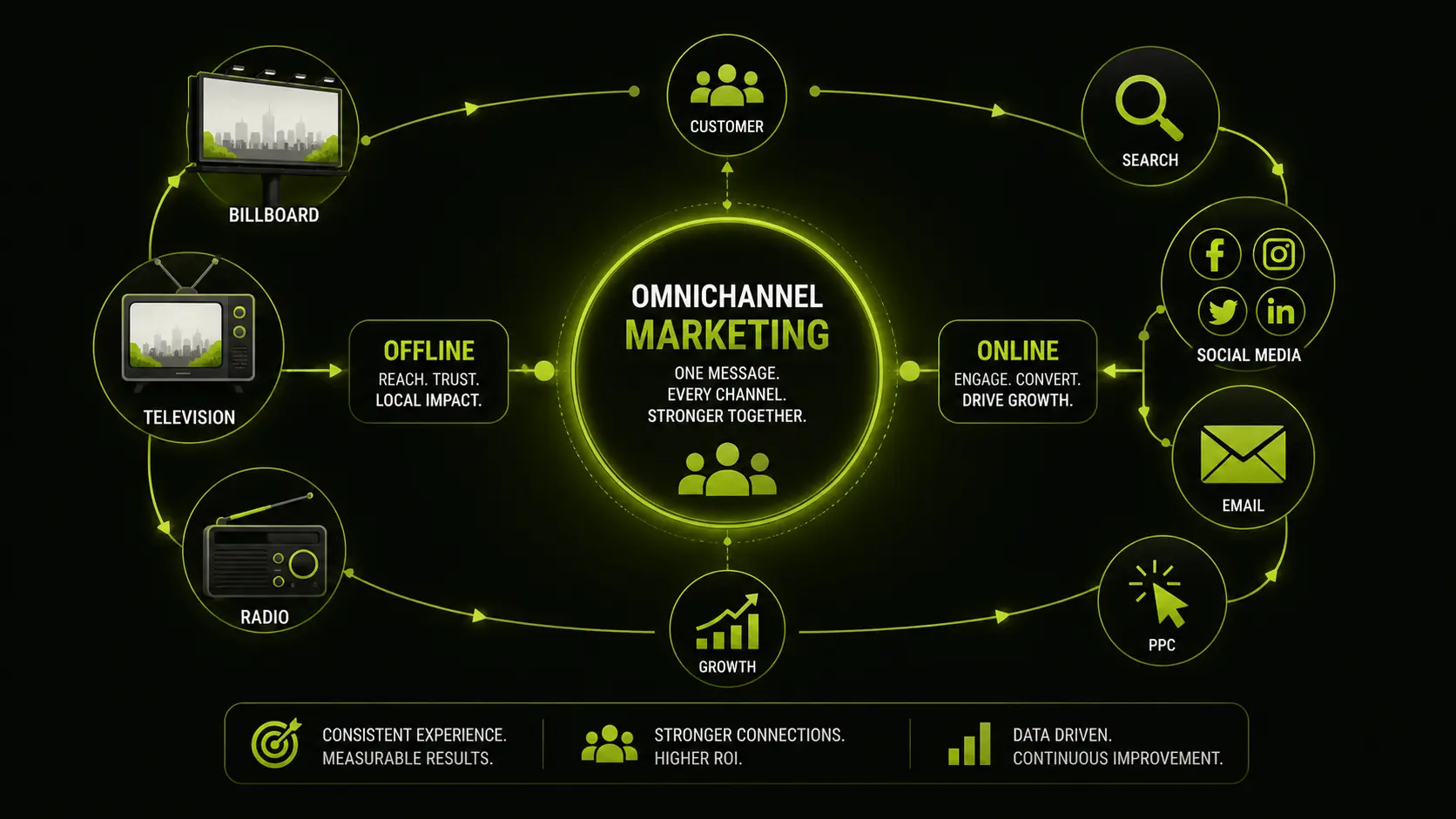
Omnichannel marketing blends the reach of traditional media with the precision of digital advertising so your brand stays consistent everywhere your customer looks. A billboard or radio spot builds recognition, and a well timed search ad, social campaign, or email turns that recognition into a sale you can measure. This unified approach improves your marketing ROI comparison, strengthens brand recall, and gives every channel a clear role in the buyer journey. When digital marketing and traditional marketing work as one system, your results compound.
How Skills Heaven Helps You Win With Both
At Skills Heaven, we design data guided strategies that combine the strengths of digital marketing and traditional marketing for brands in every industry. From our digital marketing services to print advertising and broadcast placements, our team plans the exact mix that fits your audience and budget. You get transparent reporting, measurable growth, and a partner focused on real revenue. Ready to see the ideal blend for your brand? Reach out today and let us map your winning marketing strategy.
Frequently Asked Questions
Is digital marketing better than traditional marketing?
Digital marketing is often the stronger choice because it offers precise audience targeting, flexible budgets, and fully measurable results. Traditional marketing remains valuable for broad awareness and local trust, so many brands succeed by combining both.
Is digital marketing more affordable than traditional marketing?
Yes, digital marketing usually offers a friendlier marketing costs comparison, because you can begin with a small budget and scale campaigns based on performance. Traditional media like TV and print carry a higher upfront investment.
Which is better for local businesses in the online marketing vs offline marketing debate?
Local businesses benefit from a blend. Offline channels such as flyers and direct mail marketing build neighborhood familiarity, while internet advertising and local SEO drive measurable leads and steady foot traffic.
Can you combine digital marketing and traditional marketing?
Absolutely. Omnichannel marketing unites both so offline media builds awareness and digital channels convert and measure that interest, giving you a stronger overall marketing ROI comparison.
What counts as traditional media?
Traditional media includes print advertising, TV advertising, radio advertising, billboards, brochures, and direct mail marketing, all of which reach audiences through offline channels.
The Bottom Line
The choice in digital marketing vs traditional marketing is rarely about picking one and leaving the other behind. Digital marketing gives you precise audience targeting, measurable marketing, and a strong marketing ROI comparison, while traditional media keeps your brand visible and trusted across print advertising, TV advertising, and radio advertising. For most brands, the winning move is a balanced, omnichannel marketing plan that lets every channel do what it does best. Partner with Skills Heaven and we will build that plan around your goals, so each campaign moves you closer to real, lasting growth.

Wali Shah is the Founder and CEO of SkillsHeaven, a digital growth agency specializing in Local SEO, Google Ads, and conversion-focused website development. With over 8+ years of experience, he has helped scale 170+ businesses, including 93+ limousine companies globally, by building structured, lead-generating digital systems. His expertise spans local search optimization, paid media strategy, and high-performance website development, all aligned with measurable business growth. Known for a data-driven and ethical approach, Wali focuses on creating scalable marketing systems that increase visibility, generate qualified leads, and drive long-term revenue for service-based businesses.