
Off-page SEO includes all activities done off of a website to increase the site’s search rankings, including building backlinks, encouraging branded searches, and increasing engagement and shares on social media platforms. If you have been asking what is off-page SEO and why it matters for your business, the direct answer is this: it is the process of building your website’s authority, trust, and credibility across the entire internet, and we deliver results-driven off-page SEO services that help businesses grow their organic presence and outrank their competition.
What Is Offsite SEO and How Is It Different from On-Page SEO
To fully understand what off page SEO is, it helps to see it alongside its counterpart. On-page SEO covers everything you control directly on your website: your content, title tags, heading structure, internal linking, page speed, and meta descriptions. Off-page SEO, also called offsite SEO or off-site SEO, covers everything that happens beyond your website boundaries.
Off-page SEO encompasses all optimization activities performed outside your website to improve search engine rankings. These external signals help search engines evaluate your site’s authority, relevance, and trustworthiness.
The simplest way to picture the difference: on-page SEO is what you say about yourself. Off-page SEO is what the rest of the internet says about you. Both matter deeply, and neither works at full strength without the other.

What Is Off Page SEO in Digital Marketing
In digital marketing, off-page SEO represents the full ecosystem of external signals that search engines use to judge whether your website deserves to rank above competitors. Off-page SEO in digital marketing is about trust and authority. It is the digital equivalent of word-of-mouth marketing, and it takes time, strategy, and genuine value to get right. When people trust your brand, search engines trust you too, and that is when rankings and traffic follow.
The key focus of off-page SEO in digital marketing extends across several interconnected disciplines: link building, digital public relations, brand authority development, local citation management, social signals, and online reputation building. Each of these disciplines contributes to the single goal of demonstrating to search engines that your website is a credible, authoritative, and trustworthy resource worthy of prominent placement in search results.
According to a Search Engine Ranking Factors study, off page SEO carries more than 50% of the ranking factor weight. This figure underlines why businesses that invest seriously in content but neglect off-page work consistently find their results plateauing.
What Is the Key Focus of Off Page SEO
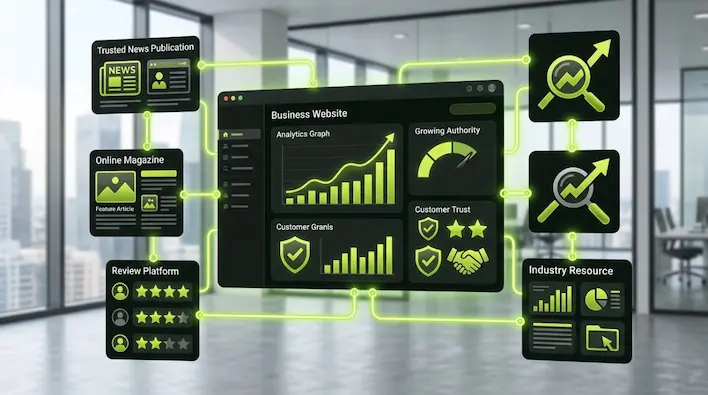
The key focus of off-page SEO is building authority and trust through external validation. Off-page SEO is about using off-site signals to get search engines and users to view your site as trustworthy and authoritative, in line with Google’s EEAT fundamentals of Experience, Expertise, Authority, and Trustworthiness. EEAT is one of many guidelines Google uses to determine whether your site’s content is valuable and helpful, and based on those signals it decides how high your site should rank. Google’s Search Essentials provide official best practices for creating high-quality websites that perform well in search results.
The three pillars that define this focus are:
Authority earned through high-quality backlinks from relevant, respected websites that act as votes of confidence in your content.
Trust built through consistent brand mentions, positive reviews, accurate citations across directories, and a visible presence across authoritative platforms.
Relevance demonstrated when the websites, publications, and communities linking to or mentioning your brand operate in a closely related industry or niche.
How Does Off Page SEO Impact Website Rankings
Off-page SEO is the process of building external signals to improve how your site ranks in search results. Traditionally, off-page SEO focused heavily on backlinks, but the definition has expanded. In short, it is your digital reputation.
Here is precisely how off-page SEO impacts website rankings across multiple dimensions:
Backlinks Signal Authority to Google
The number one result on Google has an average of 3.8 times more backlinks than positions two through ten. However, it is about quality as well. Google’s Spam Updates mean that manipulative link building is more dangerous than ever, making it essential to focus on earned links via news coverage, data studies, and digital PR campaigns, and on relevance first, where the subject matter of the linking site must be relevant to yours.
Brand Mentions Reinforce Credibility
Search engines can now identify brand mentions even without hyperlinks using AI and entity recognition. Frequent mentions across authoritative platforms signal real-world credibility and contribute to your overall authority score.
Reviews Build Consumer and Search Engine Trust
Reviews are a validation of trust and as a result one of the most important factors Google considers when evaluating your site. Encouraging customers to leave positive reviews online, starting with email campaigns directing users to your Google Business Profile, is one of the most accessible and effective off-page SEO activities available.
AI and LLM Visibility Now Depends on Off-Page Signals
AI SEO is greatly impacted by off-page SEO as well. Large language models want third-party validation for their answers and recommendations. Earning brand mentions on relevant and authoritative industry publications is critical to appearing in LLM results, with top ChatGPT sources including major publications that have earned their authority over years of consistent off-page presence.
What Is On and Off Page SEO Working Together
On-page and off-page SEO are two sides of the same organic growth strategy. On-page SEO makes your website worthy of ranking. Off-page SEO makes the rest of the internet agree that it should. Neither delivers its full potential without the other.
A website with outstanding content but zero backlinks tells Google it has not yet earned the trust of the wider web. A website with strong backlinks pointing to thin, poorly structured content will see those ranking gains erode as user engagement signals push back against the poor experience. The most successful SEO strategies treat on-page and off-page work as parallel, continuous investments rather than sequential phases.

What Are Off Page SEO Techniques That Deliver Results
These are the proven off-page SEO techniques that produce sustainable ranking improvements in today’s search landscape:
High Authority Link Building
Building backlinks remains the most powerful off page SEO technique available. High-quality backlinks from relevant, authoritative sites remain one of the strongest ranking signals, and one good link from a respected industry publication can outperform dozens of low-quality links. Effective link acquisition comes through digital PR campaigns, original research and data studies, guest contributions to respected industry publications, and skyscraper content that improves on what currently ranks.
Guest Posting and Thought Leadership
Publishing valuable, expert-level content on authoritative external websites earns backlinks while simultaneously introducing your brand to new audiences. Treat guest posting as thought leadership rather than link building and focus on publishing on authoritative platforms to strengthen your expert positioning within your industry.
Digital Public Relations
Digital PR efforts such as press releases and media outreach can result in valuable backlinks and increased brand visibility. Collaborating with influencers and thought leaders amplifies your content’s reach and credibility significantly. Data-driven studies, original research, and compelling stories attract coverage from publications that your target audience already reads and trusts.
Broken Link Building
This technique involves identifying broken links on high-authority websites within your niche, then reaching out to suggest your own relevant content as a replacement. It works because you are actively helping website owners resolve a problem, which makes outreach far more likely to succeed than cold link requests.
Local Citations and Google Business Profile Optimization
Google Business Profile and local citations serve as the foundation of local SEO. Accurate listings, consistent information, and verified profiles signal trustworthiness to search engines. Strong local presence enhances rankings, builds community recognition, and supports overall off-page SEO efforts. For businesses serving specific geographic markets, this is one of the highest-return off-page investments available.
Brand Mention Monitoring and Conversion
When authoritative websites mention your brand without linking to it, those unlinked mentions still contribute to your authority. Monitoring these mentions through tools like Ahrefs or Google Alerts and reaching out to request proper attribution converts passive mentions into active backlinks with link equity value.
Social Media Engagement and Content Amplification
Social shares are not direct ranking factors, but their indirect impact is significant. Viral posts drive referral traffic, increase brand visibility, and often lead to natural backlinks. Creating platform-specific content and engaging with audiences through meaningful interactions builds the kind of brand presence that earns recognition across the web.
Forum and Community Participation
Active, genuine participation in relevant online communities including industry forums, question and answer platforms, and professional networks positions your brand as a knowledgeable authority. This drives referral traffic, generates brand mentions, and builds the kind of community trust that translates into organic link acquisition over time.
Influencer Collaboration
Influencers act as trust amplifiers in your niche. Focusing on micro-influencers delivers higher engagement rates and more authentic audience connections than pursuing only high-profile names. Trust is transferable, and association with credible creators boosts your own authority in the eyes of both users and search engines.
Online Review Generation
Actively encouraging satisfied customers to leave reviews on Google, industry-specific platforms, and third-party review sites builds the social proof that search engines interpret as a trust signal. Responding to reviews, both positive and constructive, further demonstrates the active brand engagement that supports strong local and organic rankings.
Off Page SEO Techniques to Approach Carefully
Not every off-page tactic delivers the same quality of results, and some approaches carry genuine risk. Purchasing backlinks from low-authority sources, participating in link exchanges at scale, and creating content purely to generate links rather than to serve an audience all fall into patterns that Google’s algorithms have become increasingly capable of identifying and discounting.
Off-page SEO is not about hacks or shortcuts. It is about building real-world credibility that search engines can recognize and reward. Consistency beats intensity and revisiting your off-page SEO strategy regularly while keeping a focus on earning trust from both Google and the people you are trying to reach is what produces compounding results over time.

Why Off Page SEO Matters More Than Ever in 2026
According to research, 60% of search results now pull from off-page sources including social media, news sites, YouTube, Reddit, and reviews. This means reviews on social media and third-party sites play a massive role in rankings, and brand mentions and discussions across platforms can influence visibility. Trust signals and authority matter more than ever, with Google assessing credibility beyond just backlinks.
With Google placing even more weight on authority and third-party validation, and with AI-driven algorithms now evaluating brand presence across the entire web, off-page SEO is not optional for businesses that depend on organic search for growth. It is essential.
The businesses winning in search results today are not just those with the most optimized pages. They are brands that the wider internet recognizes, references, and recommends. Building that recognition is exactly what a well-executed off-page SEO strategy achieves.An XML sitemap helps search engines discover your pages, supporting your overall SEO strategy.
Understanding what off-page SEO is is the first step. Executing it consistently and strategically is what separates businesses that dominate their search results from those that remain invisible despite strong on-site work. Every backlink earned, every brand mention generated, every positive review collected, and every authoritative publication that covers your story contributes to a compounding authority advantage that grows stronger over time.Our off-page SEO services are built around sustainable, quality-first strategies that earn lasting authority for your brand and deliver the organic visibility your business deserves.
FAQs
What is off-page SEO in simple terms?
Off-page SEO refers to all the optimization activities that happen outside your own website to improve your search engine rankings. This includes earning backlinks from other websites, generating brand mentions, building local citations, collecting online reviews, and establishing your brand’s presence and authority across the web.
What is offsite SEO and is it the same as off-page SEO?
Yes, offsite SEO and off-page SEO refer to the same discipline. Both terms describe the process of building external signals such as backlinks, brand authority, and online reputation that help search engines recognize your website as trustworthy and worthy of higher rankings.
How does off-page SEO impact website rankings?
Off-page SEO impacts rankings by providing search engines with external proof of your website’s authority and credibility. High-quality backlinks from relevant sites act as votes of confidence, brand mentions reinforce trust, and positive reviews signal to Google that real users value your business. Together, these signals carry more than 50% of overall ranking factor weight according to industry research.
What is the key focus of off-page SEO?
The key focus of off-page SEO is building authority, trust, and relevance through external validation. This means earning high-quality backlinks from industry-relevant sources, generating consistent brand mentions across authoritative platforms, managing online reviews, and maintaining a visible and credible presence beyond your own website.
What are the most effective off-page SEO techniques?
The most effective off-page SEO techniques include high-authority link building through digital PR and original research, guest posting on respected industry publications, broken link building, Google Business Profile optimization, local citation management, brand mention monitoring, social media content amplification, online review generation, and strategic influencer collaboration.
What is the difference between on and off-page SEO?
On-page SEO covers everything you control directly on your website, including content quality, keyword optimization, internal links, page speed, and technical structure. Off-page SEO covers external signals such as backlinks, brand mentions, reviews, and citations that demonstrate to search engines how the wider internet perceives your website’s authority and relevance.
Is social media considered part of off-page SEO?
Yes, social media activity is considered part of off-page SEO. While social shares are not direct ranking factors, active social media engagement drives referral traffic, increases brand visibility, and generates natural backlinks over time. A strong social presence also contributes to the brand authority signals that Google’s algorithms now evaluate as part of overall site credibility.
How long does it take for off-page SEO to impact rankings?
Off-page SEO is a long-term investment. Most websites begin seeing measurable ranking improvements within three to six months of consistent off-page activity, with stronger and more compounding results typically emerging after six to twelve months of sustained link building, digital PR, and brand authority development.

Atif Khan is a highly experienced Local SEO Expert and Strategic SEO Consultant who helps businesses turn their websites into powerful lead-generating assets. With hands-on experience optimizing and ranking over 100 websites across competitive industries, he specializes in building data-driven SEO systems that improve local search visibility, attract qualified traffic, and convert visitors into customers. His expertise spans Google Business Profile optimization, technical SEO, keyword research, content strategy, and conversion-focused website optimization, ensuring every project is aligned with measurable business outcomes. Atif focuses on creating complete local search ecosystems, combining website authority, relevance, and trust signals to help businesses dominate in their target locations. Beyond rankings, he develops scalable growth strategies that drive calls, inquiries, and long-term revenue. His approach is rooted in ethical, white-hat SEO practices, continuous optimization, and performance tracking, ensuring sustainable results. As a consultant, he works closely with businesses and agencies to align SEO with revenue goals, improve digital presence, and build long-term organic acquisition systems.