
The fastest way to learn how to find keywords for local SEO is to combine your core services with the locations you serve, then validate those combinations using real search data, Google autocomplete, and competitor pages that already rank in your area. At Skillsheaven, this is the exact starting point we use before building any local content or Google Business Profile strategy for a client, because guessing at keywords almost always leads to pages that nobody actually searches for. Local keyword research works differently from general SEO keyword research, since it depends heavily on geography, search intent, and how people phrase their searches when they need a business nearby right now.
This guide breaks down a complete, repeatable process for how to find local SEO keywords, the tools and techniques that actually work, and how to turn your research into pages that genuinely attract nearby customers.
What Is Local SEO Keyword Research?
Local SEO keyword research is the process of identifying the exact words and phrases people type into search engines when they are looking for a product or service within a specific area. Instead of targeting a broad term like plumber, local keyword research focuses on phrases like emergency plumber near downtown or licensed plumber in your service city, since these combinations reflect how people actually search when they want a nearby business.
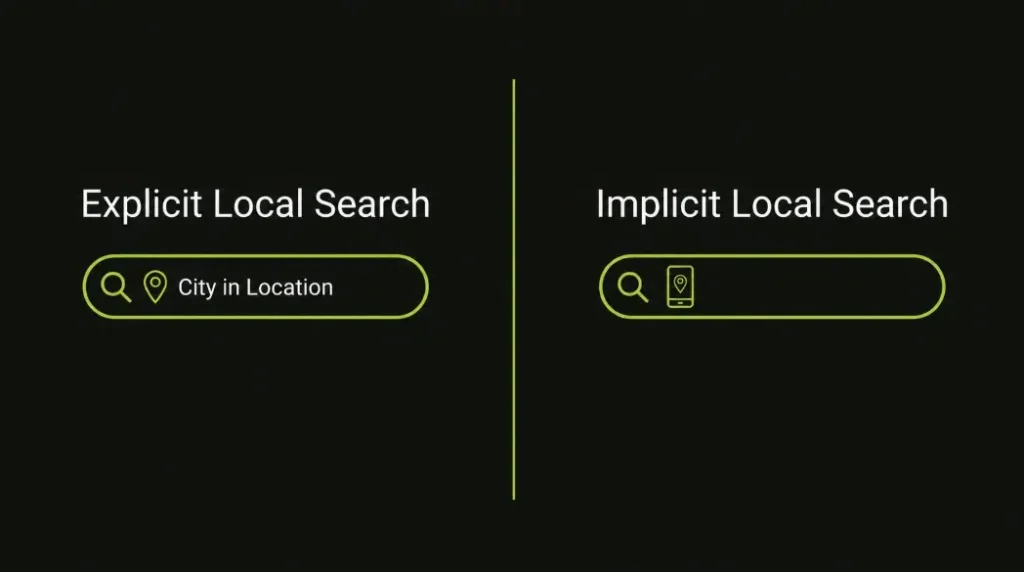
Understanding how to research keywords for local SEO starts with recognizing two distinct types of search behavior. Explicit local searches include a clear location term, such as a city, neighborhood, or zip code, written directly into the query. Implicit local searches leave the location out, but the searcher still expects nearby results, since Google automatically factors in their device location. Both types matter, and a strong local keyword strategy accounts for each one differently.
How Important Is Keyword Research for Local SEO?
How important is keyword research for local SEO compared to other ranking factors like reviews or citations? It sits at the very foundation of the entire strategy, because every other local SEO effort depends on knowing which terms to target in the first place. Your Google Business Profile description, your service pages, your blog content, and even your review responses all perform better when they are built around language your actual customers use.
Without solid keyword research, businesses tend to write content using internal jargon or assumptions about what customers search for, rather than the real phrases people type into Google. This mismatch leads to pages that may read well but never attract meaningful search visibility, simply because they were never aligned with actual demand. Strong local keyword research closes that gap and gives every later step of local SEO, from on page content to Google Business Profile optimization, a clear and accurate direction.
Building Your Seed Keyword List
Before diving into tools, the process of how to do local SEO keyword research starts with a simple internal exercise: listing out every service, product, and customer problem your business addresses. These become your seed keywords, the short, broad terms that represent the core of what you offer.
A practical seed list usually includes:
- Every service or product category your business provides
- Common customer problems phrased the way a customer would describe them
- Industry specific terms alongside the plain language version a non expert might use
- Variations in service names that competitors or customers commonly use
Once this list is complete, the next step in how to do keyword research for local SEO is pairing each seed term with location modifiers at multiple levels of specificity, including your city, nearby neighborhoods, and broader regional terms. A service area business often performs better targeting smaller, more specific areas like a particular neighborhood or postcode, since these searches typically carry less competition while still reflecting strong local intent.
Step by Step Process for Local Keyword Research
Here is a clear, repeatable workflow for how to find local SEO keywords that consistently produces useful, search ready results.
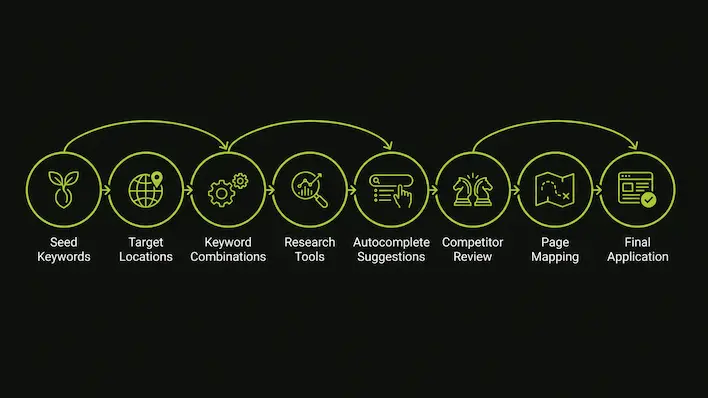
- List your seed keywords covering every service and product you offer
- List your target locations at different levels, including city, neighborhood, and nearby towns
- Combine seed terms with location modifiers to generate a full list of local keyword variations
- Use keyword research tools to check search volume, competition, and intent for each combination
- Study Google autocomplete suggestions and People Also Ask boxes for additional phrasing ideas
- Review what currently ranks for your top keywords to confirm the content format and depth expected
- Map each validated keyword to either an existing page or a new page you plan to create
- Apply your strongest keywords to your Google Business Profile description, service pages, and location pages
Following this process for how to do local keyword research for local SEO ensures that every keyword on your final list is grounded in real search behavior rather than internal guesswork, which makes the content you build around it far more likely to attract genuine local traffic.
Tools and Sources That Reveal Real Local Search Behavior
Several free and paid resources make the research process faster and far more accurate than relying on assumptions alone.
Google Autocomplete reveals real, commonly searched phrases the moment you start typing a seed term followed by your city or neighborhood name into the search bar.
People Also Ask boxes show the specific questions real searchers ask around a topic, which can shape both keyword choices and FAQ content for your local pages.
Keyword research tools such as those built into major SEO platforms provide search volume, competition scores, and related keyword suggestions, helping you prioritize which combinations are worth targeting first.
Google Business Profile insights show which search terms are already triggering views and actions on your existing profile, offering a direct window into language your current audience uses.
Competitor analysis involves reviewing the pages currently ranking for your target terms in your area, studying their content structure, headings, and the additional local keywords they appear to be targeting, then identifying gaps you can fill with stronger or more specific content.
Combining these sources gives a far more complete picture than any single tool alone, since autocomplete and People Also Ask reveal real phrasing, while keyword tools confirm volume and competition at scale.
How Agencies Select Keywords for Local SEO
How agencies select keywords for local SEO usually follows a more structured filtering process than a typical do it yourself approach. Agencies tend to score each candidate keyword against several factors at once: estimated search volume, ranking difficulty relative to the client’s current domain authority, how closely the term matches commercial or transactional intent, and whether the keyword aligns with a service the business can realistically deliver and convert.
Agencies also place heavy weight on keyword mapping, ensuring that each page on a client’s site targets a distinct keyword cluster rather than letting multiple pages compete for the same term. This structured approach prevents what is known as keyword cannibalization, where similar pages unintentionally compete against each other in search results instead of strengthening the site’s overall visibility as a group.
Finally, agencies typically prioritize a balanced mix rather than chasing only the highest volume terms. A smaller set of highly specific, lower competition local keywords often delivers stronger conversion rates than a handful of broad terms that are difficult to rank for and attract less qualified traffic.
What Are the Best Keywords to Use for Local SEO?
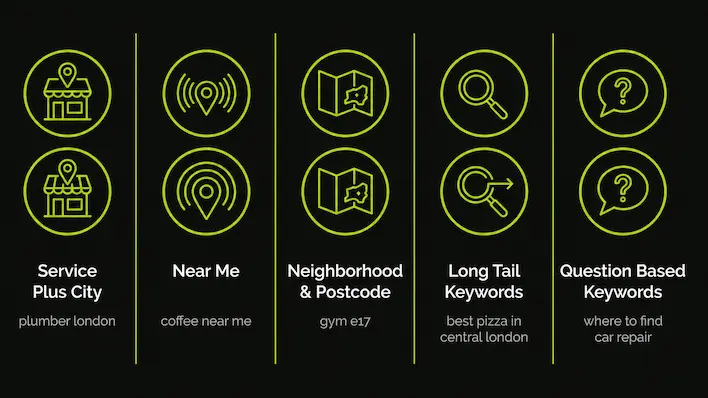
What are the best keywords to use for local SEO when you’re deciding where to focus first? The strongest performing local keywords generally fall into a few clear categories.
Service plus city keywords combine your core offering directly with your primary location, such as roofing repair in your city, and remain the backbone of most local keyword strategies.
Near me and nearby phrases reflect implicit local intent and have grown significantly in search volume as more searches happen on mobile devices with location services enabled.
Neighborhood and postcode level keywords target a smaller, more specific area, often with much lower competition, making them especially valuable for service area businesses competing against larger citywide brands.
Long tail local keywords combine a specific service detail with a location, such as same day appliance repair in a particular neighborhood, and tend to attract searchers who are closer to making a decision.
Question based local keywords reflect the kind of phrasing found in People Also Ask boxes, such as how much does a service typically cost in your area, and work well for blog content and FAQ sections that support your core service pages.
A well rounded local keyword strategy uses a mix of all five categories rather than focusing entirely on one type, since each category attracts a slightly different stage of the customer journey.
Mapping Keywords to Pages and Applying Them Correctly
Once your keyword list is finalized, the next step is assigning each keyword or keyword cluster to a specific page. Every page should target one primary local keyword, supported by a small group of closely related variations, rather than trying to rank one page for dozens of unrelated terms.
Apply your researched keywords across these key areas:
- Page titles and meta descriptions for every service and location page
- Main headings and subheadings throughout the page content
- The opening paragraph, where the primary local keyword should appear naturally
- Your Google Business Profile name, description, and service categories
- Image alt text where it fits naturally and accurately describes the image
Consistent, natural keyword placement across these areas reinforces relevance for both search engines and the Local Pack algorithm that determines which businesses appear in map based results.
Common Mistakes That Weaken Local Keyword Strategies
A few recurring issues tend to limit the impact of local keyword research, even when the initial research itself was thorough.
- Targeting only the broadest, highest volume terms while ignoring valuable neighborhood and long tail variations
- Creating duplicate or near identical pages for multiple nearby locations without enough unique, locally specific content
- Forgetting to update keyword targeting as customer language and search trends shift over time
- Relying entirely on assumptions instead of validating keyword choices with real search data and competitor research
Avoiding these patterns keeps a local keyword strategy aligned with how customers genuinely search, rather than how a business assumes they search.
Bringing Local Keyword Research Together
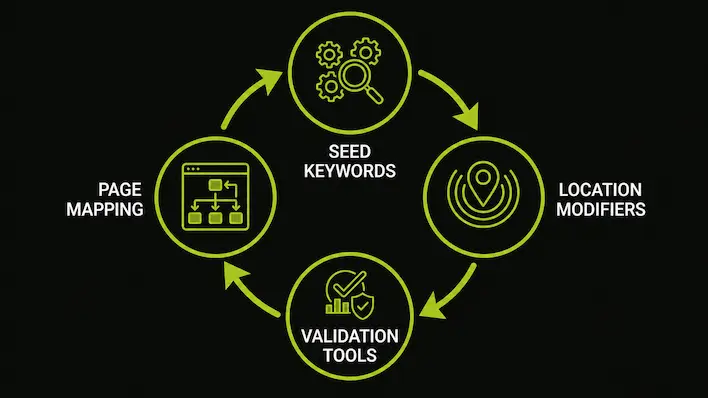
Learning how to find keywords for local SEO comes down to a clear, repeatable process: build a strong seed list, pair it with location modifiers at multiple levels, validate every combination with real search data and competitor insight, and map the results directly to the pages and profiles that matter most. Local SEO keyword research is never a one time task either, since search behavior, neighborhoods, and competition all shift over time, making periodic review just as important as the initial research itself.
Frequently Asked Questions
How do I find local SEO keywords without expensive tools?
Start with Google autocomplete and People Also Ask boxes using your service plus your city or neighborhood, then refine your list using any free version of a keyword research tool for volume estimates.
How is local keyword research different from general keyword research?
Local keyword research always factors in geography and search intent tied to nearby businesses, while general keyword research focuses on broader topic relevance without a location component.
How important is keyword research for local SEO if I already have a Google Business Profile?
It remains essential, since your profile description, categories, and services all perform better when built around the exact local keywords your customers are actually searching for.
What are the best keywords to use for local SEO for a small service area business?
Neighborhood level and long tail local keywords tend to work best, since they carry lower competition while still attracting searchers with strong, ready to convert local intent.
How do agencies select keywords for local SEO when a client serves multiple cities?
Agencies typically map distinct keyword clusters to separate, unique location pages for each city, ensuring every page targets its own specific local terms rather than competing against the others.
Do I need different keywords for each neighborhood I serve?
Yes, each neighborhood or service area page should target its own specific local keyword variations and include genuinely unique local content to avoid duplicate or thin page issues.

M. Awais Khan is a Business Development and Digital Growth Strategist at SkillsHeaven, specializing in SEO, local search optimization, and performance-driven digital marketing. With experience supporting 100+ businesses, he develops and implements data-driven strategies that help companies increase online visibility, generate qualified leads, and drive sustainable revenue growth. His expertise spans Local SEO, Google Ads, social media marketing, and conversion-focused website optimization, ensuring every project is aligned with measurable business outcomes and long-term success.