
Grey hat SEO is a search engine optimization approach that blends approved white hat methods with riskier black hat tactics, operating in a middle zone that isn’t explicitly banned by Google but doesn’t fully follow its Webmaster Guidelines either. If you run a business in Dubai, Sharjah, Abu Dhabi, or anywhere across the UAE and you’ve been offered “quick ranking” packages, chances are you’ve already been pitched some form of grey hat SEO. At SkillsHeaven, our digital marketing and local SEO team in the UAE gets this question from clients almost every week, so we decided to break it down properly, in plain language, so you know exactly what you’re dealing with before you sign up for any service that promises overnight rankings.
This guide covers everything you need to understand about grey hat SEO: how it works, why agencies still use it, the common tactics involved, the real risk it carries for your website, and how it compares with white hat and black hat approaches. By the end, you’ll be able to spot grey hat SEO a mile away, whether it’s coming from a freelancer, an agency, or a “guru” on social media.
Grey Hat SEO Explained Simply
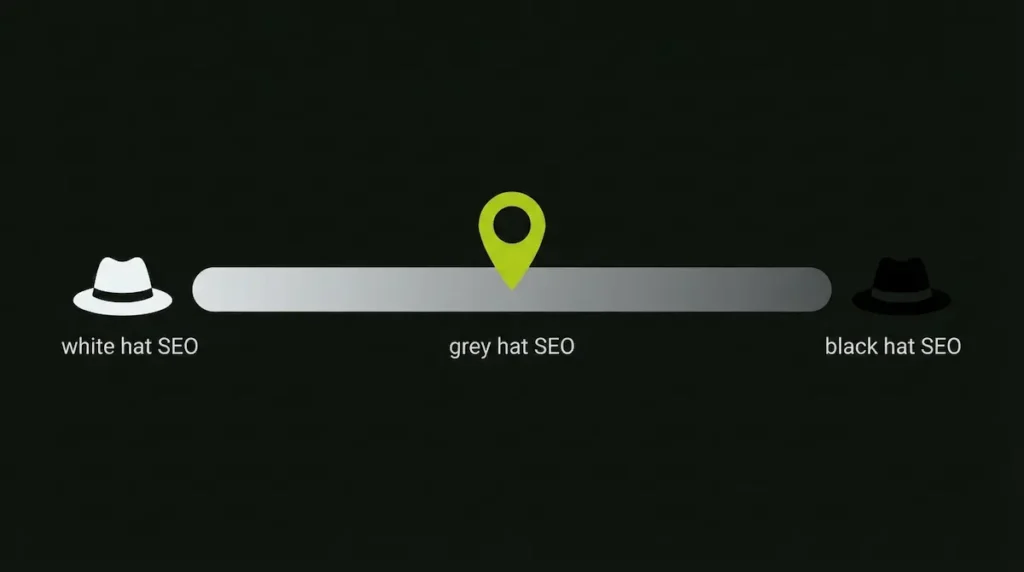
Think of SEO as existing on a spectrum. On one end, you have white hat SEO, which means playing entirely within Google’s rules: writing genuinely useful content, earning links naturally, and building a site that serves real users. On the far other end sits black hat SEO, which involves outright manipulation such as cloaking pages, hiding text, or buying thousands of spammy links overnight.
Grey hat SEO sits somewhere in the middle. It isn’t as reckless as black hat, but it isn’t as safe as white hat either. A grey hat SEO practitioner might publish solid, well-researched content (a white hat move) and then boost that page with paid backlinks or link exchanges (a black hat leaning tactic). The blend is exactly why it’s called “grey,” it borrows from both sides depending on which gets faster results.
The core idea behind grey hat SEO is exploiting ambiguity. Google’s guidelines don’t cover every possible scenario, and this creates loopholes. Some SEO professionals interpret these grey areas generously, using them to gain an edge without technically breaking a written rule. That doesn’t mean the tactic is safe, though, only that it hasn’t been explicitly labeled as a violation yet.
Why the Term “Grey” Fits So Well
The name captures the uncertainty perfectly. What counts as grey hat SEO today might be reclassified as black hat tomorrow, because search engines constantly update their algorithms to close these loopholes. A tactic considered borderline acceptable last year could trigger a manual penalty this year once Google’s systems become smart enough to detect the pattern.
This constant shifting is exactly why grey hat SEO tactics are considered a gamble. You might get a short-term ranking boost, but you’re also building on ground that could shift under you at any point.
Common Grey Hat SEO Techniques
To really understand grey hat SEO, it helps to look at the specific tactics that fall under this category. Here are some of the most common ones used across various industries, including here in the UAE market.
Buying or Exchanging Links Indirectly
Straight-up buying links is widely viewed as a black-hat move. Grey hat SEO takes a subtler route, such as sponsoring content on a relevant website where a link is included as part of the arrangement, or exchanging services, products, or guest posts with an understanding that a backlink will follow. It’s less obvious than a direct cash-for-links deal, but the underlying intent, manipulating rankings through paid or bartered links, remains similar.

Using Expired Domains
Some marketers purchase expired domains that already carry backlinks and traffic history, then redirect those domains to a new or existing website. The goal is to inherit the old domain’s authority instantly rather than earning it organically over months or years. This tactic can work temporarily, but Google has become increasingly skilled at spotting these patterns of inherited authority that don’t match genuine topical relevance.
Content Spinning
Content spinning means taking existing articles and rewording them just enough to appear as “new” content, often using automated tools. This lets a site publish large volumes of content quickly while attempting to dodge duplicate content flags. Search engines have gotten much better at recognizing spun or AI-generated text that lacks genuine depth, so this tactic carries meaningful exposure over time.
Keyword Stuffing With a Light Touch
Old school keyword stuffing crammed a target phrase into a page dozens of times until it read unnaturally. The grey hat version is more subtle, repeating keyword variations just enough to signal relevance to search engines without making the page completely unreadable to a human visitor. It’s a fine line, and crossing it too far pushes the tactic firmly into black hat territory.
Private Blog Networks (PBNs)
A private blog network is a group of websites built solely to link out to a “money site” in order to manipulate its rankings. Because these networks are designed purely for link manipulation rather than genuine audience value, Google treats detected PBNs as a link scheme, which can result in penalties for both the network and the site benefiting from it.
Boosting Engagement Metrics Artificially
Some grey hat strategies focus on inflating click-through rates, dwell time, or referral traffic using specialized tools or paid traffic sources. The aim is to signal to Google that a page is popular and relevant, hoping this nudges rankings upward, particularly for local search and map pack visibility. Since this traffic often doesn’t convert into real customers, it may boost visibility temporarily without delivering actual business value.
Grey Hat SEO vs White Hat vs Black Hat: A Clear Comparison
Understanding grey hat SEO is much easier when you place it next to its two counterparts.
White hat SEO focuses entirely on serving the end user. It includes creating original, in-depth content, improving site speed and mobile usability, earning backlinks naturally through genuine value, and optimizing technical elements like structured data and page titles. It follows Google’s guidelines to the letter and carries very little risk of penalty.
Black hat SEO ignores the rules altogether. It includes tactics like cloaking, doorway pages, hidden text, scraped content, and mass link schemes. These methods aim to manipulate rankings without offering any real value to visitors, and they carry a high chance of triggering both manual and algorithmic penalties.
Grey hat SEO borrows a bit from each side. It doesn’t openly defy the rules the way black hat does, but it doesn’t fully commit to ethical, user-first practices either. The risk level sits in between: lower than black hat, but noticeably higher than pure white hat SEO. This is exactly why so many agencies and freelancers describe their services using vague language like “aggressive SEO” or “advanced link building,” when what they’re really offering is a grey hat SEO package.
Why Some Marketers Still Choose Grey Hat SEO
Despite the risk involved, grey hat SEO remains popular in several competitive niches, and there are a few practical reasons behind that.
Speed is the biggest draw. White hat SEO, especially for a new website, can take many months or even years to show substantial results. Grey hat SEO tactics can sometimes produce visible ranking movement much faster, which appeals to business owners who need results quickly.
Cost is another factor. Building genuine authority through content marketing, digital PR, and organic outreach requires significant time and resources. Grey hat shortcuts, like acquiring an expired domain or exchanging links, can appear cheaper on the surface, even though the long-term cost of a penalty can far exceed any short-term savings.
Competitive pressure also plays a role. In crowded industries where multiple businesses are fighting for the same top spots, some marketers assume that if competitors are already using grey hat tactics, staying purely white hat puts them at a disadvantage.
The Real Risk Behind Grey Hat SEO
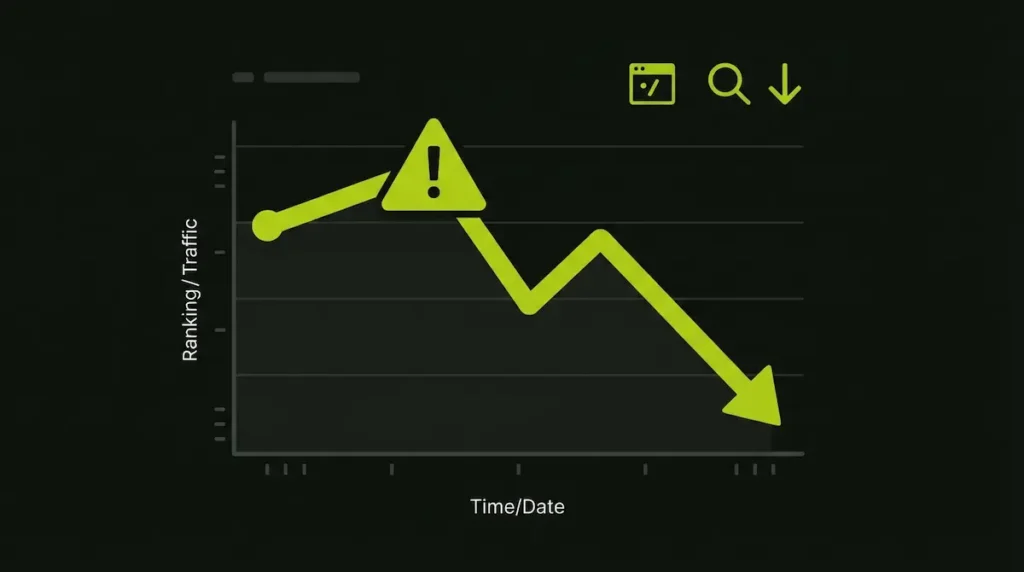
Here’s the part that matters most for any business owner considering this route. Search engines, particularly Google, continuously refine their algorithms to detect manipulative patterns, even ones that were previously undetectable. A tactic that works today can become the exact thing that triggers a penalty tomorrow.
When Google identifies grey hat SEO practices on a site, the consequences can range from a drop in rankings to a significant loss of organic visibility, and in more severe cases, removal from the index entirely. For a business, that often means losing your single largest source of new customer leads overnight, sometimes with very little warning.
There’s also a trust dimension to consider. Grey hat tactics often prioritize satisfying the algorithm over satisfying the actual visitor. That means thin content, irrelevant partnerships, or an unnatural link profile that a savvy customer, partner, or even a future SEO auditor could spot fairly easily. Reputation, once damaged in this way, takes far longer to rebuild than rankings do.
Is Grey Hat SEO Ever Worth Considering?
Some SEO professionals argue that context matters. A business with a short shelf life, or one testing a temporary campaign, might view the risk differently than a company building a long-term brand. But for the vast majority of businesses, especially local businesses across the UAE trying to build a lasting presence on Google Search and Google Maps, the calculation usually favors sustainable growth over short-lived spikes.
If your goal is a business that keeps generating leads for years, not just weeks, investing in white-hat Local SEO, quality content, genuine backlinks, and a technically sound website tends to produce far more durable results.
How to Identify Grey Hat SEO in a Service Pitch
If you’re evaluating an SEO agency or freelancer, here are a few signals that a proposal may lean grey hat rather than fully white hat.
Promises of guaranteed rankings within an unrealistically short timeframe are one warning sign. Vague explanations about “how” links will be built, without clarity on the source or method, are another. Heavy emphasis on volume metrics, like the number of backlinks delivered per month, rather than the quality or relevance of those links, can also indicate a grey hat approach. Finally, reluctance to explain the exact tactics being used, or discomfort when you ask direct questions about compliance with Google’s guidelines, is often a clear signal worth paying attention to.
Building Sustainable Rankings the Right Way

At SkillsHeaven, we work with businesses across Dubai, Sharjah, and Abu Dhabi who want their website and Google Business Profile to rank consistently, without the uncertainty that comes with grey hat SEO tactics. Our approach focuses on matching search intent, optimizing technical SEO fundamentals, strengthening local search signals, and building a content strategy that genuinely serves the people searching for your services. That’s the kind of foundation that keeps producing leads long after a campaign ends, rather than a short-term spike followed by a sudden drop.
If you’ve been offered a “grey hat SEO package” or an “aggressive ranking strategy” and you’re not sure whether it’s the right move for your business, it’s worth getting a second opinion before committing your marketing budget. Understanding grey hat SEO clearly, as covered in this guide, puts you in a much stronger position to make that decision.
Frequently Asked Questions
Is grey hat SEO illegal?
No, grey hat SEO is not illegal in a legal sense. It simply falls outside search engine guidelines rather than the law. The consequences come in the form of ranking penalties from Google, not legal action, though certain extreme tactics like hacking could carry legal implications.
What is the main difference between grey hat and black hat SEO?
Grey hat SEO exploits ambiguous areas in search engine guidelines without directly breaking clearly stated rules, while black hat SEO involves tactics that openly and deliberately violate those guidelines, such as cloaking or hidden text.
Can grey hat SEO get my website penalized?
Yes, it can. While grey hat tactics carry less risk than black hat methods, search engines continuously update their detection systems, and a technique considered borderline today could lead to a ranking drop or penalty once it’s flagged as manipulative.
Do agencies in the UAE commonly use grey hat SEO?
Some do, particularly in competitive local markets where quick visibility feels tempting. However, many established agencies, including SkillsHeaven, prioritize white-hat local SEO strategies to protect long-term rankings for their clients across Dubai and the wider Emirates.
How long does white hat SEO take compared to grey hat SEO?
White hat SEO typically takes several months to show strong results because it relies on genuine content quality and natural link growth. Grey hat SEO can sometimes show faster movement, but those gains are often unstable and can disappear once search engines catch up.
Should a small business ever use grey hat SEO techniques?
Most small businesses benefit more from a stable, penalty-free approach since losing organic visibility can significantly hurt revenue. Building a strong website foundation, quality content, and genuine local SEO signals is generally the safer long-term path for sustained growth.

M. Awais Khan is a Business Development and Digital Growth Strategist at SkillsHeaven, specializing in SEO, local search optimization, and performance-driven digital marketing. With experience supporting 100+ businesses, he develops and implements data-driven strategies that help companies increase online visibility, generate qualified leads, and drive sustainable revenue growth. His expertise spans Local SEO, Google Ads, social media marketing, and conversion-focused website optimization, ensuring every project is aligned with measurable business outcomes and long-term success.