
But here is the real problem we see every day at Skills Heaven: business owners spend thousands of dirhams building a website on the wrong platform, and then realize it does not grow with them, does not rank on Google, or cannot handle Arabic content properly.
According to the UAE Ministry of Economy, there are over 1.1 million registered businesses in the Emirates and a staggering 94% of them are SMEs (small and medium enterprises). That is more than a million businesses that need an online presence, most of them without a large IT team to guide them.
At Skills Heaven, we have worked with businesses across different industries and have seen firsthand how choosing the wrong CMS (Content Management System) can become one of the most expensive mistakes a UAE business can make. You might launch a Wix site, realize it cannot scale, and then have to rebuild everything from scratch 12 months later. Or you might invest in Shopify, only to find that the monthly app costs eat deep into your margins.
This guide is written specifically for UAE business owners whether you run a small boutique in Jumeirah, a growing consultancy in Business Bay, or a medium-sized manufacturing firm in Sharjah. By the end of this article, you will know exactly which CMS fits your size, budget, and business goals.
No fluff. No jargon. Just a clear, honest CMS comparison for UAE businesses by Skills Heaven that helps you make the right call the first time.
UAE Business Landscape in 2026
Before we dive into platforms, let us understand who is actually building websites in the UAE. The business ecosystem here is diverse, and the right CMS depends heavily on where your company sits in this landscape.
Here is a rough breakdown of the UAE business market by size:
- Micro Businesses (1-9 employees): Roughly 50% of all UAE businesses fall here. Think freelancers, home based businesses, small retail shops, local services. Budget is tight. Speed matters. They need something up and running fast without a developer.
- Small Businesses (10-49 employees): About 30% of the market. These are growing companies real estate agencies, F&B outlets, logistics providers, clinics. They need a proper website that can rank on Google and generate leads.
- Medium Businesses (50-249 employees): Approximately 14% of UAE businesses. These companies are scaling. They need integrations, automation, Arabic and English content, and solid eCommerce or booking functionality.
- Enterprise Businesses (250+ employees): The remaining 6%. Banks, government entities, large retail chains. They need custom-built, highly secure, and deeply integrated platforms.
Here is the key insight: what works for a micro business in Deira is completely wrong for a medium sized business in DIFC. The CMS needs to match the stage of growth, the technical capacity of the team, and the long-term vision of the company.
Too many UAE business owners choose a platform based on what their friend used or what they saw in a YouTube ad. This guide will change that.
What is a CMS and Why Does It Matter for UAE Businesses?
A CMS, or Content Management System, is the software that lets you build, manage, and update your website without needing to write code from scratch every time you want to change a page.
Think of it like this: your CMS is the engine under the hood of your website. You do not need to understand the mechanics to drive the car but choosing the wrong engine will slow you down, cost you more, and eventually break down on you.
For UAE businesses specifically, a CMS is not just about design. It needs to handle some unique local requirements:
- Arabic language support and right to left (RTL) text direction crucial for reaching Emirati and Arab customers
- UAE payment gateway integration platforms like Telr, PayTabs, Network International, and Tabby (Buy Now Pay Later)
- VAT compliance the UAE introduced 5% VAT in 2018, and your eCommerce platform needs to display and calculate this correctly
- E-invoicing compatibility especially relevant as the UAE moves toward mandatory e-invoicing for businesses
- Local hosting options some businesses prefer UAE based servers for latency and data residency reasons
- Multilingual SEO you need your site to rank in both English and Arabic search results on Google UAE
A platform that ignores even one of these factors can seriously hurt your business. That is why a generic CMS comparison is not enough you need a CMS comparison for UAE businesses that accounts for the local context.
CMS Requirements Based on Business Size
Different stages of business growth demand different features from a CMS. Here is a breakdown of what each business tier in the UAE actually needs and which platforms deliver.
Micro Businesses: Launch Fast, Spend Less
If you are a micro business in the UAE, your priorities are simple: get online quickly, spend as little as possible, and have something that looks professional enough to build trust.
You probably do not have a developer on staff. You need a drag-and-drop experience, a decent template, and a way to add your contact information, services, and maybe a booking form.
What micro businesses need from a CMS:
- Zero or very low development cost
- Drag and drop editor no coding required
- Fast setup ideally live within days
- Basic contact forms, social links, and local map integration
- Mobile-friendly design (critical over 70% of UAE web traffic is mobile)
Recommended CMS: Wix or Shopify Starter
Wix is genuinely great for micro businesses that just need a clean, functional website. Plans start from around AED 55-75/month, and you can have a professional looking site ready in a weekend. Shopify’s Starter plan is ideal if you are selling products and need a quick, social commerce friendly setup.
The trade off? Neither of these will serve you well long term if you start growing fast. Wix has serious limitations in terms of SEO depth and scalability, and Shopify Starter locks you out of a full storefront.
Small Businesses: SEO, Leads, and Real Growth
If you are a small business in the UAE say, a real estate agency in Ajman, a fitness studio in Dubai Marina, or an accounting firm in Abu Dhabi your website is your number one sales tool. You need leads. You need Google rankings. You need credibility.
This is where the CMS choice gets critical. A basic template on Wix might look fine, but it will not help you rank for competitive local search terms like ‘best accountant in Dubai’ or ‘real estate agency JVC.’
What small businesses need from a CMS:
- Strong SEO capabilities custom meta titles, schema markup, sitemap, fast load speeds
- Blog / content marketing capability to drive organic traffic
- Lead capture forms with CRM integration
- Arabic language support for bilingual content
- Google Analytics and Search Console integration
- Flexibility to add features as you grow
Strongly Recommended CMS: WordPress
There is a reason WordPress powers over 43% of all websites globally. For UAE small businesses, it is the single best investment you can make. It gives you complete control over your SEO, your design, your content, and your integrations without locking you into any one vendor’s ecosystem.
Combined with plugins like Yoast SEO, WPForms, and WPML (for Arabic multilingual support), WordPress becomes an extremely powerful lead-generation machine. It is not as beginner-friendly as Wix, but the long-term returns are incomparably better.
Medium Businesses: Scaling, Automation & Integration
Medium-sized businesses in the UAE have usually already built some digital presence. Now they need to level up better performance, more automation, deeper integrations with their CRM, ERP, or inventory systems, and a site that can handle thousands of visitors without breaking a sweat.
What medium businesses need from a CMS:
- Headless or hybrid CMS architecture for performance at scale
- API integrations SAP, Zoho, Salesforce, custom ERPs
- Advanced eCommerce or booking systems
- Multilingual content management at scale
- Dedicated developer support and version control (Git)
- Advanced analytics and A/B testing
Recommended CMS: WordPress (with advanced architecture) or Webflow
For most medium businesses, a well structured WordPress site with a premium hosting environment (like WP Engine or Kinsta) and custom plugin development is still the best choice. It is flexible, scalable, and the development community is enormous meaning you can always find skilled WordPress developers in Dubai or Abu Dhabi.
Webflow is worth considering for businesses where visual design is a competitive differentiator creative agencies, luxury brands, hospitality companies. It offers stunning design control and a clean CMS layer. However, it has limitations in Arabic RTL support and payment gateway integration that need to be custom-solved.
Enterprise Businesses: Custom, Secure, and Deeply Integrated
Enterprise businesses banks, government entities, large retail groups, airlines have needs that go far beyond what any off the shelf CMS can handle out of the box.
What enterprises need from a CMS:
- Enterprise grade security role based access, two factor authentication, audit logs
- Compliance with UAE data protection laws and NESA regulations
- Deep API integrations with legacy systems
- Granular content workflow management approval chains, publishing schedules
- Scalability to handle massive traffic spikes (sale events, product launches)
- 24/7 support and dedicated SLA-backed infrastructure
Recommended CMS: Drupal
Drupal is not for everyone in fact, it is not for most people. But for enterprises that need maximum control, security, and flexibility, it is unmatched. The UAE government has used Drupal for several official portals, and large regional organizations trust it for its robust permission system and extensibility.
Expect a significant upfront investment in development and ongoing maintenance. Drupal is a long term platform commitment, not a quick-launch solution.
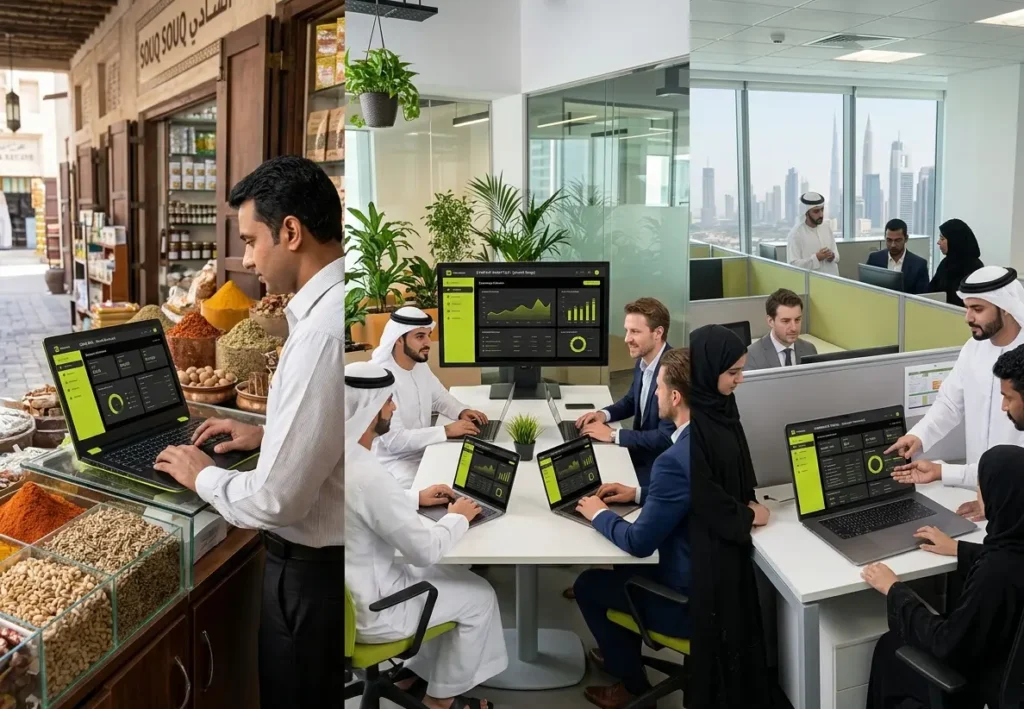
Detailed CMS Comparison: Which Platform Is Right for the UAE?
Now let us get into the specifics. Here is a detailed look at each major CMS from a UAE business perspective not just features, but real world usability, costs in AED, and local compatibility.
WordPress The Best CMS for UAE SEO & Flexibility
WordPress is open source, meaning the software itself is free. You only pay for hosting, your domain, premium themes, and any paid plugins you choose to add. For a professionally managed WordPress website in the UAE, here is a realistic cost breakdown:
- Hosting: AED 300-AED 1,500/year (local or international)
- Domain: AED 40-AED 100/year
- Premium theme: AED 200-AED 500 (one-time)
- Essential plugins (SEO, forms, security, cache): AED 500-AED 1,500/year
- Total estimated cost: AED 1,500 AED 6,000/year
Why WordPress wins for UAE SEO:
WordPress gives you complete control over every on-page SEO element title tags, meta descriptions, heading hierarchy, image alt text, canonical URLs, schema markup, and XML sitemaps. With Yoast SEO or Rank Math installed, even non-technical users can optimize pages effectively.
More importantly, WordPress supports Arabic SEO natively. Combined with the WPML or Polylang plugin, you can create a fully bilingual Arabic-English site that ranks in both English and Arabic Google search results. This is a massive competitive advantage for UAE businesses targeting both expat and Emirati audiences.
WordPress also integrates cleanly with UAE payment gateways like Telr and PayTabs through WooCommerce, making it a strong choice for businesses that want to add eCommerce without switching platforms.
Limitations:
WordPress requires some technical management updates, security patches, backups. If you do not have a developer or a managed WordPress plan, things can go wrong. This is exactly why working with a local UAE agency like Skills Heaven makes sense we handle the technical side so you can focus on your business.
Shopify Best for eCommerce, But Watch the App Costs
Shopify is purpose built for online retail. If your entire business model is selling products whether physical or digital Shopify makes the process of setting up, managing, and scaling an online store genuinely easy.
Shopify in the UAE what you need to know:
- Shopify supports Telr, PayTabs, PayFort (Amazon Payment Services), Tabby (BNPL), and Tamara all popular UAE payment methods
- Basic Shopify plan starts at USD 29/month (approximately AED 107/month) but the real cost rises fast
- Most UAE businesses on Shopify end up spending AED 3,600 AED 18,000+ per year once apps are factored in
- Arabic RTL support has improved significantly you can find Shopify themes designed for the UAE market
The app cost problem:
This is the most important thing we tell clients considering Shopify in the UAE: Shopify’s basic functionality is limited. To get features like loyalty programs, advanced product filters, subscriptions, B2B pricing, multi currency, review widgets, or abandoned cart emails you need apps. And those apps cost anywhere from AED 30 to AED 300 per month each.
It is not uncommon for a mid sized UAE Shopify store to be paying AED 1,500-AED 2,500 per month in app subscriptions alone, on top of their base plan. Budget carefully.
Limitations:
Shopify is primarily an eCommerce platform. If you also need a strong content marketing strategy, a blog that drives SEO, or a services website alongside your store, Shopify is not the ideal choice. WordPress with WooCommerce often gives you more flexibility at a lower long term cost.
Webflow Stunning Design, But Limited UAE Payment Options
Webflow has become a favourite among designers and creative agencies worldwide for good reason the design freedom it offers is exceptional. You can build pixel perfect, animation rich websites without writing a single line of CSS, and the resulting code is clean and fast.
Where Webflow works for UAE businesses:
- Creative agencies and design studios that want a showcase website
- Hospitality and luxury brands where visual storytelling is key
- SaaS companies or tech startups that need a high-converting landing page
Where Webflow falls short in the UAE:
- eCommerce is limited Webflow’s native eCommerce does not support UAE specific payment gateways like Telr or PayTabs out of the box
- Arabic RTL support is manageable but requires custom CSS it is not plug and play
- Costs (AED 2,500-AED 7,200/year for the CMS/business plan) are reasonable, but you need design expertise to make the most of it
- The CMS is great for content but not as flexible as WordPress for deep SEO customization
Our recommendation: Webflow is a strong choice for UAE businesses where brand perception and visual design are the primary concern. For lead generation or eCommerce, WordPress or Shopify will serve you better.
Wix Easiest to Start, Hardest to Scale
Wix has come a long way from the basic website builder it once was. The drag and drop editor is genuinely intuitive, the templates are visually polished, and the pricing is accessible making it perfect for micro businesses and solo entrepreneurs in the UAE who need to get online fast.
Wix strengths for UAE micro businesses:
- Plans from approximately AED 55-AED 200/month
- No coding knowledge required you can build a decent site in a day
- Wix App Market includes booking systems, forms, and basic e-Commerce
- Wix has improved its mobile responsiveness and site speed in recent years
Wix limitations for UAE businesses that want to grow:
- SEO capabilities are significantly weaker than WordPress limited schema markup, slower speeds, and less control over technical SEO elements
- Once you pick a Wix template, migrating to another is difficult. And migrating from Wix to another CMS entirely is painful.
- Arabic RTL support is functional but not seamless
- Not suitable for complex eCommerce, multi location businesses, or businesses requiring API integrations
The honest assessment: Wix is a great starting point, but it is often a short term solution. We have seen many UAE businesses come to Skills Heaven after outgrowing Wix frustrated, with sites they cannot migrate cleanly. If you are planning to grow, it may be wiser to start on WordPress from day one, even if it requires a slightly bigger initial investment.
Drupal Enterprise Power, High Complexity
Drupal is not a CMS for the average UAE SME. It is a powerhouse used by governments, large multinationals, and organizations that manage vast amounts of complex content with strict security requirements.
Why enterprises in the UAE choose Drupal:
- Unmatched security architecture ideal for financial institutions and government portals
- Highly granular user and permission management
- Scales to millions of pages and huge traffic volumes
- Full multilingual support including Arabic, Farsi, and other regional languages
The trade-offs:
- No beginner friendliness you need experienced Drupal developers, which are harder to find in the UAE than WordPress developers
- Development and maintenance costs are significantly higher budget AED 15,000+ for a solid Drupal build
- Overkill for any business under the enterprise tier
Drupal earns its place in this CMS comparison for UAE businesses, but only for the top 6% of enterprises who genuinely need what it offers.
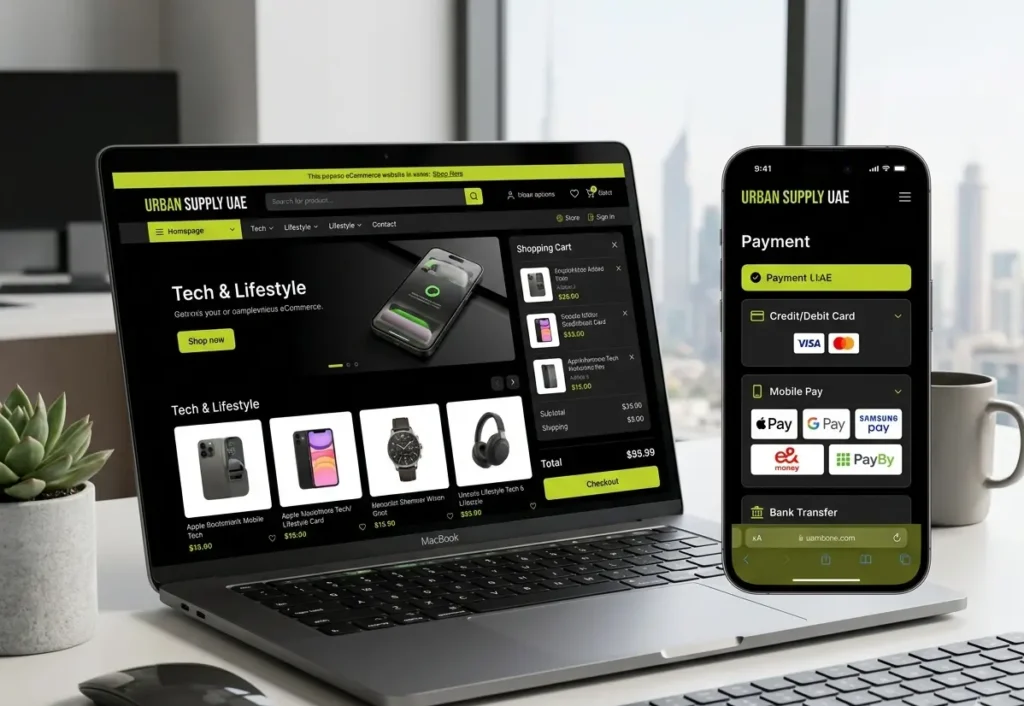
CMS Comparison Table UAE Focused (2026)
Here is a side by side summary of the most important factors for UAE businesses:
| CMS | Best For | Est. Cost (AED/yr) | SEO Score | UAE Compatibility |
|---|---|---|---|---|
| WordPress | Small & Medium Businesses, Bloggers, SEO-focused sites | 1,500 – 6,000 | ⭐⭐⭐⭐⭐ | Excellent — Arabic, VAT, local gateways |
| Shopify | eCommerce stores, product-based businesses | 3,600 – 18,000+ | ⭐⭐⭐⭐ | Good — supports Telr, PayTabs, Tabby |
| Webflow | Design-heavy sites, agencies, portfolios | 2,500 – 7,200 | ⭐⭐⭐⭐ | Moderate — limited UAE payment options |
| Wix | Micro businesses, personal sites, quick launches | 900 – 3,600 | ⭐⭐⭐ | Basic — limited Arabic RTL & scaling |
| Drupal | Enterprise, government, high-security platforms | Custom (15,000+) | ⭐⭐⭐⭐ | Strong — full custom integrations |
Note: Costs are estimates based on typical UAE market usage and may vary based on your specific requirements, hosting choices, and third party integrations.
Which CMS Should YOU Choose? A Decision Guide for UAE Businesses
Still not sure? Here is the simplest decision framework we use at Skills Heaven when we sit down with a new UAE client for the first time:
If you are a Micro Business (budget under AED 5,000/year, no developer):
- Go with Wix for a service or informational website
- Go with Shopify Starter if you have a few products to sell online
- Keep your future in mind — plan to migrate to WordPress when you are ready to grow
If you are a Small Business (focused on SEO, lead generation, and growth):
- WordPress is the clear winner full stop
- Invest in a well structured WordPress build with quality hosting from the start
- Add WooCommerce if you have eCommerce needs alongside your services
- Use WPML or Polylang for Arabic English bilingual SEO
If you are a Medium Business (scaling, integrations, high traffic):
- WordPress with enterprise-grade hosting and custom plugin development
- Consider Webflow if your brand depends heavily on visual storytelling
- For pure eCommerce at scale, Shopify Advanced may be worth the cost
- Ensure your platform integrates with your CRM and ERP systems
If you are an Enterprise (200+ employees, complex requirements):
- Drupal for content-heavy, high-security, complex permission-based platforms
- Consider a headless CMS approach (Contentful or Strapi) with a custom front-end for maximum flexibility
- Always work with a dedicated development team not freelancers
The bottom line: for the majority of UAE businesses roughly 80% of the market WordPress is the right answer. It is flexible enough to grow with you, powerful enough for serious SEO, and supported by a massive ecosystem of developers, plugins, and resources.
Common Mistakes UAE Businesses Make When Choosing a CMS
After working with hundreds of businesses across the UAE, here are the mistakes we see over and over again:
1. Ignoring Arabic SEO from Day One
This is the single biggest missed opportunity for UAE businesses. Millions of searches happen in Arabic on Google UAE every single day. If your website does not have Arabic content or worse, if the Arabic content is machine-translated and not properly SEO-optimised you are invisible to an enormous portion of your potential customers.
Many CMS platforms make Arabic SEO an afterthought. WordPress handles it well with the right plugins, but it needs to be built in from the beginning, not bolted on later.
2. Choosing a CMS Based on Price Alone
We understand budget constraints are real especially for startups and small businesses in the UAE. But the cheapest option today often becomes the most expensive option tomorrow.
A AED 1,500 Wix website might seem like a great deal until you realise you cannot rank on Google, cannot add custom integrations, and need to rebuild the entire thing in 18 months. A proper WordPress build might cost AED 6,000 upfront, but it will serve you for 5+ years with minimal rework.
3. Overspending on Shopify Apps
We touched on this earlier, but it bears repeating. Shopify’s base platform is genuinely good but it is designed to be extended through paid apps. UAE businesses with product catalogs often find themselves paying for 8-12 different apps to get the functionality they need, which quickly makes Shopify one of the more expensive platforms in the long run.
Before committing to Shopify, map out every feature you need and check whether it is included natively or requires a paid app. The true monthly cost might surprise you.
4. Not Planning for Scalability
The UAE business environment moves fast. A business that has 5 employees today might have 50 in two years. A local store might decide to go national or regional. Your CMS needs to grow with you.
Always ask: can this platform handle 10x my current traffic? Can it support new languages, new markets, new products? If the answer is no or ‘it depends on expensive custom development,’ reconsider your choice.
5. Choosing a CMS Without UAE-Specific Testing
Some platforms that work brilliantly in the US or UK have quirks in the UAE market whether it is payment gateway compatibility, Arabic character rendering, or compliance with local regulations like VAT display requirements. Always test your shortlisted CMS in a UAE context before committing.
Conclusion:
After going through this full CMS comparison for UAE businesses, the picture should be much clearer. There is no single ‘best CMS’ in absolute terms the right platform depends entirely on your business size, your goals, your budget, and your team’s capabilities.
But if we had to make one recommendation that covers the broadest range of UAE businesses, it would be this:
For most UAE businesses whether you are a growing startup in Dubai, an established SME in Sharjah, or an expanding service firm in Abu Dhabi WordPress is the smartest, most flexible, and most cost effective CMS you can build on in 2026.
It powers more websites than any other platform. It is the most SEO friendly out of the box. It supports Arabic content and UAE payment gateways. It grows with you. And most importantly, it is supported by a global ecosystem of developers, plugins, and resources including the team here at Skills Heaven.
Shopify is a strong second choice specifically for product based eCommerce businesses. Webflow has a place for design forward brands. Wix is a pragmatic starting point for micro businesses. And Drupal is the right call for enterprises with complex, high-security needs.
Whatever you choose, make sure it fits your current reality AND your 3-year vision. Do not let a short term budget decision become a long term business constraint.
Ready to build your website the right way?
Skills Heaven is a UAE-based digital agency specialising in professional WordPress development, eCommerce solutions, and full-service UAE website development CMS consulting. We help micro, small, and medium businesses get online with a platform that actually works and keeps working as you grow. Contact us today for a free CMS consultation tailored to your business.
Frequently Asked Questions
What is the best CMS for UAE SEO in 2026?
WordPress is the best CMS for UAE SEO in 2026. It gives you complete control over all on-page SEO elements, supports Arabic-English multilingual content, generates clean URL structures, and integrates with the leading SEO plugins (Yoast, Rank Math). When properly configured, WordPress sites consistently outrank competitors built on Wix or Shopify in Google UAE search results for competitive local keywords.
Is Shopify a good choice for UAE-based businesses?
Shopify is an excellent choice specifically for product-based eCommerce businesses in the UAE. It integrates with UAE payment gateways like Telr, PayTabs, Tabby, and Tamara, and has improved its Arabic support significantly.
The main concern is cost once you factor in app subscriptions, many UAE Shopify stores end up spending significantly more than they anticipated. If your business is primarily a service company or you need strong content marketing alongside eCommerce, WordPress with WooCommerce often delivers more value for money.
What is the cheapest CMS option for a UAE small business?
Wix is the most affordable CMS to get started with in the UAE, with plans starting from approximately AED 55/month. However, if we are talking about the cheapest option that also delivers real long-term value, a basic WordPress setup on affordable shared hosting can cost as little as AED 1,500 AED 2,500 per year in total and will serve you far better in terms of SEO and scalability than Wix over a 2–3 year horizon.
WordPress vs Shopify UAE Which should I choose?
The WordPress vs Shopify decision for UAE businesses comes down to your primary business model. If you are primarily selling physical products online and want a dedicated, polished eCommerce experience, Shopify is purpose built for that and delivers well.
If you offer services, need strong blog based SEO, want to combine a service website with light eCommerce, or want long term flexibility without heavy app costs, WordPress with WooCommerce is the better investment. Most UAE service businesses should start on WordPress. Most UAE product only businesses should evaluate both carefully before deciding.
Which CMS supports Arabic language and RTL content best in the UAE?
WordPress offers the strongest Arabic language and right to left (RTL) text support among mainstream CMS platforms in the UAE. With the WPML or Polylang plugin, you can build a fully bilingual Arabic English website, run separate SEO campaigns in both languages, and serve different audiences from the same platform. Drupal also has strong multilingual capabilities at the enterprise level. Shopify has improved its Arabic support but is still more limited for content-heavy Arabic sites. Wix supports Arabic but with less flexibility for advanced RTL customization.

M. Awais Khan is a Business Development and Digital Growth Strategist at SkillsHeaven, specializing in SEO, local search optimization, and performance-driven digital marketing. With experience supporting 100+ businesses, he develops and implements data-driven strategies that help companies increase online visibility, generate qualified leads, and drive sustainable revenue growth. His expertise spans Local SEO, Google Ads, social media marketing, and conversion-focused website optimization, ensuring every project is aligned with measurable business outcomes and long-term success.