The Language Gap Costing UAE Businesses’ Revenue
The UAE is home to more than 200 nationalities. On any given day, a business in Dubai is simultaneously serving Emiratis, South Asian expats, Western professionals, European tourists, and GCC online shoppers. Each of these groups speaks a different language and each behaves differently online.
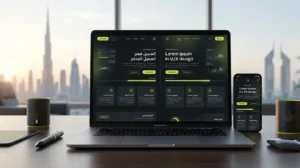
A single language website simply cannot serve all of them. That is the reality businesses in Dubai, Abu Dhabi, and Sharjah are confronting in 2025. Building a multilingual website in the UAE is no longer a luxury or a nice-to-have feature. It is a core business decision that directly affects traffic, conversions, and long term growth.
When done correctly, a multilingual website becomes one of the most powerful investments a UAE company can make. It expands your reach, builds trust with diverse communities, improves your search engine visibility across multiple languages, and positions your brand as genuinely inclusive.
Skills Heaven has partnered with businesses across the UAE to build Multilingual Websites in UAE that speak authentically to every segment of their audience. This guide covers everything you need to know before you start—from strategy and design to technical implementation and ongoing SEO.
Why the UAE Market Demands a Multilingual Website
The UAE has one of the most linguistically diverse populations on the planet. Emiratis represent approximately 11% of the total population. The remaining 89% are expatriates arriving from India, Pakistan, the Philippines, the United Kingdom, Egypt, China, and dozens of other countries.
This diversity creates a fundamental challenge for businesses. Your English website may reach your international clients. However, it will not convert your Arabic speaking customers, build genuine trust with South Asian shoppers browsing in Hindi or Urdu, or even be discovered by someone searching in their native language on Google.
The Numbers Behind Multilingual Success
The commercial case for multilingual websites in the UAE is compelling. Studies consistently show that 73% of consumers prefer buying from websites that communicate in their language. More than 60% of internet users are more likely to engage with content in their native tongue, even when the overall quality is only average.
In the UAE e-commerce market valued at over AED 33 billion ignoring language means ignoring revenue. Every language barrier on your website is a conversion barrier that your competitors may not have.
Government Expectations and Compliance
Beyond consumer behaviour, the UAE government has actively promoted the integration of Arabic into digital platforms. Across many sectors, a bilingual interface is now expected as a baseline standard rather than an optional enhancement. If your website is English only, you are already operating below what the market expects.
Translation vs. Localisation: Understanding the Critical Difference
Most businesses make the same mistake when building their first multilingual website. They treat it as a translation project. They take their existing English content, hand it to a translation service, paste the Arabic text onto the page, and consider the job done.That approach fails almost every time.
What Translation Get
Translation converts words. Localisation converts meaning. In the UAE market, meaning matters far more than words.
When a UAE based retailer localises their website for Arabic speakers, they are not simply translating product names. They are adapting imagery to reflect cultural preferences.
They are rewriting calls to action to align with how Arabic speaking customers make purchasing decisions. They are adjusting the tone, the register, and the visual hierarchy so that the experience feels natural and familiar to someone browsing in Arabic.
The Cultural Nuance That Determines Conversions
A phrase that feels confident and direct in English may come across as overly aggressive in Arabic. A colour combination that performs well for your English audience may carry entirely different cultural associations for your Emirati customers. These details are not cosmetic; they are the difference between a page that converts and one that bounces.
Skills Heaven approaches every multilingual project with localisation at its core, treating translation as a tool within a broader cultural and commercial strategy rather than as the final deliverable.
Arabic RTL Design: Far More Than Flipping the Layout
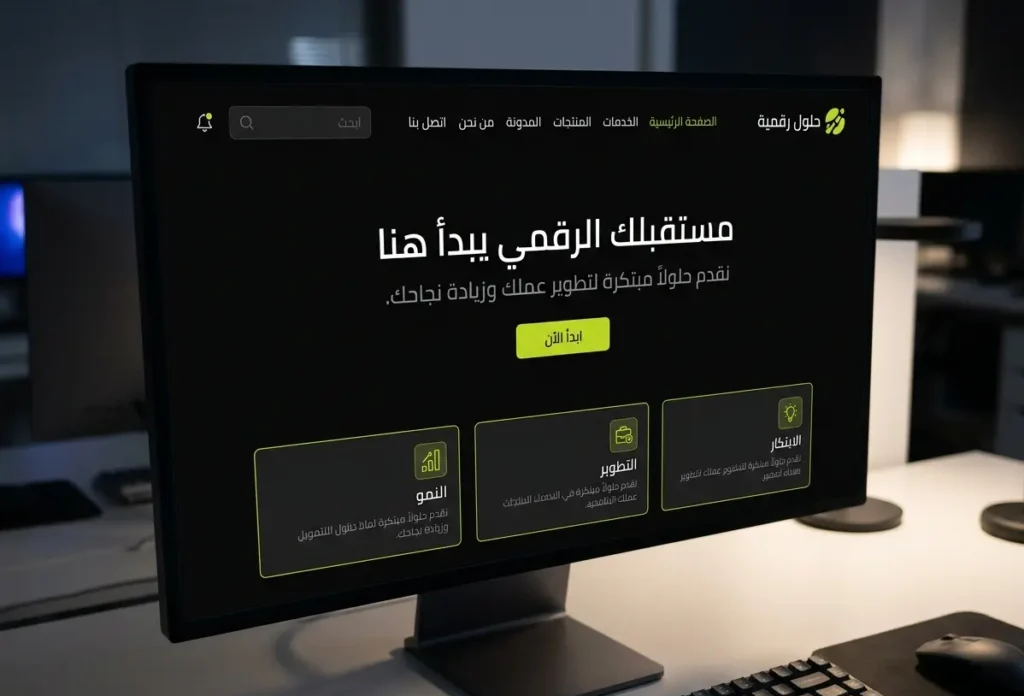
Arabic is a right to left (RTL) language. That single fact changes almost everything about how a website looks, behaves, and feels. Many developers assume that switching a website to Arabic is simply a matter of mirroring the layout. In reality, every element of the interface must be rethought for RTL users.
Navigation and Menus
On an Arabic website, the navigation menu should begin from the right. The logo typically moves to the top right position. Dropdown menus open to the left. Breadcrumbs flow from right to left. If you paste Arabic text into a left to right layout without restructuring the interface, the experience feels broken because it is. Arabic speaking users will leave immediately.
Forms and Input Fields
Input fields in Arabic versions must accept right to left text entry. Labels should align to the right. Error messages must appear on the contextually appropriate side of the field. These adjustments require code level changes not simply text replacement. Overlooking them creates a form that Arabic speakers cannot use intuitively.
Icons, Sliders, and Animations
Directional icons, arrows, progress bars, sliders, and carousels must all be mirrored for RTL interfaces. A forward arrow pointing right in English points left in Arabic. A carousel that slides left to right in English should slide right to left in Arabic. Missing these details signals to native Arabic speakers that the website was not designed for them undermining trust and credibility.
Typography, Spacing, and Font Selection
Arabic fonts require different line heights, letter spacing, and font sizes compared to Latin fonts. A 14px font that reads comfortably in English can appear cramped and difficult to read in Arabic.
Typography choices that look elegant in English can appear broken in Arabic when the wrong font is selected. Skills Heaven uses Arabic-native fonts and conducts thorough readability testing across every page before launch.
Language Switcher Placement
The language switcher must be immediately visible, ideally positioned within the top navigation bar. The majority of UAE users expect to find it in the top right corner of the screen. Burying it in a footer or side menu significantly increases bounce rates from Arabic speaking visitors who cannot locate it quickly. Accessibility of the language toggle is not a minor detail, it is a critical usability factor.
URL Structure: Getting the Technical Foundation Right
How you structure your URLs is one of the most consequential technical decisions in building a multilingual website. Get it right, and search engines know precisely which version of your site to show each user.
Get it wrong, and both your search rankings and user experience will suffer. There are three common URL structures for multilingual websites. Each has distinct advantages and trade offs that UAE businesses must understand before choosing a direction.
Subdirectories Recommended for UAE Businesses
The subdirectory approach yoursite.ae/en/ for English and yoursite.ae/ar/ for Arabic is widely regarded as the gold standard for businesses operating in bilingual markets such as the UAE. Skills Heaven recommends this structure for the majority of clients, for five clear reasons.
- Unified Domain Authority: All content lives under one domain, meaning backlinks and authority signals earned by your Arabic pages benefit your English pages and vice versa. Google treats the entire site as a single, authoritative entity.
- Simplified Technical Management: One hosting plan, one SSL certificate, and centralised updates that apply simultaneously to both language versions. When you fix a bug or update a plugin, both versions benefit immediately.
- Superior Hreflang Implementation: In a subdirectory structure, it is significantly easier for Google’s crawlers to identify and index the relationship between yoursite.ae/en/services and yoursite.ae/ar/services, preventing keyword cannibalisation.
- Enhanced User Experience: A one click language toggle keeps users on the same page they were viewing, simply switching the language. This creates a seamless, trustworthy experience that reinforces brand consistency.
- Cost Efficiency: No additional domain purchases, reduced maintenance hours, and a single URL for all marketing activity making this structure the most budget friendly choice for long term multilingual growth.
Subdomains Generally Avoided for SEO Projects
The subdomain structure ar.yoursite.ae is used by some large organisations but is generally inadvisable for growing UAE businesses investing in SEO. The core problem is that Google’s algorithm tends to treat subdomains as entities separate from the root domain.
- Split Authority: Arabic content on a subdomain does not automatically inherit the authority of your main domain. You are, in effect, running two separate SEO campaigns with separate link building requirements.
- Cannibalisation Risk: Because Google may treat subdomains as distinct sites, your own pages can compete against each other in search results rather than reinforcing each other.
- Increased Technical Complexity: Wildcard SSL certificates, separate analytics configurations, and cross-origin resource sharing (CORS) issues all add cost and maintenance overhead.
- Session and Cart Risks: For e-commerce businesses, switching between language subdomains can break user sessions, resulting in empty shopping carts and lost conversions.
Large corporations such as Wikipedia use subdomains because their domains already carry enormous authority and their technical teams are built to manage the complexity. For most UAE businesses, this is not a practical model.
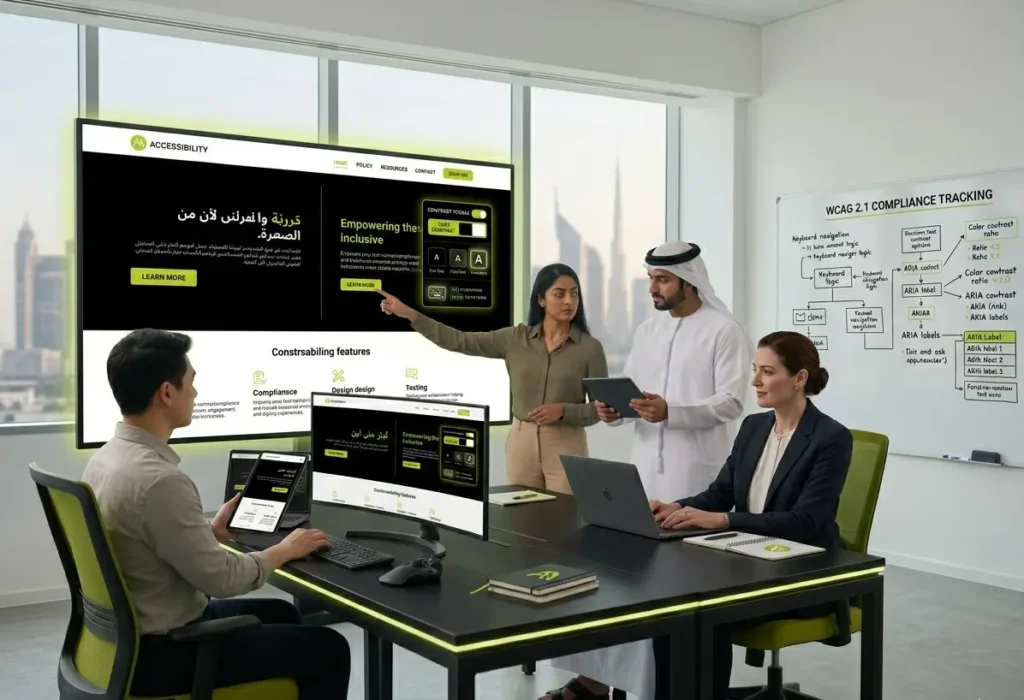
Separate Domains Only for Very Specific Situations
Using entirely separate domains yoursite.ae for Arabic and yoursite.com for English offers the highest degree of localisation but is resource-intensive and rarely justified for most UAE businesses.
- Zero SEO Synergy: Google treats separate domains as unrelated websites. A domain with five years of authority and thousands of backlinks provides no benefit to a new domain starting from scratch.
- Doubled Operational Costs: Separate hosting, duplicate content management, doubled SEO budgets, and fragmented analytics all substantially increase the cost of running a bilingual digital presence.
- Brand Fragmentation Risk: Users may not know which domain is the authoritative one, potentially eroding confidence in your brand particularly for smaller or mid sized businesses.
Skills Heaven recommends the separate domain approach only in specific circumstances: multinational corporations where products and pricing genuinely differ by country, industries with local data residency legal requirements, or organisations with dedicated SEO teams and budgets for each domain.
URL Structure Comparison at a Glance
| Feature | Subdirectory (/ar/) | Subdomain (ar.) |
| SEO Authority | Shared-Stronger | Split-Weaker |
| Maintenance | Easy-Single Site | Hard-Multiple Sites |
| Cost | Lower | Higher |
| Google’s Preference | Highly Recommended | Neutral / Complex |
| UX Consistency | Seamless | Session Risk |
The verdict is clear: for the vast majority of UAE businesses from growing SMEs to established enterprises in Dubai and Abu Dhabi the subdirectory model delivers the strongest combination of SEO performance, technical simplicity, and cost efficiency.
Hreflang Tags: Telling Google Which Version to Show
Hreflang tags are code attributes that instruct search engines which version of a page to serve to which user, based on their language and geographic location. Without them, Google may show your English page to an Arabic speaker in Dubai, or serve your Arabic page to an English speaker in London, reducing relevance and wasting ranking potential.
Correct Implementation for UAE Businesses
For a UAE business, correct hreflang implementation means adding hreflang=”ar-ae” to your Arabic pages and hreflang=”en-ae” to your English pages. Every single page must include both a self referencing tag and a tag pointing to its alternate language counterpart. This bidirectional setup is essential; a one sided implementation creates errors that search engines may ignore entirely.
The Canonical Tag Mistake That Destroys Arabic Rankings
One of the most common and costly errors in multilingual website builds is the misuse of canonical tags in place of hreflang. Canonical tags tell search engines that one page is the original and all others are duplicates. If you inadvertently point your Arabic page to your English page with a canonical tag, Google will stop indexing your Arabic content altogether.
The result is that your entire Arabic SEO investment becomes invisible in search results. Skills Heaven audits both hreflang implementation and canonical tag configuration before every multilingual website launch to prevent this from occurring.
Multilingual SEO for UAE Businesses: A Practical Approach
Building a multilingual website is step one. Getting it to rank competitively in both Arabic and English search results is step two and it requires a distinct, independently developed SEO strategy for each language. Translating your English SEO strategy into Arabic is not an approach that works.
Arabic Keyword Research Is Its Own Discipline
Arabic speakers search differently. The phrasing, the intent, and the search volume associated with Arabic keywords do not map directly from English equivalents. A business offering web development services in Dubai must research how Arabic speakers actually search for those services, not simply translate the English keywords and assume the volume and intent transfer.
Skills Heaven conducts fully independent keyword research for every language version before developing a content strategy. This ensures that both the Arabic and English versions of your site are optimised for the way real users in each language actually search.
Metadata and On-Page SEO for Every Language
Every language version of your website requires its own meta title, meta description, H1, H2 headings, and image alt text. In Arabic, these elements must be written in natural, idiomatic Arabic not machine translated content from Google Translate.
Search engines assess the quality of content in each language independently. Weak, unnatural Arabic metadata produces weak Arabic search rankings.
FAQ Schema for Answer Engine Optimisation
Adding FAQ schema markup in both English and Arabic substantially increases your chances of appearing in People Also Ask boxes and AI-generated answer summaries.
This is especially valuable in the UAE market, where voice search in Arabic is growing rapidly. Each FAQ entry should directly and naturally answer a specific user question in that language not be adapted from the English version.
Hub and Spoke Content Architecture
The most effective multilingual content strategy for UAE businesses uses a hub and spoke model: one authoritative pillar page covering the broad topic, supported by focused subpages that explore specific aspects in depth. This architecture works effectively in both English and Arabic, building topical authority that search engines recognise and reward across both language indices.
CMS Options for Managing a Multilingual Website in the UAE
Your choice of content management system (CMS) determines how practical and sustainable it will be to manage your multilingual website as it grows. Some platforms handle multiple languages natively. Others require plugins or custom development. Choosing the right platform from the outset avoids costly rebuilds later.
WordPress with WPML or Polylang
WordPress remains the most widely used CMS across the UAE market. The WPML plugin enables comprehensive management of multiple language versions for every page, post, and product from a single dashboard, with full support for RTL layouts and Arabic fonts. Polylang offers a lighter weight alternative suited to simpler bilingual setups. Skills Heaven has delivered dozens of bilingual WordPress websites for UAE clients using both approaches.
Webflow Localisation
Webflow’s native localisation feature makes it a strong option for design intensive multilingual websites. It enables full RTL layout control for each language version without requiring custom CSS for every individual element, a significant technical advantage. This is particularly well suited to UAE businesses that want a visually distinctive, design forward website with robust, native Arabic language support.
Custom CMS with a Translation Management System
For larger organisations managing hundreds of product pages or running multilingual campaigns at scale, a custom CMS integrated with a Translation Management System (TMS) is frequently the most effective solution.
TMS platforms track content changes, maintain consistency across all language versions, and allow translators to work directly within the system without interacting with the design layer. Skills Heaven develops and integrates these systems for enterprise clients in Dubai and Abu Dhabi.
Languages Beyond Arabic and English in the UAE
Arabic and English are the essential foundation of any UAE multilingual website strategy. However, the UAE population includes millions of speakers of Hindi, Urdu, Tagalog, Chinese, and Russian. For businesses targeting specific communities, adding a third or fourth language can open entirely new customer segments that competitors are overlooking.
The South Asian Opportunity
The South Asian community is one of the UAE’s largest demographic groups, with millions of residents from India, Pakistan, Bangladesh, and Sri Lanka. A business in retail, food delivery, financial services, or healthcare that adds Hindi or Urdu language support gains direct access to a customer segment that is largely underserved in the digital space. The barrier to entry is lower than most businesses assume, and the competitive advantage can be significant.
Tagalog, Chinese, and Russian Niche Markets with High Loyalty
The Filipino community is one of the UAE’s most digitally active expat groups. A Tagalog language section, even limited to key service pages, builds meaningful trust and loyalty. Similarly, the growing Chinese and Russian expat communities particularly concentrated in Dubai’s tourism, real estate, and luxury retail sectors respond strongly to native-language digital experiences.
When to Add a Third Language
The decision to expand beyond Arabic and English should be driven by data: which communities are already visiting your site, where your sales enquiries are coming from, and where your competitors have gaps in their language coverage. Skills Heaven analyses audience data and market positioning to help UAE businesses identify their highest-value language expansion opportunities.
READY TO REACH EVERY CUSTOMER IN THE UAE?
Build Your Multilingual Website with Skills Heaven. Whether you are launching your first bilingual Arabic English website, migrating to a proper RTL-compatible platform, or expanding into additional languages for the UAE market, Skills Heaven provides the expertise to get it right from the start.From full-stack multilingual development and Arabic RTL design to hreflang implementation, multilingual SEO, and CMS integration Skills Heaven handles every layer of your multilingual digital presence.Contact Skills Heaven today to discuss your project and receive a tailored consultation for your business
Conclusion:
Every Language You Add Is a Market You Open
The UAE’s extraordinary linguistic diversity is not a complication for businesses it is an opportunity. Every language your website speaks is a new audience it can reach, a new community whose trust it can earn, and a new market segment it can convert.
The businesses that will dominate their sectors in the UAE over the next five years are the ones building multilingual digital presences today with proper RTL design, technically sound URL structures, correct hreflang implementation, independent SEO strategies for each language, and culturally informed localisation that goes far beyond word for word translation.
The businesses that delay are not simply missing out on traffic. They are handing that traffic, and those customers, to competitors who have already made the investment.
Skills Heaven brings together the technical expertise, multilingual SEO knowledge, and deep understanding of the UAE market to deliver multilingual websites that perform not just in English, but in every language your audience speaks. If your website is not speaking to your whole audience yet, now is the time to change that.
Contact Skills Heaven today to begin your multilingual website project.
Frequently Asked Questions
Is a multilingual website legally required for UAE businesses?
A multilingual website is not legally required for private UAE businesses. However, it is mandatory or expected for government, healthcare, and finance sectors. For others, offering Arabic is more of a commercial necessity to reach the local market effectively.
What is the difference between translation and localisation for UAE websites?
Translation only changes the text from one language to another. Localization adapts the entire user experience including imagery, cultural tone, and right to left (RTL) layout to feel natural to UAE users. While translation is readable, localization is what drives conversions.
Which URL structure is best for a multilingual website in Dubai or Abu Dhabi?
The subdirectory structure (e.g., yoursite.ae/ar/) is best for most UAE businesses. It consolidates SEO authority on one domain, simplifies technical management, and lowers costs. Subdomains or separate domains are typically reserved for large multinationals with massive budgets and dedicated technical teams.
How long does it take to build a bilingual Arabic English website in the UAE?
A straightforward bilingual website in the UAE typically takes 4 to 8 weeks to launch. Larger projects, such as enterprise portals or e-commerce sites with extensive content, usually require 3 to 6 months depending on the complexity of the localization and technical requirements.
Does an Arabic website need separate SEO from an English website?
Yes. Arabic SEO requires its own keyword research, metadata, and content strategy. Since search intent and phrasing differ between Arabic and English speakers, simple translation isn’t enough. To get results, you must treat each language version as a separate, data driven campaign.
How does Skills Heaven approach multilingual website projects for UAE businesses?
Skills Heaven uses a strategic, data driven approach:
Audience Analysis:
Defining language priorities and localization needs.
Independent Strategy:
Developing separate content and SEO plans for each language.
Technical Build:
Using subdirectory URL structures and proper hreflang tags.
RTL Design:
Creating fully Right to Left compliant Arabic interfaces with native fonts.
Growth:
Providing ongoing multilingual SEO to ensure high visibility and conversions.

M. Awais Khan is a Business Development and Digital Growth Strategist at SkillsHeaven, specializing in SEO, local search optimization, and performance-driven digital marketing. With experience supporting 100+ businesses, he develops and implements data-driven strategies that help companies increase online visibility, generate qualified leads, and drive sustainable revenue growth. His expertise spans Local SEO, Google Ads, social media marketing, and conversion-focused website optimization, ensuring every project is aligned with measurable business outcomes and long-term success.