
SEO for Small Businesses in UAE is essential for competing in one of the world’s most digitally advanced economies. With an internet penetration rate of 99% and 21.9 million mobile connections — equivalent to 195% of the total population — the UAE presents an extraordinary digital marketplace where small businesses can achieve strong visibility, attract customers, and grow rapidly online.
For small businesses, this level of connectivity is not just a convenience; it is a survival imperative. Despite this digital abundance, many small and medium enterprises (SMEs) in the UAE still struggle to compete online.
They face the dual challenge of an increasingly competitive digital landscape and the presence of well-funded multinational brands occupying prime digital real estate. However, the good news is that the digital environment in the UAE is also highly leveled in many ways — if you know the right strategies to deploy.
This guide from Skills Heaven is designed to walk small business owners and entrepreneurs through the most effective, proven strategies for competing online in the UAE. Every recommendation here is grounded in current market data, competitor research, and real-world best practices.
Understanding the UAE Digital Landscape
The Scale of Digital Opportunity
The UAE digital economy is booming. According to DataReportal’s Digital 2025 report, there are 11.1 million internet users in the UAE, with social media user identities reaching 11.3 million — equating to 100% of the population. Mobile internet speeds average 441.89 Mbps, placing the UAE among the top nations globally for connectivity.
The e-commerce sector alone was valued at approximately USD 27.1 billion in 2022 and is projected to reach USD 51.9 billion by 2026, representing a compound annual growth rate (CAGR) of 14.2%. These figures confirm that the online marketplace in the UAE is not only large but growing at a remarkable pace.
For small businesses, this means that the customers are online, actively searching, comparing products and services, and making purchase decisions digitally. Being absent from the online space is equivalent to not existing for a significant portion of your potential customer base.
The SME Landscape in the UAE
As of mid-2022, there were 557,000 SMEs operating in the UAE, contributing as much as 63.5% to the non-oil GDP. The government forecasts that this number will reach 1 million SMEs by 2030. This projection means that competition among small businesses will intensify significantly over the next few years — making online differentiation not optional but critical.
The UAE has also ranked first globally in the Global Entrepreneurship Monitor (GEM) 2024-2025 Report for the fourth consecutive year, reflecting the government’s commitment to fostering a thriving business environment. The challenge for individual small businesses is to leverage this ecosystem to build a sustainable online presence.
Building a Strong Digital Foundation
Website Development and Mobile-First Design
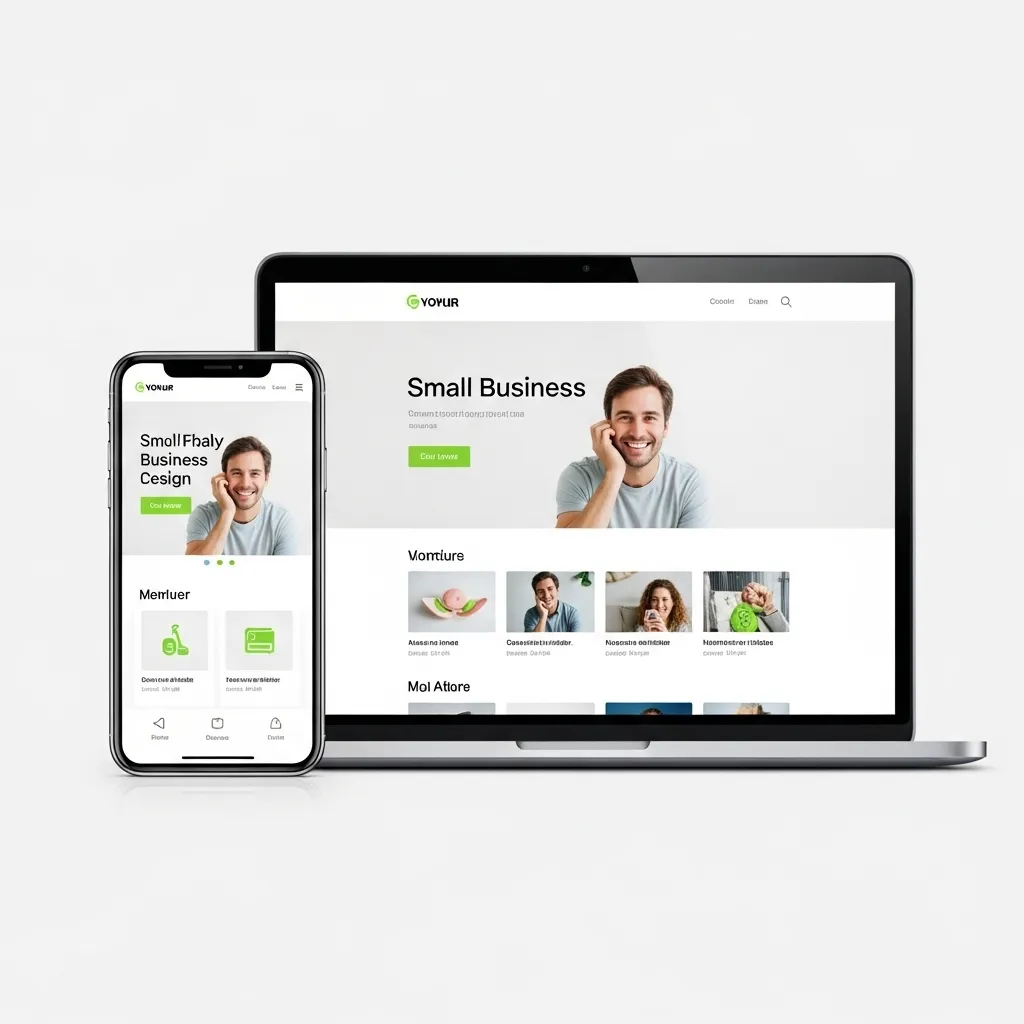
Effective web development plays a crucial role in building a strong digital foundation for UAE small businesses.In the UAE, approximately 73% of internet users access the internet through mobile devices, according to Statista 2024 data. Mobile phones account for 75.30% of total web traffic.
This means that a mobile-first website is not a feature — it is a baseline requirement for any business competing online.
A mobile-first website must satisfy several key technical and user experience criteria. Page loading speed should be under three seconds; research consistently shows that 70% of users say a site’s page speed impacts their willingness to buy from an online retailer.
The website must be visually clean, with intuitive navigation and clear calls-to-action that guide visitors toward conversions. For businesses in the UAE, bilingual website content — Arabic and English — is also a strategic necessity. The UAE’s population is a mix of Emirati nationals and expatriates from over 200 nationalities.
Optimizing content in both languages significantly expands your addressable audience and strengthens your relevance in local search results.
Google Business Profile Optimization
Google dominates the UAE search engine market with over 92% market share. This makes Google Business Profile (GBP) optimization one of the highest-ROI actions a small business can take.
A fully optimized GBP increases your chances of appearing in the Local 3-Pack — the top three results displayed on Google Maps — which captures a disproportionately large share of local search clicks.
Key elements of an effective GBP include accurate business name, address, and phone number (NAP); up-to-date operating hours; high-quality photos of the business; a well-written business description with relevant keywords; and regular posting of updates, offers, and events. Actively collecting and responding to customer reviews also plays a significant role in local rankings and consumer trust.
Search Engine Optimization (SEO) for UAE Small Businesses
Approximately 68% of all online experiences begin with a search engine, and organic search results account for about 94% of all clicks on search engine results pages (SERPs). For small businesses with limited advertising budgets, SEO represents the most cost-effective channel for sustainable, long-term traffic generation.
Local SEO: The Small Business Advantage
Local SEO is specifically designed to improve visibility in location-based search results. According to industry data, 46% of all Google searches have local intent, and 97% of consumers conduct online searches to find a local business. For small businesses in the UAE, this presents a tremendous opportunity to compete against larger brands by dominating local and hyperlocal search results.
Effective local SEO involves targeting city-specific and emirate-specific keywords such as “accountant in Sharjah” or “organic grocery store Abu Dhabi.” It also means ensuring NAP consistency across all online directories, UAE-specific platforms like Connect.ae, and international directories such as Yelp.
Skills Heaven recommends conducting a comprehensive local citation audit as one of the first steps in any SEO strategy.
Long-Tail Keyword Strategy
Small businesses cannot realistically compete for broad, highly competitive keywords like “restaurant in Dubai” or “real estate UAE.” Instead, a long-tail keyword strategy allows businesses to capture highly specific, intent-driven search queries with far less competition.
For example, targeting “best vegan restaurant near Jumeirah” or “affordable ladies salon in Deira” will attract fewer total searches but convert at a substantially higher rate.
Free tools like Google Keyword Planner, Ubersuggest, and the “People Also Ask” section on Google are valuable resources for identifying long-tail keyword opportunities without significant software investment. The goal is to think like your customer and identify the exact phrases they are typing into search engines when they need your specific product or service.
On-Page SEO and Technical Optimization
On-page SEO ensures that search engines can correctly read, understand, and index your website content. Key elements include optimized title tags and meta descriptions for each page, a logical URL structure, proper use of heading hierarchy (H1, H2, H3), internal linking between related pages, and image alt text that includes relevant keywords.
Technical SEO encompasses the structural and backend aspects of your website that affect search engine crawling and indexing.
This includes XML sitemap submission, clean robots.txt configuration, mobile usability, Core Web Vitals (page speed, interactivity, and visual stability), and HTTPS security. Google places significant weight on these technical factors as part of its ranking algorithm.
Social Media Marketing in the UAE Context
The UAE has 11.3 million social media user identities, representing 100% of the population as of early 2025. Facebook reaches 86.5% of the total population with 9.70 million users. Instagram has 7.6 million users, and YouTube reaches 73.6% of the population. TikTok has emerged as a significant platform with 11.3 million users aged 18 and above.
For small businesses, social media marketing is an exceptionally cost-effective way to build brand awareness, engage with customers, and drive traffic. The key is platform selection based on your target audience. A B2B service provider should prioritize LinkedIn, while a food business or fashion brand will find greater traction on Instagram and TikTok.
Content Strategy and Social Commerce
Content is the engine of social media growth. A well-defined content calendar ensures consistency, which is one of the most important factors in social media algorithm performance.
Small businesses in the UAE should plan content around local events, Islamic calendar dates (Ramadan, Eid), national holidays, and UAE-specific cultural moments to maximize relevance and engagement.
Social commerce — the direct integration of shopping features into social media platforms — is also growing rapidly. Instagram Shopping, Facebook Shops, and TikTok Shop are enabling small businesses to sell directly through social media without requiring customers to visit a separate website. This frictionless buying experience is particularly effective in the UAE’s mobile-first consumer environment.
Content Marketing and Thought Leadership
Content marketing is a foundational strategy for small businesses seeking to establish authority and attract organic traffic over time. Unlike paid advertising, content marketing assets — blog posts, guides, videos, infographics — continue to generate traffic and leads for months or even years after their initial publication.
According to Conductor’s 2025 State of SEO survey, 91% of respondents reported that SEO positively impacted their website performance and marketing goals in 2024. Organic search generated an average of 33% of overall website traffic across seven key industries. For small businesses with limited advertising budgets, investing in content that ranks organically is a high-ROI strategy.
Skills Heaven recommends that small businesses in the UAE focus on creating content that directly addresses the questions and concerns of their target customers.
This includes educational blog posts that explain how to use your products or services, comparison guides that help customers make informed decisions, local guides relevant to your business category, and FAQ pages targeting question-based search queries.
Pay-Per-Click Advertising as a Complement to Organic Growth
Google Ads is one of the most effective paid marketing channels for UAE small businesses to quickly drive targeted traffic and generate leads.
While organic strategies form the long-term foundation of online competitiveness, pay-per-click (PPC) advertising provides immediate visibility. The UAE digital advertising market reached USD 3.38 billion in 2024 and is projected to reach USD 5.74 billion by 2033, according to IMARC Group.
This growth reflects the significant ROI businesses are achieving through digital advertising. For small businesses, PPC campaigns should be tightly targeted to minimize wasted spend. Google Search Ads targeting specific keywords with clear commercial intent — such as “buy office furniture Dubai” or “emergency plumber Sharjah” — deliver highly qualified traffic.
Facebook and Instagram ads allow for demographic, interest, and behavioral targeting that can be refined to reach exactly the right audience segments.
The golden rule for small business PPC is to start small, test rigorously, and scale what works. A monthly budget of AED 1,500 to AED 5,000 focused on one or two high-intent channels can generate measurable results. Companies make an average of USD 5 for every dollar spent on digital marketing when campaigns are properly optimized.
Email Marketing: The Underutilized Channel
Email marketing consistently delivers one of the highest returns on investment of any digital marketing channel, with an ROI of between 3,600% and 4,200% according to multiple industry studies. Despite this, many small businesses in the UAE underutilize email as a marketing tool, relying instead on social media and paid advertising.
A structured email marketing program includes a welcome sequence for new subscribers, a regular newsletter with valuable content and offers, promotional campaigns tied to UAE seasonal events and sales periods, and re-engagement sequences for inactive subscribers.
Building an email list through website opt-in forms, social media promotions, and in-store sign-ups is an ongoing process that compounds in value over time.
Digital Payment Systems and E-Commerce Infrastructure
According to a Visa Global Back to Business Study, 93% of UAE small businesses plan to prioritize cross-border sales, driven by consumer demand — 83% of UAE consumers are already comfortable buying across borders. For small businesses, this means that investing in robust digital payment infrastructure is both a competitive necessity and a growth opportunity.
Key considerations for digital payment optimization include accepting multiple payment methods (credit/debit cards, Apple Pay, Google Pay, buy-now-pay-later options), offering transparent pricing in AED with clear VAT breakdowns, providing simple and secure checkout processes optimized for mobile devices, and displaying trust signals such as SSL certificates and recognized payment badges.
Furthermore, 92% of UAE SMEs now accept digital payments, and 97% recognize data analytics as critical to business operations. Small businesses that have not yet implemented comprehensive digital payment solutions are falling behind the market standard.
Leveraging Influencer Marketing and User-Generated Content
Influencer marketing has become a mainstream strategy in the UAE, with the country’s social media penetration and high consumer spending power making it one of the most fertile markets for creator partnerships.
Small businesses do not need to partner with mega-influencers; in fact, micro-influencers (10,000 to 100,000 followers) typically deliver higher engagement rates and more targeted audience alignment.
Skills Heaven advises small businesses to prioritize nano and micro-influencers who are genuinely relevant to their niche and whose audience demographics match the target customer profile. Authentic collaborations that include real product experiences, location tags, and UAE-specific cultural context tend to outperform generic sponsored content in terms of trust and conversion.
User-generated content (UGC) — reviews, photos, and testimonials shared by real customers — is another powerful and low-cost trust-building tool. Encouraging customers to share their experiences on Google, Instagram, and TripAdvisor builds social proof that influences the purchasing decisions of new customers.
AI, Automation, and Technology Adoption
The UAE is a global leader in AI adoption. The UAE National AI Strategy 2031 targets increasing the digital economy’s contribution to non-oil GDP from 11.7% to over 20% in the next decade. For small businesses, AI tools are increasingly accessible and affordable, offering powerful capabilities that were previously available only to large enterprises.
According to a Visa study, 91% of UAE SMBs are considering using automation and AI services in the next year to boost their competitiveness. AI tools applicable to small businesses include AI-powered chatbots for 24/7 customer service, AI content generation tools for blog posts and social media.
AI-driven analytics platforms for audience insights, automated email marketing workflows, and AI ad optimization tools that continuously improve campaign performance.
Businesses that adopt these technologies gain a meaningful competitive advantage, particularly in areas such as personalization, response time, and data-driven decision-making. The barrier to entry for AI tools has dropped significantly, with many high-quality solutions available at price points accessible to small businesses.
Omnichannel Strategy: Integrating Online and Offline
An omnichannel strategy integrates all customer touchpoints — online and offline — into a seamless brand experience. For small businesses in the UAE, this means that the customer journey from discovery to purchase to post-sale support should be consistent and connected across websites, social media, email, in-store, and mobile apps.
Practically, this involves ensuring that your brand voice, visual identity, pricing, and messaging are consistent across all channels. It also means that data collected from one channel (for example, email sign-ups from in-store customers) is used to enhance the experience on other channels (for example, personalized email campaigns for those customers).
Sustainability and Corporate Responsibility as Digital Differentiators
Consumer values are shifting in the UAE. A study by Visa found that 92% of UAE shoppers say that a business’s sustainability practices have at least some impact on their purchase decisions, and nearly all (96%) are willing to pay more for sustainable products or services.
For small businesses, communicating sustainability credentials online is an increasingly powerful differentiator. This does not require large-scale environmental programs. Practical steps include transparent communication about sourcing and production practices, reducing packaging waste, supporting local suppliers, and making charitable contributions to UAE or global causes.
These values-based differentiators should be prominently communicated on your website, social media profiles, and marketing materials.
Conclusion: The Competitive Online Playbook for UAE Small Businesses
Competing online as a small business in the UAE requires a structured, multi-channel approach that is grounded in data and optimized for the specific characteristics of the UAE digital market.
The foundations are non-negotiable: a mobile-first website, a fully optimized Google Business Profile, a consistent local SEO strategy, and an active social media presence.
Beyond the foundations, competitive advantage comes from strategic content marketing, targeted PPC campaigns, email marketing, influencer partnerships, and AI-powered automation. Small businesses that consistently execute across these channels will build compounding digital assets — rankings, email lists, social followings, and customer reviews — that become increasingly difficult for competitors to displace.
Skills Heaven consistently emphasizes that the digital playing field in the UAE is not inherently favored toward large brands. What it rewards is consistency, strategic focus, cultural awareness, and a genuine commitment to delivering value to customers. By following the strategies outlined in this guide, small businesses in the UAE can not only compete online but can achieve market leadership in their respective niches.
The digital economy of the UAE is projected to grow substantially over the next decade. The small businesses that invest in building their online presence today are the enterprises that will capture the lion’s share of that growth tomorrow.
This educational guide is produced by Skills Heaven. For more resources on digital marketing and business growth in the UAE, visit the Skills Heaven knowledge portal.
Frequently Asked Questions
How can small businesses in the UAE compete with large brands online?
Small businesses can compete by focusing on niche markets, leveraging local SEO, targeting long-tail keywords, and building strong relationships with customers through personalized marketing. Unlike large brands, SMEs can move faster, adapt quickly, and create more authentic, community-driven experiences.
What is the most important digital marketing strategy for UAE small businesses?
There isn’t a single “most important” strategy, but a combination works best. However, local SEO and a mobile-optimized website are foundational. Without visibility on search engines, other marketing efforts become significantly less effective.
Why is local SEO critical for small businesses in the UAE?
Local SEO helps businesses appear in location-based searches like “near me” or city-specific queries. Since a large percentage of users search for nearby services, optimizing for local search increases visibility, foot traffic, and conversions.
How much should a small business in the UAE spend on digital marketing?
A typical starting budget ranges from AED 1,500 to AED 5,000 per month for small businesses. The key is to start small, test different channels (SEO, PPC, social media), and scale the strategies that generate the best return on investment.
Do small businesses in the UAE need a bilingual website?
Yes, having both Arabic and English content significantly increases reach. The UAE has a diverse population, and bilingual websites improve user experience and search visibility across different audience segments.
Is SEO better than paid advertising for small businesses?
SEO is better for long-term growth and sustainability, while paid advertising delivers immediate results. The most effective approach is to use PPC for quick wins while building SEO for long-term traffic and cost efficiency.

M. Awais Khan is a Business Development and Digital Growth Strategist at SkillsHeaven, specializing in SEO, local search optimization, and performance-driven digital marketing. With experience supporting 100+ businesses, he develops and implements data-driven strategies that help companies increase online visibility, generate qualified leads, and drive sustainable revenue growth. His expertise spans Local SEO, Google Ads, social media marketing, and conversion-focused website optimization, ensuring every project is aligned with measurable business outcomes and long-term success.