4 Types of Keywords in SEO? Full List With Examples
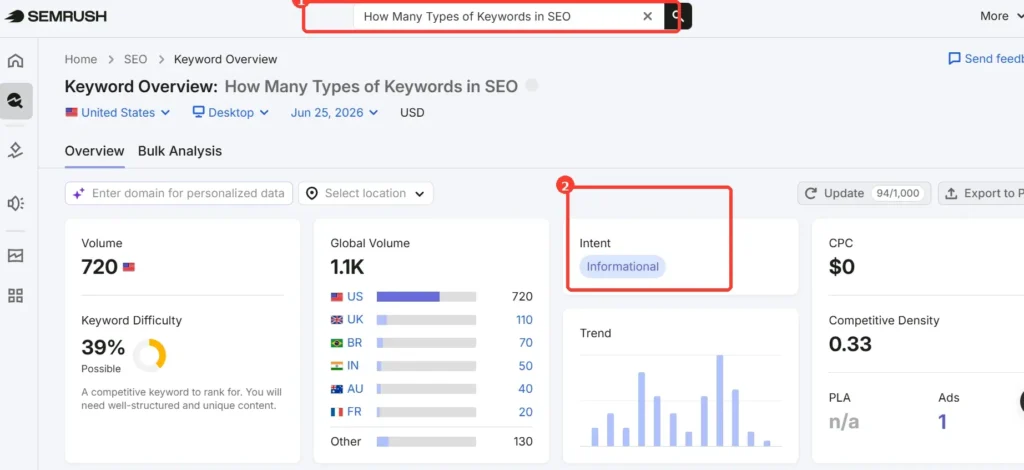
There is no single fixed number. The honest answer to how many types of keywords in SEO exist depends on which categorization you look at, since experts sort keywords by intent, length, difficulty, volume, seasonality, and several other angles.
SEO keywords are grouped in several ways. By intent there are four types: informational, navigational, commercial, and transactional. By length there are short tail, medium tail, and long tail. Beyond that, keywords also get sorted by difficulty, search volume, match type, seasonality, and brand relation, though these describe a keyword’s behavior rather than adding a brand new core category.
How Many Types of Keywords in SEO? The Core Breakdown
When people ask how many types of keywords in SEO exist, they are usually mixing up two different questions. One is about why someone searched, which is intent. The other is about how specific the phrase is, which is length. Strong SEO planning treats both as separate filters that work together, not as competing systems.
Types of Keywords by Search Intent
Search intent explains the reason behind a search. Google studies which results people click and stay on and then uses that pattern to decide what kind of page deserves to rank for a given query.
Informational Keywords
These keywords show that a person wants to learn something, not buy anything yet. Phrases like “what is seo” or “How does link building work?” fall here. Guides, explainers, and how to posts are built to answer this kind of search. Ranking well usually means giving a direct answer early, adding genuine depth, and answering the follow-up questions a curious reader would ask next.
Navigational Keywords
A navigational search happens when someone already knows where they want to go. They might type a brand name, a login page, or a specific tool name, such as “YouTube login.” Optimizing for this is less about teaching something new and more about making sure your brand name sits clearly in your title tag and homepage heading, with a clean site menu so the search resolves fast.
Commercial Keywords
Commercial searches sit in the research stage before a purchase. Someone searching “best SEO tools” is comparing options, not buying yet. This stage is sometimes called commercial investigation, since the searcher wants to buy something eventually but has not picked what. Comparison posts, reviews, and “best of” lists usually win here, since the reader still wants guidance before deciding.
Transactional Keywords
Transactional searches show clear buying intent. Words like “buy,” “price,” “near me,” or “discount” often appear in these queries. A person typing “buy SEO course” is close to checkout. Commercial and transactional searches together are sometimes grouped as high intent keywords, since both sit close to a purchase decision. Product pages and service pages should target these, with the purchase or contact option placed near the top.
A small but useful extra category here is local keywords, queries that include a city or “near me” and combine with commercial or transactional intent, like “SEO agency in Dubai.” ” These are not a separate intent on their own, just a location layer added on top of one.
Types of Keywords by Length
Length changes how competitive a keyword is and how specific the searcher’s need is.
Short Tail Keywords
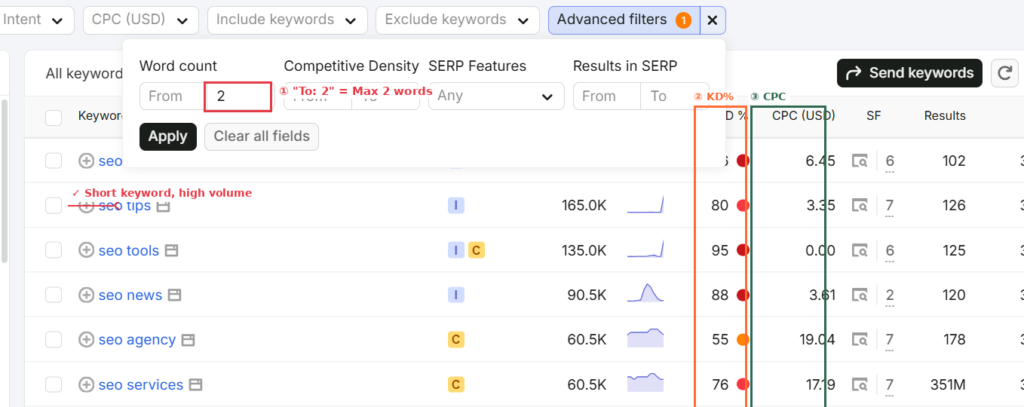
A short tail keyword usually has one or two words, such as “shoes” or “marketing.” Some tools also call the single core word inside it a root keyword, like “keyword” inside “keyword research tool. Short-tail terms get high search volume but stay broad and hard to rank for since they attract many different intents at once. Only well-established sites usually compete here.
Medium Tail Keywords
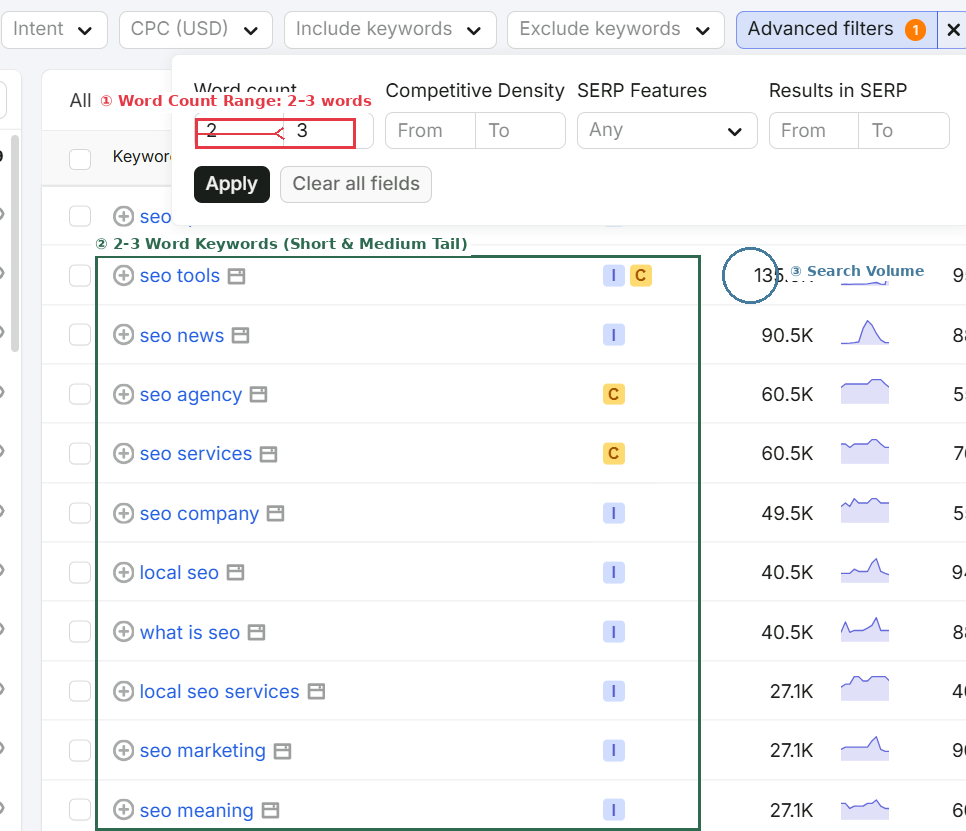
Medium tail keywords sit between short and long phrases, often two or three words, like “running shoes for men.” They carry decent volume with somewhat less competition, which makes them a practical target for sites still building authority.
Long Tail Keywords
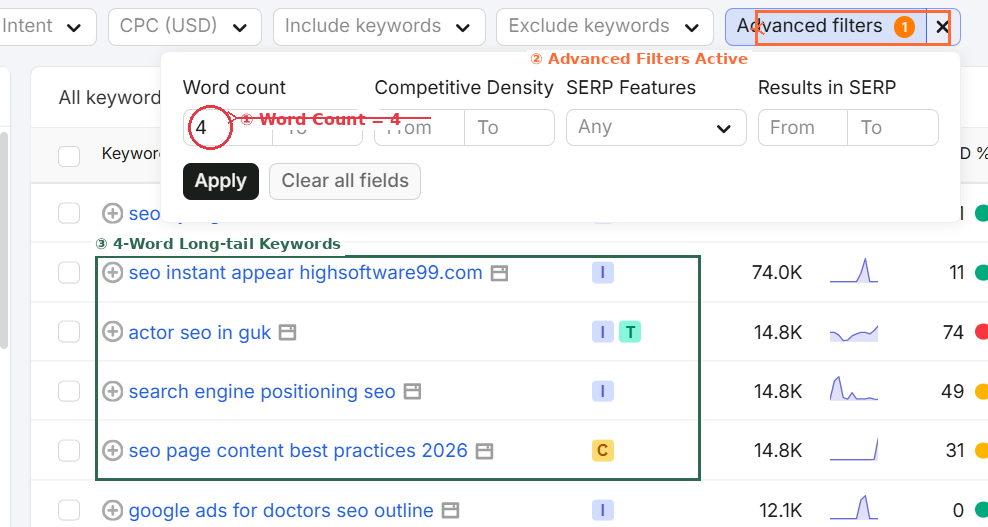
Long-tail keywords contain three or more words and describe a specific need, such as “best running shoes for flat feet.” Each one brings in less traffic on its own, but the searcher’s intent is much clearer, so conversion rates tend to be higher. Most new websites grow fastest by targeting these first.
Other Ways SEO Keywords Get Categorized
Intent and length get the most attention, but research tools and content teams sort keywords by several other angles too. Each one solves a different practical problem.
By Difficulty
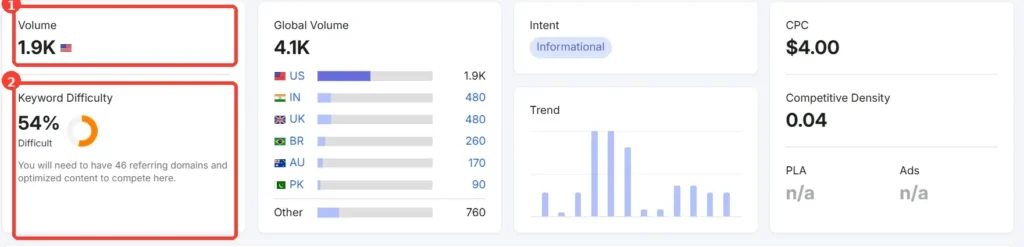
Keyword difficulty estimates how hard it would be for a new site to rank for a term, usually based on how strong the current top-ranking pages already are. Most tools group this into easy, medium, and hard, while a few stretch it to five levels by adding very easy and very hard at the extremes.
By Search Volume
Volume groups keywords by how many searches they get each month, typically low, medium, or high. What counts as high volume changes by industry. A skincare keyword might need tens of thousands of monthly searches to count as high volume, while a specialized B2B term might only need a few dozen.
By Match Type
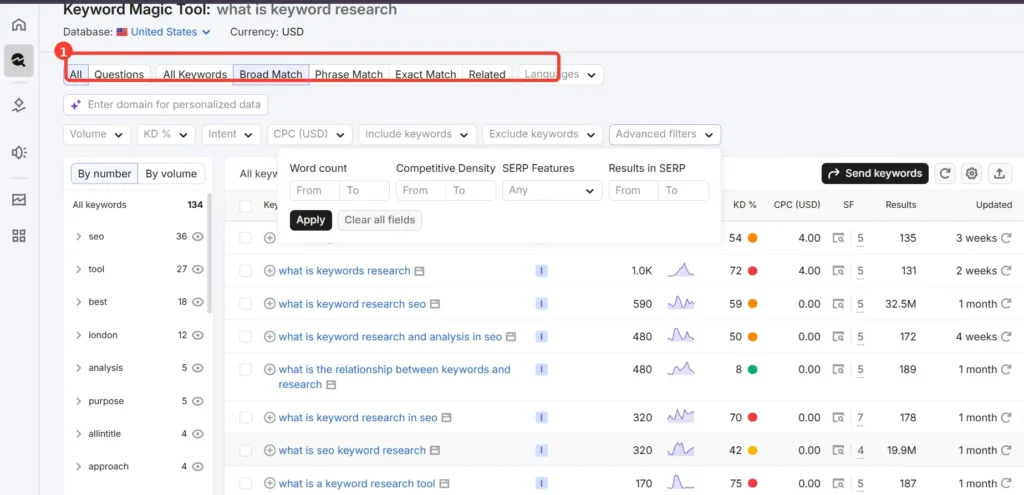
Match type describes how closely a found keyword relates back to the seed term you searched with. Broad match includes any keyword containing your seed words in any order. Phrase match keeps your seed words together as a phrase. Exact match only returns the seed words in the exact order you typed them. Related queries are different phrasings tied to the same idea, closer to synonyms than variations.
By Seasonality
Seasonal keywords spike during a specific time of year, like “christmas decorations,” then drop off almost completely the rest of the year. Evergreen keywords keep a steady search pattern all year round, or repeat their spike multiple times annually. Knowing which type you are targeting changes when you should publish and how often you should refresh the content.
By Focus (Primary and Secondary Keywords)
This sorting is mainly used in content writing rather than research tools. A primary keyword is the main term a page targets, placed in the title, the opening lines, and at least one subheading. Secondary keywords are supporting phrases related to the same topic, used briefly in supporting paragraphs rather than repeated throughout the page.
By Brand Relation
Branded keywords include a company or product name and signal the searcher already has that brand in mind. Nonbranded keywords describe what someone wants without naming a brand, such as “white sneakers” instead of a specific shoe brand. Ranking for non-branded terms brings in people who do not know your business yet, while branded terms capture people already looking for you specifically.
Keyword Modifiers
Many keywords carry an extra word that narrows the context, even though the core query stays the same. Common modifier types include a market or industry mention (keyword research for e-commerce), an audience mention (running shoes for teens), a location (marketing agency near me), and a use case or brand mention (white sneakers for running). These modifiers help search engines personalize results, and they are useful starting points when you want to find less competitive long-tail variations of a broader topic.
Seed Keywords and Question Keywords
A seed keyword is not really a category of its own. It is simply the starting term you feed into research, the input that expands into dozens of related ideas. “Coffee” as a seed keyword can branch into recipes, health questions, brand comparisons, and local cafe searches.
Question keywords contain a question word like “what,” “how,” “why,” or “where.” These often come from voice search and tend to trigger featured snippets, since the searcher wants a quick, direct answer rather than a long article to dig through.
What Is a Primary Keyword and a Focus Keyword?
A primary keyword is the main phrase a page is built around. It usually appears in the title, the first paragraph, and at least one subheading. A focus keyword means almost the same thing inside most SEO plugins. It is the term you ask the page to compete for, and every other phrase on the page supports it instead of competing against it.
What Is a Keyword Phrase? Can SEO Keywords Be Full Phrases or Questions?
A keyword phrase is simply a search term made of more than one word, instead of a single isolated word. Most real searches today look like this. Yes, SEO keywords can absolutely be full phrases or even complete questions. Searches like “How many types of keywords in SEO are there?” or “What is the best way to do keyword research?” are normal, and content written to answer a full question often performs better in voice search and featured snippets than content built around a single word.
How to Identify Search Intent for Any Keyword
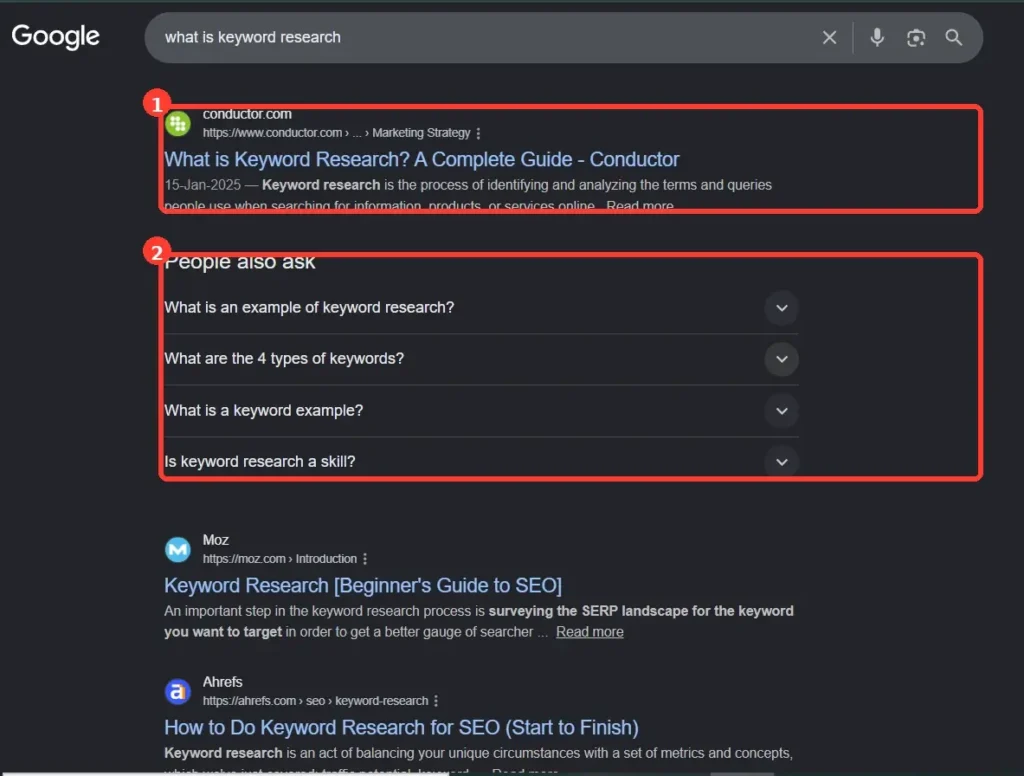
A single word can mean different things depending on context. “Apple” could point to the fruit or the tech brand, so guessing intent from the word alone is risky. A more reliable approach is to search the term yourself and read what is already showing up.
Check these three signals:
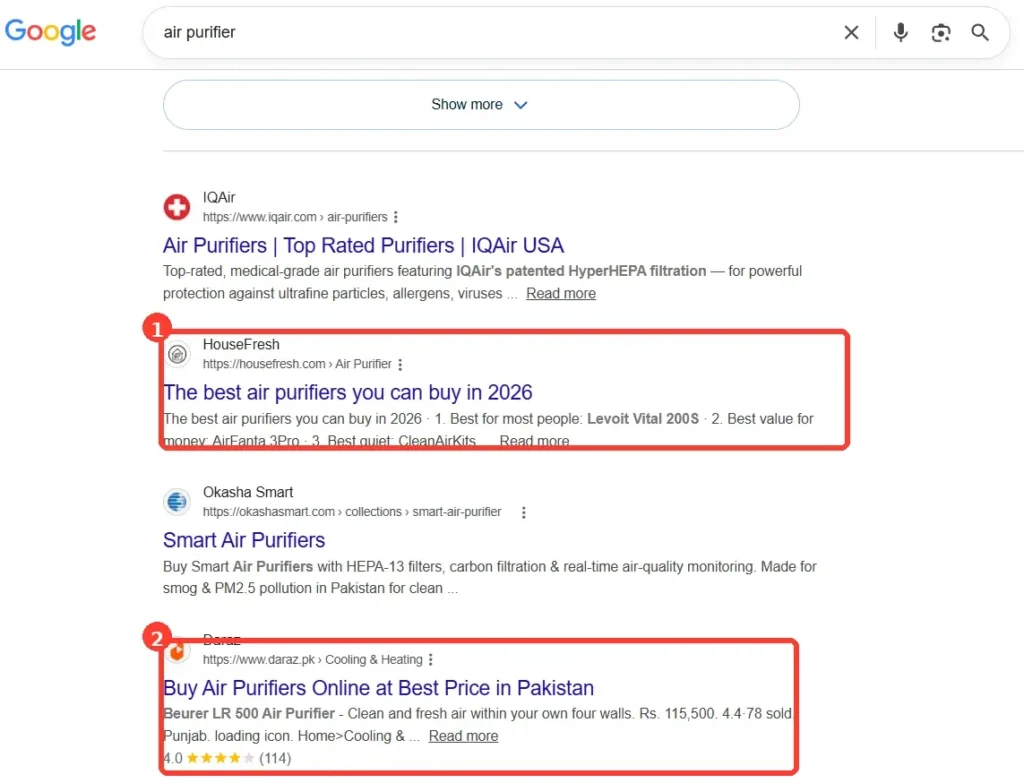
The type of pages ranking. Guides and articles signal informational intent. Product listings or shopping style results signal transactional intent.
The keyword’s modifiers. Words like “what,” “how,” or “guide” lean informational. Words like “buy,” “price,” or “deal” lean transactional. Words like “best,” “vs.,” or “review” lean commercial.
Mixed signals. Some keywords, like “coffee beans,” show both commercial and informational results at once. When that happens, one piece of content can address both angles instead of forcing a single intent.
Keyword Density and Placement Best Practices
Once you know which keyword type you are targeting, placement matters more than repetition. Put your primary keyword in the title, the page URL, the meta description, the opening lines, and at least one subheading. Keep overall keyword density between 1 and 1.5 percent of total word count, since repeating the same phrase too often reads poorly to both readers and search engines. Support your primary keyword with a handful of related phrases spread naturally through the page, rather than circling back to the exact same term again and again.
FAQ
What are the 4 types of keywords in SEO?
The four types based on search intent are informational, navigational, commercial, and transactional.
What are the different types of keywords in SEO?
The main categories are intent based, length based, plus extra sortings like difficulty, volume, seasonality, brand relation, and focus.
How many type of keywords are there in SEO?
Most experts count four intent based types and three length based types as the core answer, with several more categorizations layered on top depending on the tool or use case.
What are short tail keywords in SEO?
A short tail keyword is a brief search phrase, usually one or two words, covering a broad topic with high search volume and high competition.
What is a focus keyword in SEO?
A focus keyword is the main phrase a specific page targets, guiding the title, headings, and content around that single topic.
What is a primary keyword in SEO?
A primary keyword is the central term a page is optimized for, placed naturally in the title, intro, and at least one heading.
What is a keyword phrase in SEO?
A keyword phrase is a multi word search term, as opposed to a single word query, and most real world searches fall into this category.
Can SEO keywords be phrases or full questions?
Yes. Many high performing keywords today are complete phrases or full questions, since search engines reward content that answers a query directly.
Are local keywords a separate type?
Not exactly. A local keyword, such as “seo agency in dubai,” is usually a long tail keyword carrying commercial or transactional intent, with a location added.
For a deeper, official look at how search engines evaluate content quality and relevance, check Google’s own SEO Starter Guide at developers.google.com.
Wali Shah is the Founder and CEO of SkillsHeaven, a digital growth agency specializing in Local SEO, Google Ads, and conversion-focused website development. With over 8+ years of experience, he has helped scale 170+ businesses, including 93+ limousine companies globally, by building structured, lead-generating digital systems. His expertise spans local search optimization, paid media strategy, and high-performance website development, all aligned with measurable business growth. Known for a data-driven and ethical approach, Wali focuses on creating scalable marketing systems that increase visibility, generate qualified leads, and drive long-term revenue for service-based businesses.