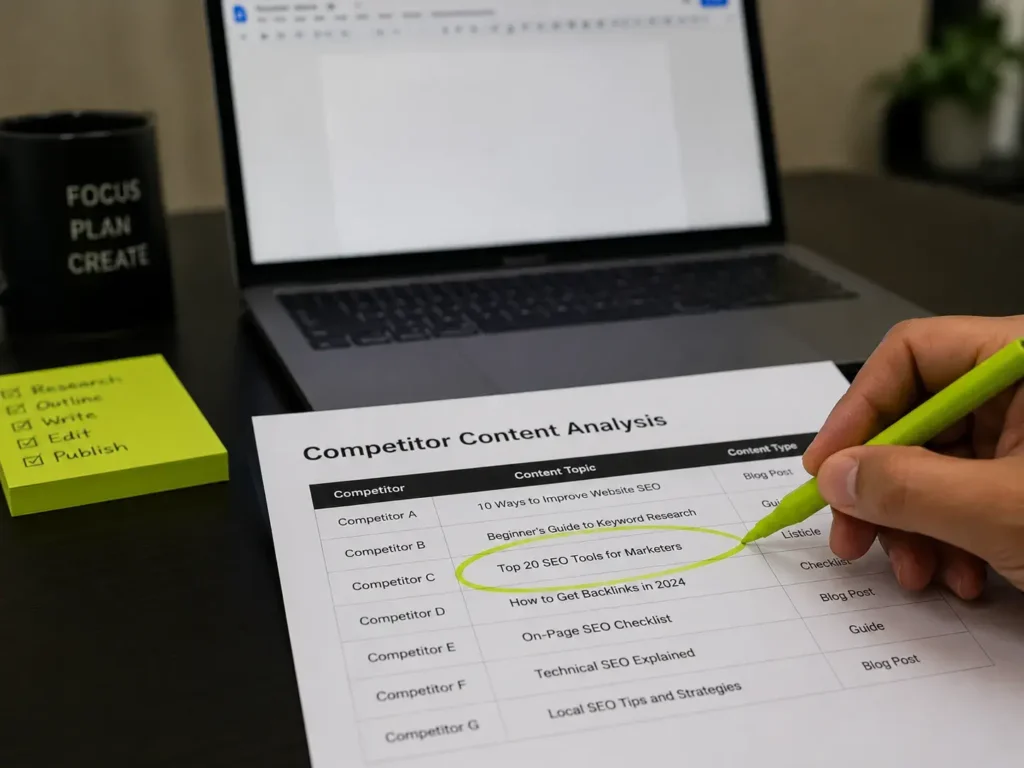
SEO competitive analysis is the process of studying the websites, content, and search visibility of businesses targeting the same audience as you, so you can identify gaps, opportunities, and proven strategies to strengthen your own search rankings. Rather than guessing which keywords or content formats might work, this process gives you real evidence of what is already driving traffic in your space, which you can then use to build a smarter, more focused strategy of your own.
If you want to understand how competitor analysis improves SEO strategy and how to actually apply those insights to your business, this guide breaks the entire process down into clear, practical steps.

Why SEO Competitive Analysis Matters
Every industry has a handful of websites that consistently rank well for the keywords that matter most to potential customers. Studying these pages reveals patterns: the topics they cover, the keywords they target, the way their content is structured, and the type of backlinks pointing to their site. SEO competitive analysis turns these patterns into a roadmap, helping you prioritize your time and budget on tactics with proven demand instead of starting from a blank page.
How Competitor Analysis Improves SEO Strategy
Competitor analysis improves SEO strategy by replacing assumptions with evidence. Instead of guessing which keywords your audience searches for, you can see which terms are already sending traffic to similar businesses. Instead of wondering what content format performs best, you can observe which articles, videos, or guides earn the most engagement and links. This evidence based approach helps you set realistic goals, choose the right keywords, and build content that genuinely satisfies search intent, since it is grounded in what is already working in your market.
How Does Competitive Analysis Improve SEO Strategy in Practice
In practice, competitive analysis improves SEO strategy by highlighting three things clearly: keyword opportunities you are missing, content gaps you can fill better than anyone else, and technical or authority advantages you can build over time. Reviewing several strong performing pages side by side often reveals a consistent pattern, such as a type of question that keeps coming up or a content depth that ranking pages share. Recognizing that pattern early lets you create something more thorough and more useful, which search engines and readers both tend to reward.
Step by Step: How to Conduct SEO Competitive Analysis
Identify Your Real Search Competitors
Your search competitors are not always the same as your business competitors. Search for your main target keywords and note which websites consistently appear on the first page, since these are the pages you are actually competing against in search results.
Analyze Their Keyword Targeting
Look at the keywords each top ranking page appears to target, including the language used in their titles, headings, and body content. Free tools like Google’s “People also ask” section and Google Search Console (for keywords your own site already partially ranks for) help reveal related terms worth targeting as well.
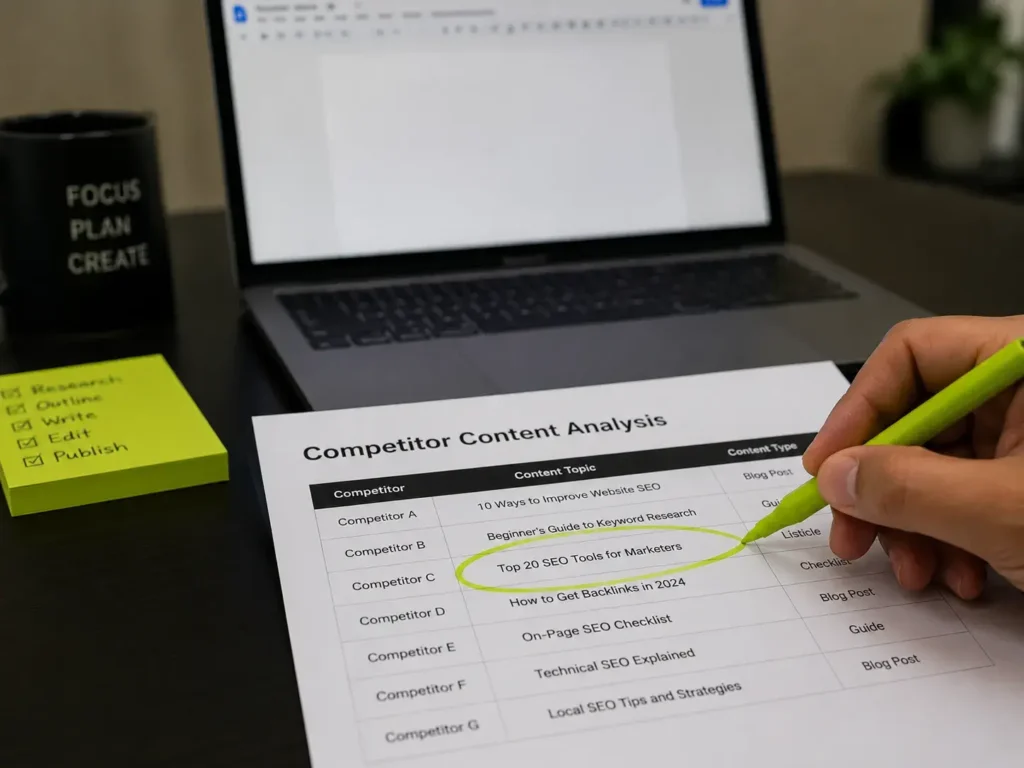
Review Their Content Structure and Depth
Note how thoroughly each page covers the topic, including the subtopics, questions, and examples included. Pages that rank well often cover a subject more completely than competing pages, so identifying any gaps gives you a clear opportunity to create something more comprehensive.
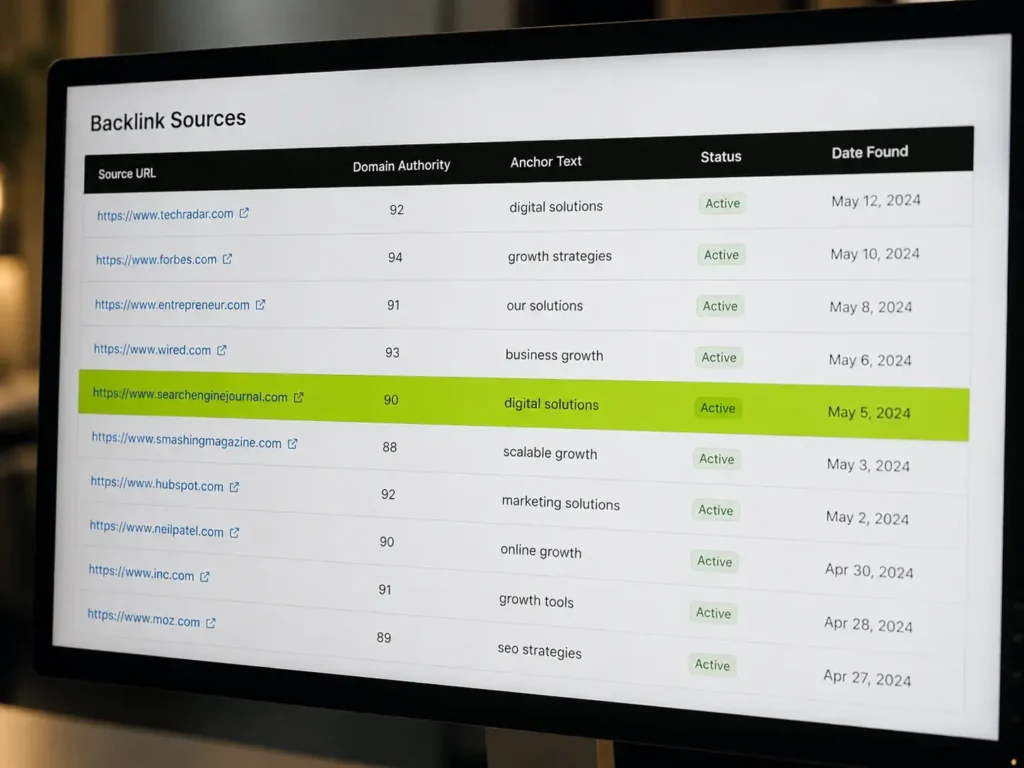
Study Their Backlink Profile
Backlinks remain one of the strongest ranking signals, so reviewing where competing pages earn links from can reveal partnership opportunities, guest posting targets, or industry directories worth pursuing for your own site.
Check Their On Page SEO Elements
Review title tags, meta descriptions, URL structure, and internal linking on top ranking pages. While the goal is never to copy these elements, understanding common patterns across several strong pages can confirm best practices worth applying to your own site.
Evaluate Site Speed and User Experience
Page speed, mobile friendliness, and overall site experience all influence rankings. Comparing your site’s performance against top ranking pages in your space helps you understand whether technical improvements should be part of your strategy.
How to Use Competitor SEO Gaps to Inform GTM Strategy
A go to market, or GTM, strategy benefits significantly from the gaps uncovered during SEO competitive analysis. If competing pages consistently miss a certain subtopic, audience question, or content format, that gap represents a clear opportunity to position your messaging and content around what your market still needs. For example, if every top ranking page in your space focuses heavily on one customer segment while ignoring another, your GTM strategy can intentionally target that underserved segment with tailored content and messaging. Mapping these gaps against your product positioning, pricing, and target audience helps ensure your content strategy and broader business strategy move in the same direction, rather than developing separately.
Turning Competitive Insights Into Original Content
The purpose of SEO competitive analysis is to understand what already resonates with your shared audience, then build something more valuable in your own voice. This means every piece of content you create afterward should be researched, written, and structured independently, using competitor pages only as a reference point for topic ideas and audience questions rather than a template to copy. Search engines and readers both respond well to content that feels genuinely original and thorough, which is the real advantage SEO competitive analysis is meant to help you build.
Tools That Support SEO Competitive Analysis
A combination of free and paid tools makes this process more efficient. Google Search Console reveals keywords your own pages already rank for, including ones you may not have intentionally targeted. Free browser extensions can quickly reveal a competing page’s title tag, meta description, and heading structure. Backlink checking tools, even on their free tiers, often reveal a useful sample of referring domains pointing to a competing page, giving you a starting point for outreach.
How Often to Revisit Your SEO Competitive Analysis
Search results shift over time as competitors update their content, build new backlinks, or target new keywords. Revisiting your SEO competitive analysis every few months helps you catch new opportunities early and adjust your strategy before a competitor’s advantage grows too large to close.
Frequently Asked Questions
What is SEO competitive analysis?
SEO competitive analysis is the process of studying competing websites’ keywords, content, backlinks, and technical setup to identify opportunities for improving your own search rankings.
How often should I do a competitor SEO analysis?
Most businesses benefit from revisiting their competitor SEO analysis every three to six months, or sooner if rankings shift noticeably in their industry.
What tools are used for SEO competitive analysis?
Common tools include Google Search Console, free browser extensions for viewing on page SEO elements, and backlink checking tools with free tiers that reveal referring domains.
Can competitor analysis help with content strategy, not just keywords?
Yes, competitor analysis often reveals content gaps, underserved audience questions, and format opportunities that directly inform a stronger, more complete content strategy.
Final Thoughts
SEO competitive analysis gives you a clear, evidence based view of what is already working in your market, from the keywords driving traffic to the content formats earning engagement and links. Used well, these insights can directly inform both your SEO strategy and your broader GTM strategy, helping you close gaps competitors have left open while building genuinely original content that earns its own rankings over time.

M. Awais Khan is a Business Development and Digital Growth Strategist at SkillsHeaven, specializing in SEO, local search optimization, and performance-driven digital marketing. With experience supporting 100+ businesses, he develops and implements data-driven strategies that help companies increase online visibility, generate qualified leads, and drive sustainable revenue growth. His expertise spans Local SEO, Google Ads, social media marketing, and conversion-focused website optimization, ensuring every project is aligned with measurable business outcomes and long-term success.