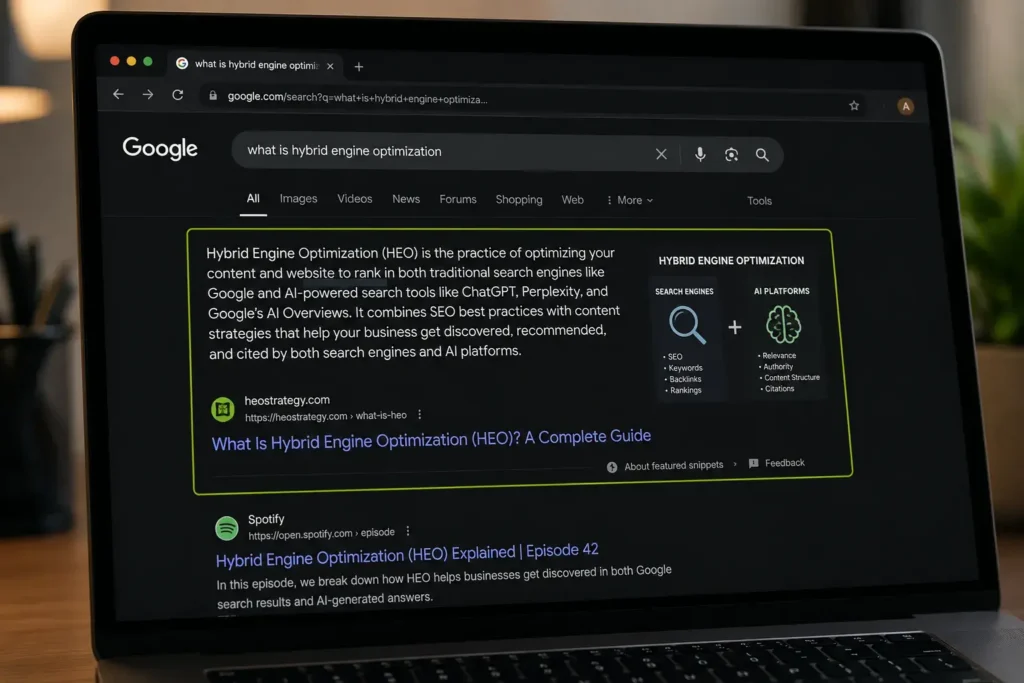
What is SERP in SEO stands for Search Engine Results Page, the page that appears after you type a query into Google, Bing, or any other search engine. Understanding what a SERP is matters because it is not just a simple list of ten blue links anymore. It now includes a mix of features like maps, images, videos, and direct answers, all competing for the same visibility your business is trying to earn.
If you are searching for what SERP is in SEO, what its features mean, and how local results like the map pack fit into the picture, this guide covers every part of it in plain language.
What Does SERP Stand For in SEO
SERP stands for Search Engine Results Page. Every time someone searches a keyword, the search engine returns a SERP made up of organic listings, paid ads, and various special result types, all working together to answer that specific query as completely as possible. SEO, at its core, is the practice of improving where and how your website appears on this page for the keywords your audience searches.
What Is the SERP in SEO, and Why Does It Matter
The SERP is the place where all SEO effort is ultimately tested. A well optimized page means nothing if it does not appear where people actually look on the SERP, since most clicks go to results appearing near the top, particularly within the first few organic listings or any prominent features above them. This is why understanding the layout and behavior of a SERP, not just your own ranking position, is essential to a complete SEO strategy.
What Is SERP vs SEO
A simple way to separate the two terms is this: SERP is the result, while SEO is the process. The SERP is the actual page of results a search engine displays for any given query. SEO is everything you do, from keyword research to content creation to technical improvements, in order to earn a better position on that SERP. In short, SEO is the work, and the SERP is where that work gets judged.
What Are SERP Features in SEO
SERP features are the special result types that appear alongside or above traditional organic listings. These features have become a major part of modern search results and often capture more attention and clicks than standard listings. Common SERP features include:
- Featured snippets, which pull a direct answer from a page and display it near the top of results, often in response to question based searches.
- Knowledge panels, which show a summary box of facts about a person, place, or entity, usually appearing on the right side of desktop results.
- Image and video packs, which display a row of visual results for queries where visual content answers the search intent well.
- People also ask boxes, which show a list of related questions that expand to reveal short answers when clicked.
- Local map packs, which display a set of local business listings tied to a map, appearing for searches with local intent.
- Site links, which show additional pages from the same website beneath its main listing, usually appearing for branded or well known searches.
Each of these features changes how users interact with a SERP, and optimizing content to appear within them has become its own specialized area of SEO.
What Are Map Packs for Google Local SEO
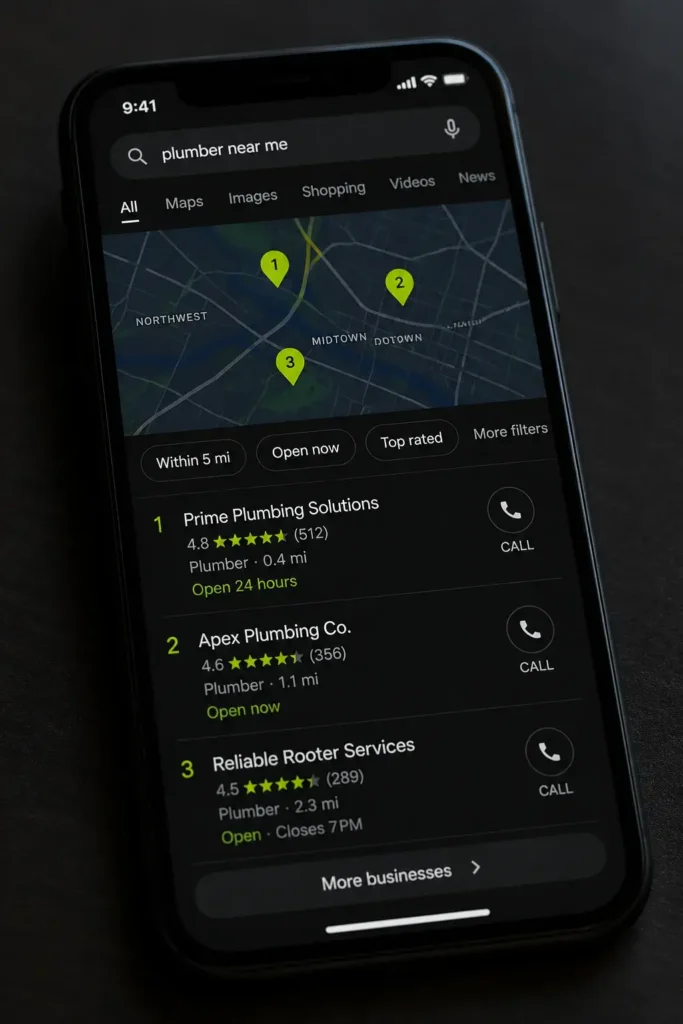
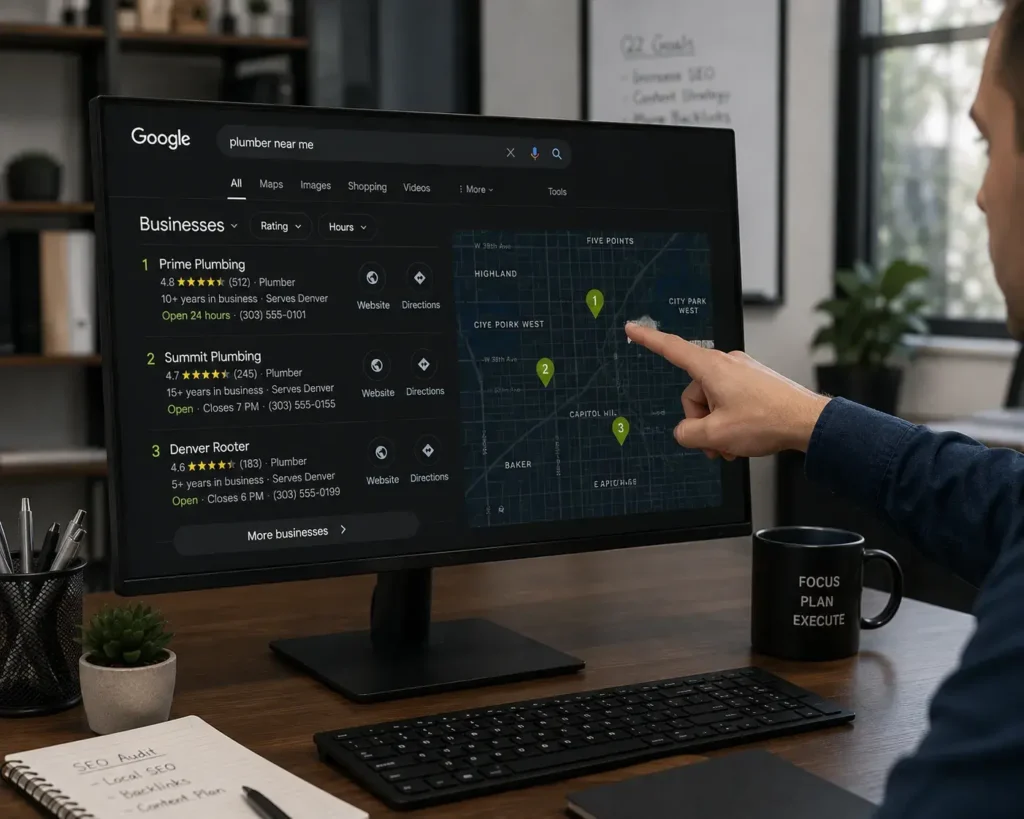
A map pack, sometimes called the local pack, is the section of a SERP that displays a small map alongside three local business listings relevant to a local search query. Map packs typically appear for searches that include local intent, such as a service paired with a city name, or for searches Google interprets as local based on the searcher’s location. Appearing in this section is one of the most valuable outcomes in local SEO, since it places a business directly in front of nearby customers who are ready to take action.
What Is a Local SEO 3-Pack
The local SEO 3-pack refers to the three business listings shown within a map pack. These three positions are highly competitive, since they appear prominently near the top of local search results, often before any traditional organic listings. Ranking in the 3-pack depends heavily on a complete and accurate Google Business Profile, consistent business information across the web, positive customer reviews, and overall relevance and proximity to the searcher. Because only three spots exist, businesses that actively manage and optimize their Google Business Profile have a significant advantage over competitors who neglect this part of their SEO strategy.
How SERP Features Affect Your SEO Strategy
The growing variety of SERP features means ranking in a traditional organic position is no longer the only goal worth pursuing. A business might gain more visibility and traffic by earning a featured snippet or a map pack position than by holding a slightly higher organic ranking. This shift means a complete SEO strategy today should include structuring content to directly answer common questions, maintaining a strong Google Business Profile for local visibility, and using clear formatting, like lists and concise definitions, that search engines can easily pull into these features.
How to Check Which SERP Features Appear for Your Keywords
Before optimizing for any SERP feature, search your target keyword yourself and observe which features currently appear. A keyword that triggers a map pack tells you local SEO matters for that term. A keyword that triggers a featured snippet tells you a clear, well structured answer near the top of your content could earn that spot. This simple habit of reviewing the SERP for your own keywords helps shape a much more targeted and realistic SEO strategy.
Frequently Asked Questions
What is the difference between a SERP and a search engine?
A search engine is the platform, such as Google or Bing, that processes a search query, while the SERP is the actual results page that the search engine displays in response to that query.
Do all keywords show the same SERP features?
No, the features shown on a SERP depend entirely on the query and what the search engine determines best answers that specific intent, which can include local results, images, videos, or a simple list of organic links.
How do I rank in the local 3-pack?
Ranking in the local 3-pack depends on a fully completed Google Business Profile, consistent business details across the web, strong customer reviews, and relevance and proximity to the person searching.
Is SEO only about ranking organic listings?
Not anymore. Modern SEO often includes optimizing for SERP features like featured snippets, map packs, and people also ask boxes, since these can capture significant visibility and traffic on their own.
Final Thoughts
Understanding what a SERP is in SEO, along with the features that now make up these results pages, gives you a much clearer picture of where your real opportunities lie. Whether that means structuring content to earn a featured snippet or strengthening your Google Business Profile to compete for the local 3-pack, knowing how a SERP actually works is the foundation for building a smarter, more complete SEO strategy.

M. Awais Khan is a Business Development and Digital Growth Strategist at SkillsHeaven, specializing in SEO, local search optimization, and performance-driven digital marketing. With experience supporting 100+ businesses, he develops and implements data-driven strategies that help companies increase online visibility, generate qualified leads, and drive sustainable revenue growth. His expertise spans Local SEO, Google Ads, social media marketing, and conversion-focused website optimization, ensuring every project is aligned with measurable business outcomes and long-term success.