
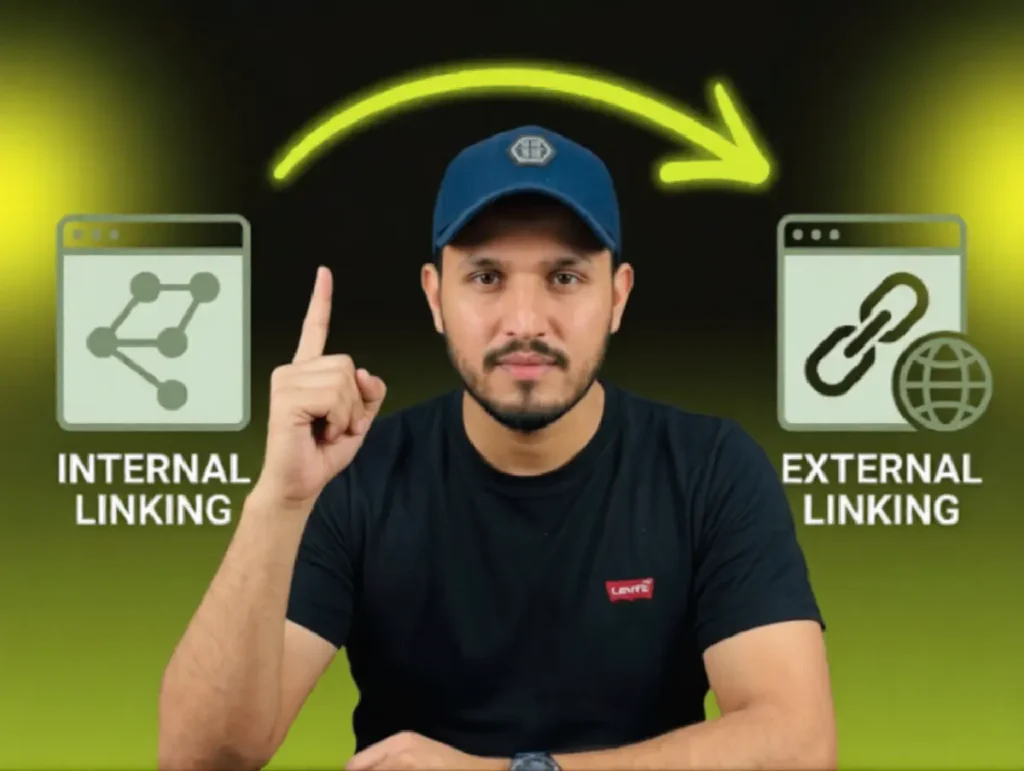
Internal and external linking refers to the two types of hyperlinks that connect content on the web. Internal links point to other pages within the same website, while external links point out to pages on a completely different domain. Understanding internal and external linking matters because both types work together to help search engines understand your site, build trust in your content, and guide visitors toward the information they came looking for.
What Is Internal Linking
Internal linking, sometimes called interlinking or cross linking in SEO, is the practice of connecting one page of your website to another page on that same website. A link from a blog post back to a service page, or from a homepage to a product category, is an example of internal linking in action.
Internal links serve a few clear purposes. They help search engines discover new pages by following the links across your site, they distribute authority from your strongest pages to newer or less visible ones, and they keep visitors engaged by guiding them toward related content they might not have searched for directly. A website with thoughtful internal linking tends to have a clearer structure, which search engines reward with better crawling and indexing.
What Is External Linking
External linking is the other half of internal and external linking, and it covers any hyperlink that sends a visitor away from your website to a page on a different domain. External links come in two directions. An outbound link is one you place on your own page that points out to another website. An inbound link, often called a backlink, is one that points the opposite way, from another website into yours.
So when someone asks what is an outbound link in SEO, the answer is simple: it’s a link you add on your own page that sends visitors to a separate website, usually to support a claim, cite a source, or add helpful context.

Are External Links Good for SEO
Yes, external links are good for SEO when they point to relevant, trustworthy sources. This answers several closely related questions at once, including do external links help SEO, does linking to other sites help SEO, and is external linking good for SEO, since they’re all asking the same thing from a slightly different angle.
Here’s how outbound links benefit a page when used well:
- They give search engines context: an outbound link to a relevant page helps confirm what your own content is actually about
- They build topical credibility: linking to a respected source signals that your content is well researched and grounded in real information
- They improve the reading experience: visitors get the option to dig deeper into a claim or statistic without leaving your page feeling incomplete
- They support a natural link profile: a page that only links inward can look isolated, while one that references outside sources reads as more authentic
Google’s own guidance on outbound links has long confirmed that linking out to quality, relevant pages does not hurt rankings and can support a healthier overall content strategy, as long as the links are used naturally and not stuffed in for the sake of volume.
How External Links Affect SEO Compared to Internal Links
Internal and external linking affect SEO in different ways, and understanding that difference helps you use both correctly. Internal links shape how authority and importance move around your own site. They tell search engines which pages matter most and help every page, including ones with no backlinks of their own, get discovered and indexed. External links work outward instead, shaping how trustworthy and well sourced your content appears to both search engines and human readers.
Neither type works as a replacement for the other. A page packed with internal links but zero outside references can feel self contained and thin on evidence. A page full of outbound links but no internal connections to the rest of the site misses the chance to guide visitors deeper into your content. The strongest pages usually combine both, linking inward to support site structure and outward to support credibility.
How to Use Internal and External Linking the Right Way
A good rule for internal and external linking is to link with purpose rather than volume. Every internal link should genuinely help a reader find related, useful content, not just pad the page with extra hyperlinks. Every external link should point to a source that’s actually authoritative on the topic, such as an established publication, a government resource, or a well known industry reference, rather than a random or low quality site.
A few practices that consistently work well:
- Use descriptive anchor text that tells the reader exactly what they’ll find on the other end of the link
- Link to your most important pages from multiple places across the site to reinforce their priority
- Choose outbound links from sources with real authority on the subject
- Avoid overloading a single page with too many links of either type, since that dilutes the value of each one
- Check periodically for broken links, since a dead internal or external link weakens the page it sits on

Frequently Asked Questions
What is internal linking in SEO?
Internal linking is the practice of connecting pages within the same website through hyperlinks, helping search engines understand site structure and helping visitors find related content.
What is external linking in SEO?
External linking refers to any link that points from your website to a page on a different domain, usually used to cite sources or add credible context.
What is the difference between inbound links and outbound links?
An inbound link, or backlink, points from another website into yours. An outbound link points from your page out to a different website.
Do outbound links help SEO?
Yes, outbound links to relevant, trustworthy sources help SEO by adding credibility and context, and Google has confirmed that linking out does not harm rankings when done naturally.
What is cross linking in SEO?
Cross linking is another term for internal linking, referring to the practice of connecting related pages within the same website.


Atif Khan is a highly experienced Local SEO Expert and Strategic SEO Consultant who helps businesses turn their websites into powerful lead-generating assets. With hands-on experience optimizing and ranking over 100 websites across competitive industries, he specializes in building data-driven SEO systems that improve local search visibility, attract qualified traffic, and convert visitors into customers. His expertise spans Google Business Profile optimization, technical SEO, keyword research, content strategy, and conversion-focused website optimization, ensuring every project is aligned with measurable business outcomes. Atif focuses on creating complete local search ecosystems, combining website authority, relevance, and trust signals to help businesses dominate in their target locations. Beyond rankings, he develops scalable growth strategies that drive calls, inquiries, and long-term revenue. His approach is rooted in ethical, white-hat SEO practices, continuous optimization, and performance tracking, ensuring sustainable results. As a consultant, he works closely with businesses and agencies to align SEO with revenue goals, improve digital presence, and build long-term organic acquisition systems.