
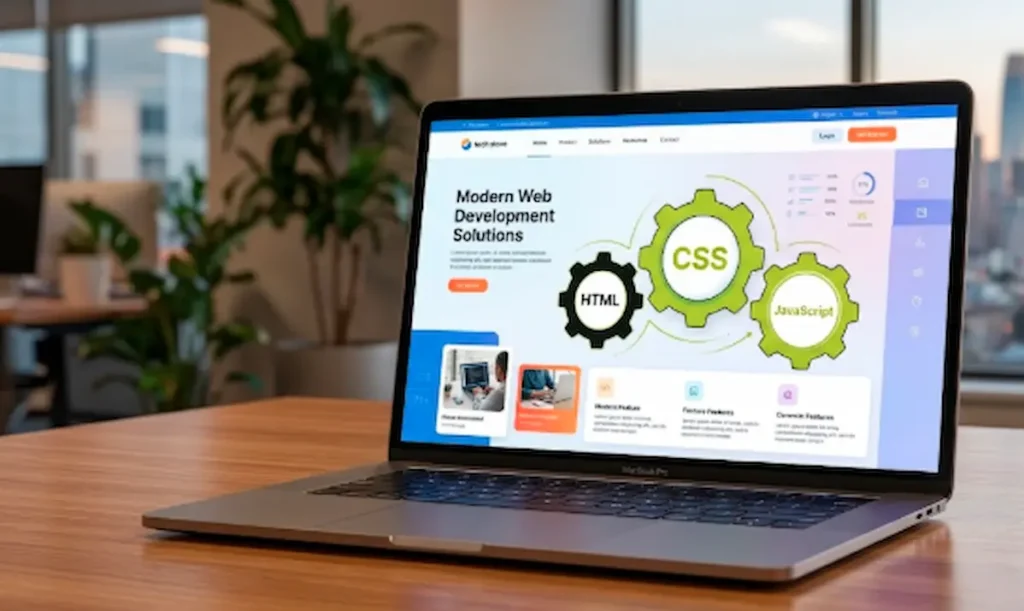
Front end in web development refers to everything a visitor sees and interacts with on a website or web application, built using HTML, CSS, and JavaScript. It’s the layer that sits between the design and the data, turning a static idea into something people can actually click, scroll, and use in a browser. Understanding what front end in web development means is the first step to understanding how a website comes together, and this guide breaks down the concept along with the related terms that often come up alongside it.
Breaking Down Front End in Web Development
When people talk about front end in web development, they’re referring to the client side of a website, the part that runs directly in the user’s browser rather than on a distant server. Three core technologies make this possible. HTML provides the structure, essentially the skeleton of every page. CSS controls the visual presentation, including colors, spacing, and layout. JavaScript adds interactivity, allowing buttons to respond, menus to expand, and content to update without reloading the entire page.
A front end developer’s job is to take a design and turn it into a working interface that looks right and behaves correctly across different browsers and screen sizes. This work sits at the intersection of design and engineering, since it requires both visual judgment and technical precision.
What Does Headless Mean in Web Development
A headless setup separates the front end of a website from its back end content management system entirely. Instead of a traditional CMS handling both the content storage and the page display together, a headless architecture stores content in one system and delivers it through an API to a completely separate front end, which can be built with any framework the development team prefers.
This approach has become popular because it gives front end teams more flexibility. The same content stored in a headless CMS can power a website, a mobile app, and other digital touchpoints simultaneously, since the front end and the content layer no longer depend on each other.
What Does React Do in Web Development
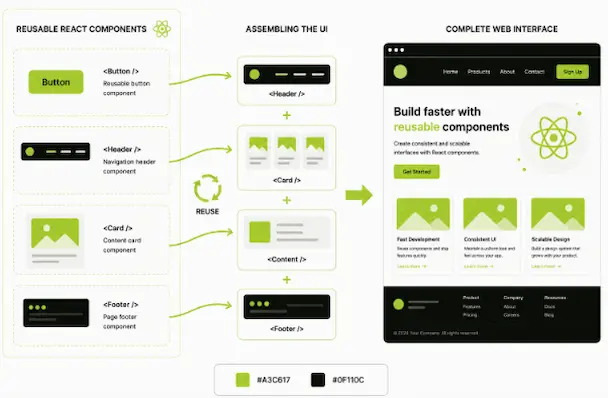
React is a JavaScript library used to build the user interface layer of websites and applications, and it’s one of the most widely adopted tools in modern front end work. Instead of rebuilding an entire page every time something changes, React breaks the interface into reusable components and updates only the parts that actually need to change, which keeps interactions fast and smooth.
Developers favor React for front end projects because its component based structure makes large applications easier to manage and scale, and its widespread adoption means there’s a large ecosystem of tools and resources supporting it.
How Web Developers Use Wireframes
Wireframes are simple, low detail layouts that map out where elements like navigation, buttons, and content blocks will sit on a page before any actual coding begins. Front end developers use wireframes as a blueprint, confirming the structure and flow of a page with designers and stakeholders early, before investing time in building out the full visual design and functionality.
This step matters because catching a structural issue on a wireframe takes minutes, while catching the same issue after a page is fully built and styled can mean reworking a significant amount of finished code.
What Is a Web Content Developer
A web content developer focuses on the written and visual material that fills a website, including page copy, images, and multimedia, rather than the underlying code that makes the site function. While a front end developer builds the structure and interactivity of a page, a web content developer ensures the actual substance on that page is clear, accurate, and aligned with what the audience and search engines are looking for.
On many projects, these two roles work closely together, since well built front end structure and well written content both contribute directly to how a page performs and how visitors experience it.
How to Develop Web Based Training
Web based training refers to educational content delivered through a browser rather than in person, and building it draws directly on front end development skills. Creating an effective web based training module typically involves structuring lessons with HTML, styling them for readability with CSS, and adding JavaScript driven interactivity such as quizzes, progress tracking, or clickable simulations that keep learners engaged.
The same principles that apply to any front end project, clear structure, responsive design, and fast load times, matter just as much here, since a training platform that’s slow or confusing to navigate undermines the learning experience itself.
Which Branding Agencies Have Top Web Development Portfolios
Agencies with strong web development portfolios typically share a few consistent traits. Their work demonstrates clean, consistent front end execution across every project, with attention to typography, spacing, and interaction design that feels intentional rather than templated. Strong portfolios also show range, covering different industries and site types, while still maintaining a clear point of view on design and usability.
When evaluating an agency’s portfolio, look past the visuals alone and check how their live sites actually perform, including load speed, mobile responsiveness, and how smoothly the front end handles real user interaction, since a polished screenshot doesn’t always reflect a well built front end underneath it.
Frequently Asked Questions
What is front end in web development?
Front end in web development is the part of a website users see and interact with directly, built using HTML, CSS, and JavaScript to create structure, style, and interactivity.
What is the difference between front end and back end development?
Front end development handles what users see and interact with in the browser, while back end development manages servers, databases, and the logic that powers the site behind the scenes.
Do front end developers need to know React?
Not always, but React is widely used in front end development, and familiarity with it or a similar framework is a common expectation for many front end roles today.
Is front end development the same as web design?
No, web design focuses on the visual look and user experience of a site, while front end development is the coding work that turns that design into a functioning, interactive webpage.


Wali Shah is the Founder and CEO of SkillsHeaven, a digital growth agency specializing in Local SEO, Google Ads, and conversion-focused website development. With over 8+ years of experience, he has helped scale 170+ businesses, including 93+ limousine companies globally, by building structured, lead-generating digital systems. His expertise spans local search optimization, paid media strategy, and high-performance website development, all aligned with measurable business growth. Known for a data-driven and ethical approach, Wali focuses on creating scalable marketing systems that increase visibility, generate qualified leads, and drive long-term revenue for service-based businesses.