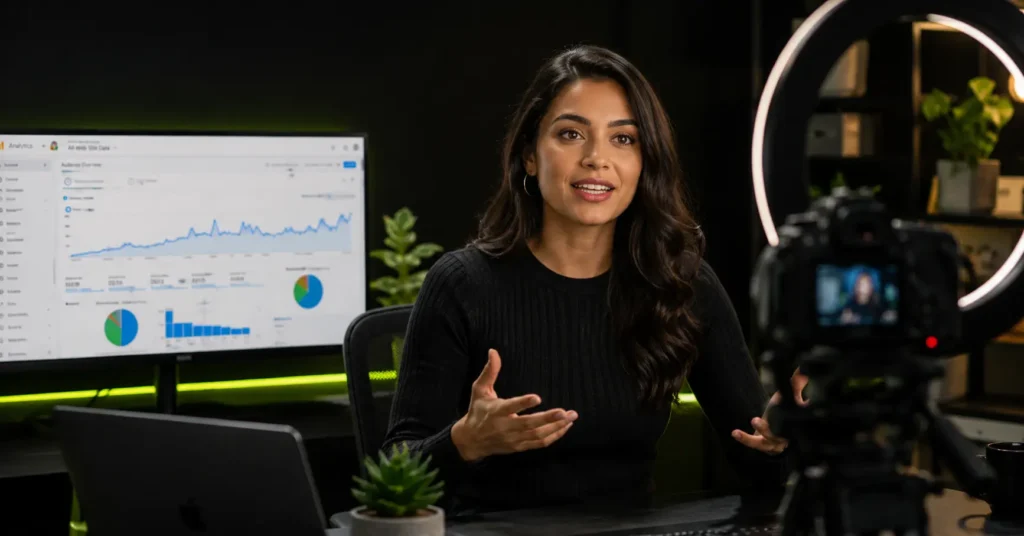
Yes, video content does improve SEO, and the data behind that statement is too significant to ignore. Pages featuring video content attract up to 157 percent more organic traffic from search results compared to text-only pages, users spend an average of 6 minutes on pages with embedded video versus just 2.5 minutes on text-only pages, and video content is 50 times more likely to earn a first-page ranking than a plain written page. If you have been asking whether does video content improve SEO for your website, this guide answers that question in depth with real strategies, platform insights, and optimization techniques you can apply today.
What Does Video Content Actually Do for SEO?
Before diving into strategy, it is worth understanding the mechanism. Search engines cannot watch your videos. What they can do is measure everything that happens around your videos, how long users stay on your page, how often they return, how many other websites link to your content, and how prominently your pages appear in search results.
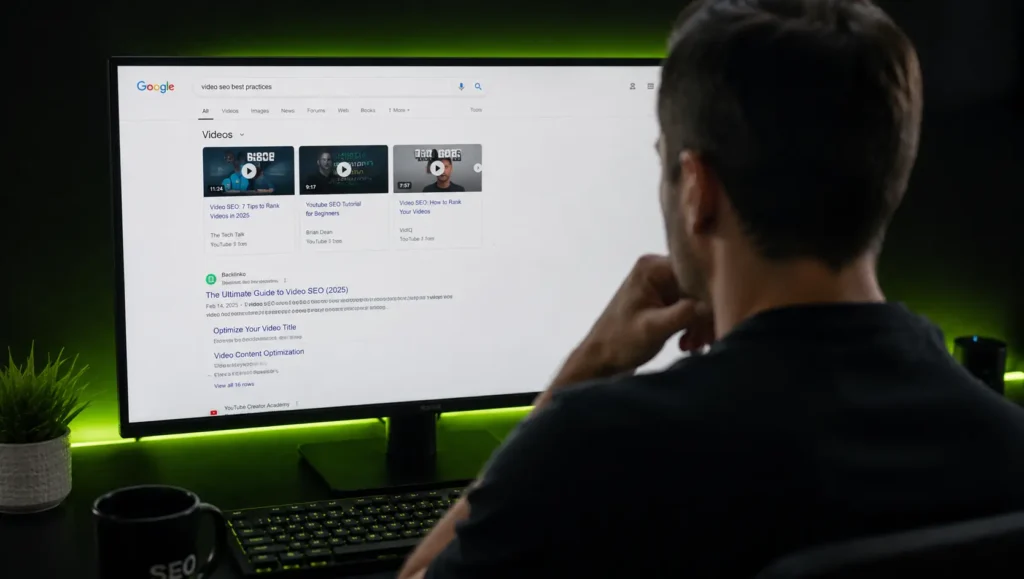
Search engines like Google prioritize videos in search results, using algorithms like Hummingbird to better understand user intent and highlight relevant video content. Videos increase your visibility on SERPs and attract clicks because they appear prominently in video carousels.
Every time a visitor watches a video on your page, they are sending positive behavioral signals to Google, and those signals collectively push your rankings higher.
How Video Content Impacts SEO Performance: The Core Mechanisms
Dwell Time: The Signal Search Engines Love Most
Dwell time is the amount of time a visitor spends on your page before returning to the search results. It is one of the most direct signals search engines use to evaluate content quality and relevance.
Pages with video have an average dwell time of 6 minutes compared to 2.5 minutes for text-only pages. Google uses dwell time as a ranking signal, making this a direct SEO factor.
Pages with embedded videos see average session durations 2.6 times longer than text-only pages. When Google registers that users are consistently staying longer on your content, it interprets that as a signal of quality and moves your page higher in the rankings over time.
Click-Through Rates: Standing Out in the Search Results
Even before a user lands on your page, video content improves your performance in search results through enhanced visual presentation.
Video schema markup increases click-through rate in SERPs by 30 percent. A video thumbnail appearing alongside your search result immediately differentiates your listing from the blocks of blue links surrounding it. Users are naturally drawn to visual previews, and that translates directly into more clicks from the same search position.
Google has a dedicated video search tab that users can leverage to find videos related to their keyword. Additionally, depending on the keyword’s intent, the search engine will sometimes serve a dedicated video carousel directly on the usual SERP. Appearing in a video carousel gives your content an entirely separate visibility opportunity beyond your standard organic listing.
Backlink Generation: Earning Authority Through Video
One of the most valuable and often overlooked benefits of video content is its natural ability to attract inbound links from other websites.
Pages with video content earn significantly more backlinks, a critical ranking factor. When your video explains a concept clearly or demonstrates something valuable, other content creators naturally reference it when writing their own material. They embed your video, link to your page, and send authority signals that strengthen your domain’s overall ranking power.
When you create top-notch videos that people find valuable and engaging, they are more inclined to share them. When your videos get shared, they also get backlinks from other websites. Getting links from other reputable sites tells search engines that your content is worth noticing.
Organic Traffic: The Bottom Line Impact
The ultimate measure of whether does video content improve SEO is whether it drives more organic visitors to your pages.
Websites using videos can see a 41 percent increase in organic search traffic, making video a powerful tool for enhancing search engine optimization.
Pages bringing in the most organic traffic include video content, and sites typically see boosts in organic traffic ranging between 10 percent to 250 percent when they add video content to existing posts.
Those are not projections. Those are observed outcomes from sites that made a deliberate shift toward integrating video into their content strategy.
Video Content and Google’s Ranking Signals: A Deeper Look
Reduced Bounce Rates
When users land on your page and find relevant, engaging video content, they are far less likely to immediately return to the search results. Lower bounce rates tell Google your content is satisfying the user’s query, which is a positive ranking signal.
Engaging videos keep visitors on your page longer, lowering bounce rates. Google sees lower bounce rates as a sign of valuable content, which helps improve rankings.
Rich Snippets and Video Carousels
Video content now appears across multiple Google SERP features beyond traditional search results, including AI overviews and video carousels. Getting your content featured in these positions essentially gives you two slots on the same search results page, one for your regular organic listing and one for your video, dramatically increasing your share of search visibility.
Content Diversity as a Ranking Signal
Google’s algorithm often prioritizes pages that offer a mix of content types. Having videos alongside text and images can make your page more diverse and appealing to the algorithm. A page with well-organized written content, supporting images, and an embedded video signals comprehensiveness to search engines, which tends to correlate with stronger rankings for competitive queries.
YouTube: The Second Search Engine You Cannot Afford to Ignore
YouTube is not just a video hosting platform. It is the world’s second largest search engine, processing more queries than Bing, Yahoo, and every other search engine combined, except Google itself.
Eight out of ten videos that appear in Google searches come from YouTube, demonstrating YouTube’s dominance in video search results. This is largely because YouTube is optimized for Google’s algorithms, meaning businesses can enhance their SEO by focusing on YouTube video marketing to capture more search traffic through relevant keywords and targeted video SEO strategies.
Publishing your videos on YouTube and embedding them on your website creates a compounding effect. The video can rank inside YouTube’s search results, appear in Google’s video carousel, and simultaneously increase the dwell time of your blog post or landing page. This multi-channel presence amplifies your organic visibility from a single piece of content.
Read About : Why Is Having Duplicate Content an Issue for SEO?
How to Optimize Video Content for SEO: Proven Strategies
Keyword Research Before You Hit Record
Effective video SEO starts with understanding what your audience is searching for before you create a single frame of content. Use keyword research tools to identify queries that already trigger video results in Google, because those are the queries where a video gives you the highest probability of appearing in a carousel or rich result.
Placing the right keywords in video titles and descriptions helps search engines understand your video content and surface it in relevant searches. Keywords also help your audience learn what your content is about so they know if it is likely to answer their question or solve their problem.
Implement Video Object Schema Markup
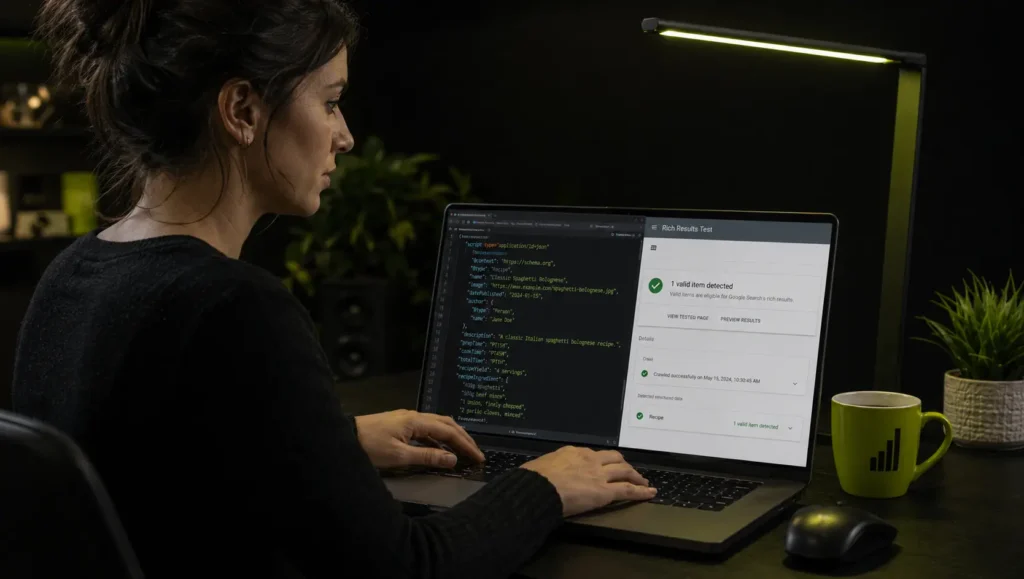
Structured data is one of the most underutilized video SEO techniques available. By adding Video Object schema markup to pages containing your video, you provide search engines with precise details about your content including the title, description, duration, thumbnail URL, and upload date.
Videos allow optimization via metadata, structured data (also known as schema), and transcripts. These elements help search engines understand your video content and the rest of your on-page content better, leading to higher rankings and increased features in video carousels.
Google and Microsoft have said that if you want your content to be visible in their AI features, use structured data. Structured data ensures your content is understood by search and AI and prepares it for agents.
Add Transcripts and Closed Captions
Search engines cannot watch or listen to your videos. They rely entirely on text-based signals to understand what a video contains. Transcripts and captions solve this problem completely.
Transcripts help search engines understand your video content better and improve your search engine rankings. Since search engines cannot watch videos, they rely on text-based content like transcripts and captions.
Beyond the SEO benefit, transcripts also make your content accessible to users who are deaf or hard of hearing, satisfy mobile viewers who watch without sound in public spaces, and allow users to skim the content before committing to watching, all of which improve engagement metrics.
Create Compelling Custom Thumbnails
Your thumbnail is the first visual impression of your video in search results. A generic auto-generated thumbnail wastes one of the most powerful conversion tools you have.
Custom thumbnails with clear text overlays, contrasting colors, and faces when appropriate perform significantly better. Adding a custom video thumbnail can double viewers and traffic to YouTube videos in search results.
A thumbnail that communicates what the video covers, displays a real human face, and uses high-contrast colors consistently outperforms generic thumbnails in both click-through rates and overall engagement.
Write Detailed Video Descriptions
Your description gives search engines context and gives viewers a reason to stay. Aim for 200 to 300 words that explain what the video covers, include key phrases naturally, and add a touch of storytelling or structure. Include timestamps if your video covers multiple topics, add calls to action, link to related content, and use semantic keywords and variations throughout your description.
Think of your video description as a short blog post that exists alongside your video. The more context and relevant language it contains, the more signals you provide to help search engines accurately index and rank your content.
Video Placement on High-Impact Pages
Where you embed your video on your website matters as much as the video itself.
Strategic video placement on high-impact pages like the homepage, product pages, or dedicated landing pages can significantly improve conversion rates. These are key areas where users make critical decisions, and videos help in guiding them toward desired actions.
Homepage videos reduce bounce rates by immediately engaging first-time visitors. Product page videos address common objections and dramatically increase conversion rates. Blog post videos extend session duration and reduce pogo-sticking back to search results.
Where to Host Your Videos: YouTube vs. Self-Hosting
This is one of the most common questions businesses ask when building a video SEO strategy, and the answer is almost always: use both.
Hosting on your website gives you complete control over the content and branding. You can customize the video player, add your branding, and control the user experience. YouTube is the second-largest search engine after Google and has a massive user base. Hosting your video on YouTube can reach a broader audience and increase visibility. You can also host videos on both YouTube and your site to maximize the reach and impact of your video marketing strategy and SEO efforts.
Upload to YouTube to benefit from its search engine authority, massive user base, and strong integration with Google’s ranking systems. Embed those same YouTube videos on your website to increase page dwell time, improve engagement metrics, and give your pages a richer content experience. Google has confirmed that embedded YouTube videos carry the same SEO value as natively hosted video content for the purposes of on-page ranking signals.
How Video Content Impacts SEO Performance Through Conversion
Video content’s influence on SEO extends beyond rankings into the conversion layer of your funnel, and conversion behavior feeds back into engagement signals that further influence rankings.
Landing pages with video see an 86 percent increase in conversion rates according to multiple marketing studies. The average conversion rate for websites with video is 4.8 percent compared to 2.9 percent for those without, a 66 percent improvement.
When users convert at higher rates, they spend more time completing actions on your site, which increases overall session quality metrics. Google’s systems track these behavioral signals at an aggregate level, and pages that consistently drive strong engagement across multiple users tend to maintain or improve their ranking positions over time.
How Voice Search Changes Content SEO in the Video Age
The relationship between video content and voice search is more connected than most SEO practitioners realize. Voice search is fundamentally reshaping the type of content that ranks, and video-first strategies are uniquely positioned to benefit.
Voice queries are longer, more specific, and carry clearer intent. People talk to their devices like they talk to other people. They ask full questions. They use filler words. Your content must reflect this conversational tone to be selected as an answer.
Video content naturally speaks in a conversational register. When you script a video to explain something clearly to a viewer, you tend to use the same direct, question-answering language that voice search users are speaking into their devices. By adding transcripts of that conversational content to your pages and structuring key moments as question-and-answer sections, you position your pages to capture both video search traffic and voice search queries simultaneously.
Voice search optimization often improves overall SEO performance, not just voice search rankings. Voice searches are local in nature and carry strong intent. Featured snippets are the source of most voice answers, so tracking and targeting them is the most direct measure of success.
Pairing video content with voice-optimized FAQ sections and featured snippet targeting creates a content architecture that performs across traditional search, voice search, and AI-generated answer boxes.
How Interactive Content Can Boost Your SEO Strategy Alongside Video
Video does not work in isolation. The most effective content strategies layer video with other interactive formats to create a comprehensive engagement ecosystem.
Interactive content including quizzes, assessments, calculators, polls, and comparison tools shares something critical with video: it dramatically increases time on page and user engagement depth. When interactive elements surround your embedded videos, users who finish watching naturally have a next step to take, further extending their session and reinforcing the positive behavioral signals being sent to search engines.
Consider structuring pages this way: an introductory video explaining the core concept, supporting written content that goes deeper, an interactive element that lets users apply what they learned (a calculator, a quiz, a checklist), and a closing video that summarizes and leads to the next piece of content. This architecture is nearly impossible to bounce away from quickly, and sustained engagement across many sessions is one of the clearest signals of content quality that modern search algorithms reward.
Additionally, interactive content generates natural social sharing and backlink opportunities similar to video. When people find a useful interactive tool alongside a helpful video, they are far more likely to share that URL across their own platforms, generating organic backlinks without any outreach required.
Video Content in AI Search: Getting Cited by ChatGPT, Perplexity, and Google’s AI Overviews
The rise of AI-powered search represents the next frontier for video SEO, and the rules are different from traditional ranking.
As AI-powered results continue to grow, video SEO must move beyond traditional tactics. Prepare your videos for inclusion in summaries and answer engines by adding transcripts or summaries to the page, including Q&A sections that answer specific queries, and using structured data to help AI models understand your content. Your video can then appear in AI overviews or answer engine results, not just SERPs.
Generative AI models often respond to natural-language questions. To show up in those answers, design your videos and their text data around answering questions clearly and directly. Create Q&A-style content, structure videos to answer common “what,” “how,” and “why” questions in your niche, and add descriptive headers around embeds to signal to large language models what question the video addresses.
AI systems favor content that is authoritative, well-structured, and answers specific questions with clarity. Transcribed video content paired with clean schema markup and descriptive surrounding text gives AI systems exactly the signals they need to cite your content in generated responses, which delivers brand visibility even when users never click through to a traditional search result.
Short-Form vs. Long-Form Video for SEO: Which One Works Better?
The answer depends on where the content lives and what goal it serves.
Short-form content like YouTube Shorts and Instagram Reels tend to get more views and engagement per view, even if they generate fewer comments. They are fast, engaging, and highly visible in mobile feeds. Research shows that 85 percent of viewers prefer videos under 15 seconds, and short-form content earns 2.5 times more engagement than long-form video. One strategy is to use Shorts to hook viewers, then drive them to long-form content for deeper engagement.
For SEO purposes on your website, longer educational videos tend to perform better because they keep users on the page for extended periods and cover topics comprehensively enough to satisfy complex search queries. For YouTube discovery and social distribution, short-form content builds reach and drives new visitors to your longer pieces.
The optimal approach is a flywheel: create comprehensive long-form videos for your website and YouTube channel, clip short-form excerpts from those long videos for Shorts and Reels, use those short clips to drive viewers back to the full version, and use the full version to increase on-page engagement metrics that strengthen your overall domain authority.
Measuring Whether Video Content Is Improving Your SEO
Tracking the impact of video on your SEO requires monitoring both traditional search metrics and video-specific engagement data.
In Google Analytics, watch for changes in average session duration, pages per session, and bounce rate on pages where you have added or improved video content. If those metrics improve after video integration, your rankings will typically follow within several weeks to months.
In Google Search Console, monitor organic click-through rates and average position for the specific pages that contain your videos. Also watch for new impressions from video-specific search features like video carousels.
On YouTube, track watch time, average view duration, and click-through rates from search results. Higher watch time sends stronger ranking signals within YouTube’s algorithm, and high CTR from search results tells the platform your content matches what users are looking for.
Frequently Asked Questions About Video Content and SEO
Does video content improve SEO for small business websites, or only for large brands?
Video content improves SEO for websites of all sizes. In fact, small businesses often benefit more than large brands because they face less competition in video search results for local and niche queries. A well-produced explainer video from a small business can outrank a large competitor that has not invested in video content for that specific topic.
How does video content impact SEO performance on mobile devices?
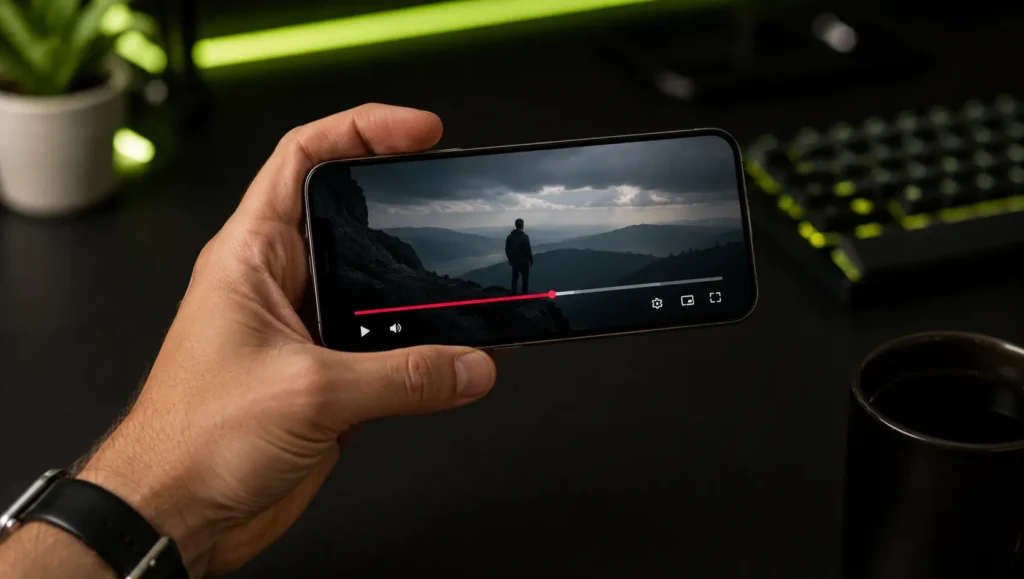
Video content plays a significant role in adapting to trends in voice search and mobile consumption, offering video marketers a unique edge in driving web traffic and improving search visibility. About 55 percent of online users watch video content daily. Mobile users consume video at particularly high rates, and since Google uses mobile-first indexing, video content that performs well on mobile devices directly contributes to overall ranking performance.
How voice search changes content SEO and whether video helps ?
Voice search favors content that answers questions conversationally and directly. Video transcripts, when added to your pages, provide exactly that kind of natural, question-answering language. Adding FAQ sections based on the spoken content of your videos is one of the fastest ways to start capturing voice search queries alongside your video search traffic.
Does the production quality of a video affect its SEO impact?
Content quality and relevance matter more than production value. Basic equipment and clear audio often produce strong SEO results. Top 5 rankings have been achieved with simple talking-head videos using minimal equipment. A video shot on a smartphone that genuinely answers a user’s question will outperform a beautifully produced video that fails to deliver relevant information.
How interactive content can boost your SEO strategy when combined with video?
Interactive content and video reinforce each other’s SEO impact. Interactive quizzes, calculators, and assessment tools placed on the same page as relevant video content extend session duration, reduce bounce rates, and give users multiple reasons to share the page. The combined engagement signal is significantly stronger than either format produces alone, and that stronger engagement signal translates directly into ranking improvements.
Should I add video to existing pages that are already ranking, or only to new content?
Adding video to existing ranking pages is actually one of the highest-ROI applications of video content. Pages that already have established authority from backlinks and indexing history can see rapid ranking improvements when video is added because the engagement metrics improve immediately while the existing authority remains intact. Real-world experiments showed a 300 percent increase in search impressions within 30 days and top 5 rankings achieved for new content with embedded video.
What is the best video length for SEO purposes on a website?
Most sales videos should be kept under two minutes to retain viewer attention. Shorter videos are especially effective for mobile searches and align with the consumption habits of mobile users. For educational content and tutorials where users are seeking in-depth information, longer videos of 8 to 15 minutes tend to generate stronger dwell time improvements. Match video length to the complexity and intent of the query your page is targeting.
How do transcripts specifically help video content rank higher?
Transcripts give search engine crawlers text-based content to index from your video. Without a transcript, search engines rely only on your title, description, and surrounding page text to understand what a video contains. With a transcript, every keyword, topic, and concept spoken in the video becomes indexable text, dramatically expanding the number of search queries your page can match and rank for.
Summary: Does Video Content Improve SEO?
Video content improves SEO through a clear chain of cause and effect. Videos increase dwell time, and higher dwell time signals content quality. Videos attract backlinks, and backlinks build domain authority. Videos appear in carousels and rich results, and those appearances improve click-through rates. Videos reduce bounce rates, and lower bounce rates reinforce ranking positions. Videos generate social shares, and those shares expand reach and earn additional organic links.
The data consistently shows that websites integrating video into their content strategy outperform those that rely on text alone, across organic traffic, search rankings, engagement metrics, and conversion rates.
Whether you are a local service business, an ecommerce store, a SaaS company, or a content publisher, the question is no longer whether does video content improve SEO. The question is how quickly you can build a video strategy that captures the search visibility your competitors are already earning.

Wali Shah is the Founder and CEO of SkillsHeaven, a digital growth agency specializing in Local SEO, Google Ads, and conversion-focused website development. With over 8+ years of experience, he has helped scale 170+ businesses, including 93+ limousine companies globally, by building structured, lead-generating digital systems. His expertise spans local search optimization, paid media strategy, and high-performance website development, all aligned with measurable business growth. Known for a data-driven and ethical approach, Wali focuses on creating scalable marketing systems that increase visibility, generate qualified leads, and drive long-term revenue for service-based businesses.