Email marketing is often declared dead every few years, yet in the UAE it continues to evolve into one of the most stable and high-converting digital channels.
The reason is straightforward. The UAE has a highly digital population, strong smartphone usage, and one of the most advanced business ecosystems in the Middle East, especially in cities like Dubai and Abu Dhabi.
Unlike casual social media interactions, email remains the preferred channel for B2B communication, real estate inquiries, luxury brand engagement, banking and fintech updates, and high-ticket service nurturing. It carries a level of credibility and intent that other platforms simply cannot match.
However, the future of email marketing in the UAE is no longer about sending newsletters. It is about automation, personalization, cultural adaptation, and omnichannel integration. Businesses that still rely on basic bulk email campaigns are already falling behind.
1. Shift from Mass Emailing to Smart CRM-Driven Funnels
One of the biggest changes in UAE email marketing is the move from mass emailing to CRM-powered automation funnels. Earlier, companies would send one email to thousands of contacts. Today, that approach is ineffective due to strict spam filters and consistently low engagement rates.
Modern UAE businesses now use lead scoring systems, behavioral triggers, customer journey automation, and segmented nurturing sequences to reach the right person at the right moment in their decision-making process.
A user who downloads a brochure for a Dubai property no longer receives generic emails. Instead, they enter a structured funnel starting with property details on day one, followed by a video walkthrough, a price comparison sheet, and a WhatsApp follow-up from an agent. This shift is making email marketing more sales-driven rather than just informational.
2. AI-Powered Email Marketing Is Becoming Standard in UAE
Artificial intelligence is no longer optional. It is becoming the backbone of modern email campaigns across UAE businesses. AI is being used for predicting user behaviour, generating subject lines, optimising send times, segmenting audiences automatically, and personalising content blocks at scale.
The UAE market is highly diverse, with expats from different regions, languages, and income levels. AI helps businesses adjust messaging based on nationality, buying behaviour, device usage, and location across cities like Dubai, Abu Dhabi, and Sharjah.
Instead of guessing what works, AI allows brands to send the right message to the right audience at the right time. This precision is what separates high-performing campaigns from those that generate complaints and unsubscribes.
3.Hyper-Personalization Beyond Just the First Name
Basic personalization such as greeting someone by their first name is no longer enough. In UAE, hyper-personalization is now expected, especially in competitive industries like real estate and e-commerce where audiences have high standards for relevance.
Modern email personalization now includes location-based offers tailored to areas like Dubai Marina or Downtown Dubai, product recommendations based on browsing behaviour, currency and language adaptation, and lifestyle-based segmentation that goes far deeper than demographics.
A luxury shopper in Dubai receives exclusive VIP collection previews and invitations to private events, while a budget-conscious customer receives discounts, bundle offers, and seasonal promotions. This level of segmentation significantly improves both engagement and conversion rates.
4.Mobile-First Email Design Is Now Mandatory
In the UAE, the majority of emails are opened on mobile devices. This makes mobile-first design a critical factor, not a secondary consideration. Key practices include short subject lines, single-column layouts, large clickable buttons, fast-loading images, and AMP email integration.
Users in UAE often check emails while commuting, shopping, or during short breaks. If an email is not optimised for mobile, it is instantly ignored or deleted. The few seconds it takes to dismiss a poorly formatted email are seconds a competitor can use to make an impression.
Brands that invest in mobile user experience consistently see significantly higher click-through rates and conversions. For any business operating in UAE, mobile-first is the baseline, not the upgrade.
5. WhatsApp and Email Hybrid Funnel Strategy
One of the most unique trends in UAE marketing is the combination of email and WhatsApp automation. Email alone is no longer the final conversion channel. Instead, businesses use a hybrid approach where email builds trust and provides detailed information while WhatsApp closes the deal through instant communication.
A typical hybrid funnel works as follows. A user fills out an inquiry form, receives a detailed email proposal, gets a WhatsApp message for a quick follow-up, and the sales team closes the deal through direct chat. This combination works extremely well in UAE because WhatsApp usage is very high and communication speed is highly valued.
Businesses that adopt this hybrid model report faster deal cycles and higher close rates compared to those relying solely on email sequences. It reflects how people in the UAE actually prefer to communicate in professional and commercial settings.
6. Arabic and English Bilingual Email Strategy
A major gap in many UAE email campaigns is the lack of bilingual communication. Most businesses still rely only on English emails, which limits engagement with Arabic-speaking audiences who represent a significant portion of the market.
Future-focused brands are now using Arabic subject lines for higher open rates, dual-language email formats, and cultural tone adaptation that goes beyond simple translation. The messaging must feel native, not like it was run through an automated tool.
In sectors like government services, real estate, and retail, Arabic communication builds stronger trust and emotional connection. Even simple bilingual adjustments can produce a meaningful increase in open rates and engagement across Arabic-speaking segments.
7.Deliverability Challenges in UAE Email Marketing
One of the most overlooked issues in UAE email marketing is deliverability. Many businesses invest heavily in design and content but ignore whether their emails are actually reaching inboxes. Common problems include spam filtering in corporate domains, poor domain reputation, over-sending cold emails, and lack of proper authentication through SPF, DKIM, and DMARC records.
The solutions to these challenges involve email warming campaigns, regular list cleaning and validation, gradual scaling of outreach, and reputation monitoring tools. Without prioritising deliverability, even the best-designed and most thoughtfully written campaigns will fail before they reach a single inbox.
Deliverability is the silent variable in email performance. Businesses that understand and manage it consistently outperform those that focus only on creative elements while neglecting technical infrastructure.
8.Industry-Specific Email Marketing Growth in UAE
Email marketing in UAE behaves differently across industries. A one-size-fits-all strategy does not work in a market as diverse and specialised as the UAE. Each sector requires a different messaging psychology and timing approach that reflects the unique needs of its audience.
Real Estate
Real estate campaigns perform best with off-plan property drip sequences, automated investment nurturing emails, and virtual tour content that allows prospects to explore properties from anywhere in the world before committing to a viewing.
Tourism and Hospitality
Tourism and hospitality brands drive bookings through seasonal travel offers, personalised holiday packages based on past behaviour, and loyalty-based email sequences that reward returning customers and encourage repeat bookings.
E-Commerce
E-commerce businesses rely heavily on flash sale notifications, abandoned cart recovery emails, and personalised product recommendations that bring users back to complete purchases they left unfinished.
Banking and Fintech
Banking and fintech companies use email for security alerts, financial product education, and trust-building newsletters that position the brand as a credible and reliable partner in the user’s financial life.
9. Data Privacy and Trust-Based Marketing in UAE
As digital awareness increases, users in UAE are becoming more sensitive about how their data is collected and used. Email marketing is shifting toward consent-based subscriber lists, transparent data usage policies, reduced aggressive retargeting, and ethical marketing practices that put the user’s experience first.
Trust is becoming a competitive advantage in the UAE market. Brands that respect user privacy, honour unsubscribe requests promptly, and avoid spam-like behaviour are building long-term relationships that outperform those built on volume and pressure tactics.
In a market where word of mouth and brand reputation carry significant weight, ethical email marketing is not just a compliance requirement. It is a strategic investment in sustainable audience growth.
Email Marketing ROI Is Becoming More Precise
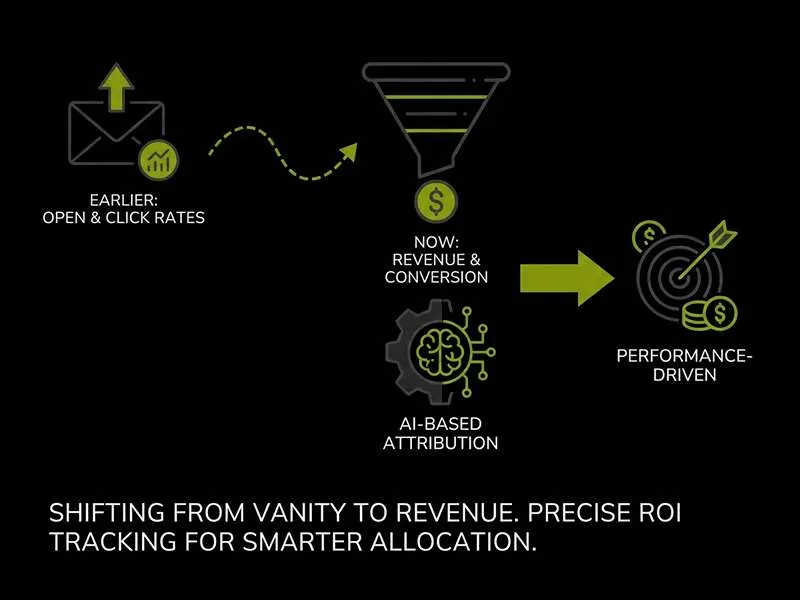
Earlier, email success was measured using open rates and click rates in isolation. Now, UAE businesses focus on revenue per email, conversion per segment, customer lifetime value generated through email funnels, and AI-based attribution tracking that shows exactly how email contributes to each sale.
This shift is making email marketing more performance-driven rather than vanity-metric driven. Businesses can now see exactly which sequences, segments, and subject lines are generating revenue, and allocate resources accordingly.
Email Marketing in UAE Is Becoming Omnichannel
Email is no longer a standalone channel. It is now the central layer of a larger marketing ecosystem. Modern UAE marketing funnels connect Google Ads or Meta Ads to email capture, email nurturing to WhatsApp follow-up, and CRM tracking to retargeting ads.
This creates a full-circle customer journey where email acts as the primary trust-building layer that ties every other channel together. Businesses that build this connected ecosystem gain a structural advantage over those running isolated campaigns.
The Future Is Intelligent, Not Manual
The future of email marketing in the UAE is not about sending more emails. It is about sending smarter emails that reach the right person, at the right time, with the right message. The winning formula for 2026 and beyond combines AI-driven automation, hyper-personalization, mobile-first design, WhatsApp integration, cultural and language adaptation, and strong deliverability practices.
Businesses that still rely on traditional email blasts will struggle to compete in the UAE’s fast-evolving digital ecosystem. On the other hand, brands that embrace automation, intelligence, and omnichannel strategies will turn email into one of their highest ROI channels.
Email marketing in UAE is not declining. It is becoming more powerful, more precise, and more intelligent than ever before. Skills Heaven helps businesses across UAE build and execute this smarter approach from strategy through to measurable results.

M. Awais Khan is a Business Development and Digital Growth Strategist at SkillsHeaven, specializing in SEO, local search optimization, and performance-driven digital marketing. With experience supporting 100+ businesses, he develops and implements data-driven strategies that help companies increase online visibility, generate qualified leads, and drive sustainable revenue growth. His expertise spans Local SEO, Google Ads, social media marketing, and conversion-focused website optimization, ensuring every project is aligned with measurable business outcomes and long-term success.