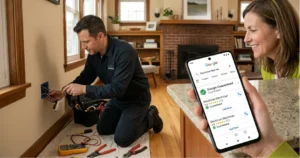
Google Local Services Ads (LSAs) are a pay per lead advertising solution that places your business at the very top of Google Search results, directly above traditional paid search ads and all organic listings, connecting you with verified, high intent local customers who are ready to hire right now. Whether you run a plumbing company, an HVAC business, a law firm, or an asphalt paving operation, this platform is built specifically to generate qualified leads in your service area, charging you only when a potential customer calls or messages you directly through your ad.
This guide answers every question you have about Google Local Services Ads, from how the platform works and where your ads appear, to which business categories are eligible, how to generate consistent leads, and how to optimize your profile for maximum performance.
What Are Google Local Services Ads?
Google Local Services Ads are a pay per lead advertising product created specifically for service area businesses. Unlike traditional pay per click models, Google only charges you when a potential customer contacts you directly through the ad. This means your advertising budget is focused entirely on real business opportunities, not empty website clicks from people who were never going to hire you.
These ads are visually distinct from typical Google Ads or organic results. They display a business name, phone number, Google rating, hours of operation, and location. They are designed for quick action: a tap to call, message, or book.
Think of LSAs as business cards, allowing your customers to identify and communicate with you directly. They allow white and blue collar professionals to appear at the top of the Google search engine result page (SERP) for queries relating to the specific type of business they offer.
The platform rewards businesses that maintain strong reputations, respond quickly to leads, and keep their profiles fully optimized. It is not about outbidding competitors on keywords. It is about being the most trusted, responsive, and relevant provider in your area.
Where Do Google Local Services Ads Appear in Search Results?
Local Service Ads appear at the very top of the page, above everything else, with a “Google Screened” or “Google Guaranteed” badge, your star rating, and a direct call or message button.
This placement matters enormously. According to research on LSA ranking factors, LSAs appear above traditional ads and organic results and can capture over 50% of total leads for service businesses. No other advertising format on Google consistently occupies this level of prominence.
Beyond Google Search, in mid 2024, Google launched LSA ads on Google Maps, initially limited to the iOS version of the mobile app, expanding the reach of your ads to people actively searching for services while on the move.
When a person searches for something like “electrician near me,” “driveway paving contractor,” or “family lawyer in [city],” Google evaluates the search intent, matches it to eligible LSA profiles, and displays a carousel of verified local businesses above everything else on the page. Your profile, complete with your star rating, number of reviews, and verified badge, is the first thing that customer sees.
What Is the Google Verified Badge?
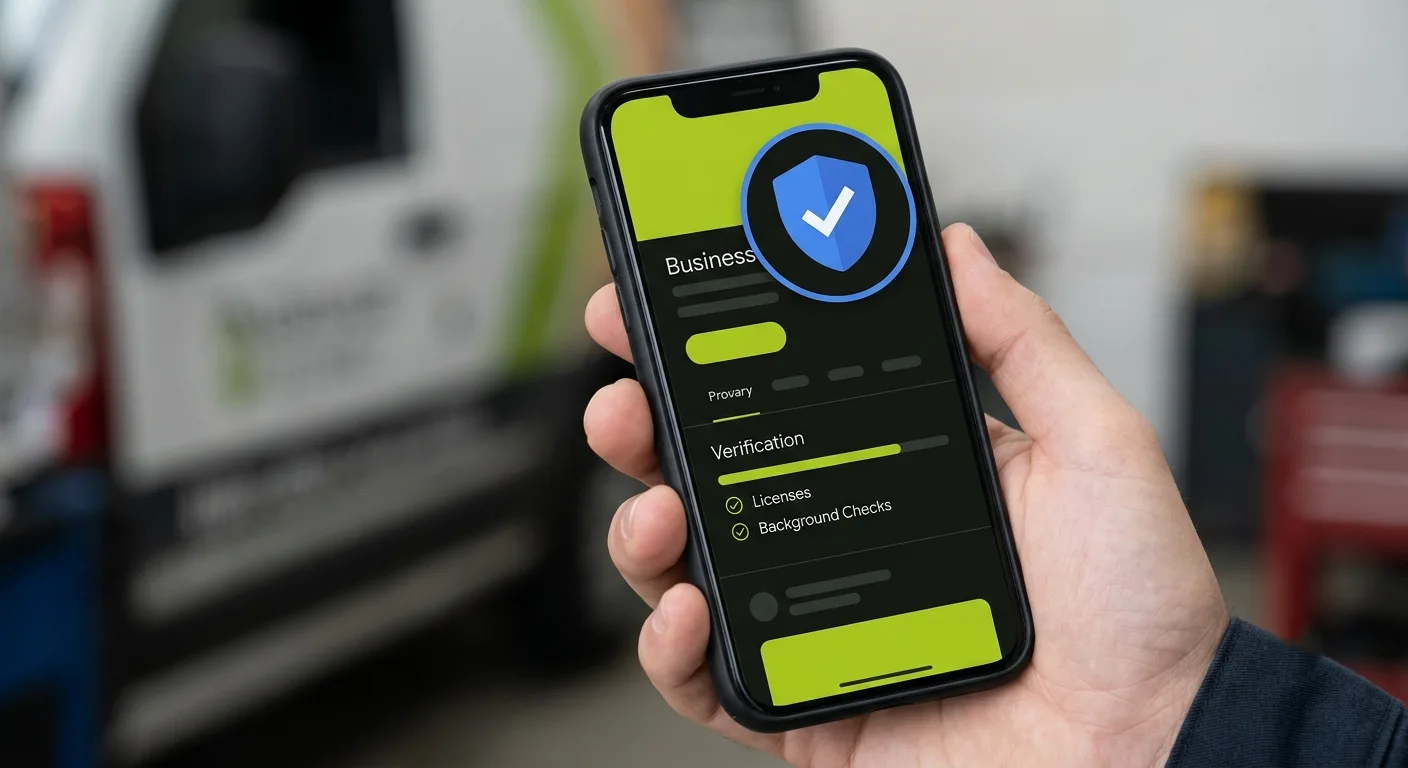
Google has replaced every previous trust icon in Local Services Ads with one clear signal: the blue Google Verified badge. The move streamlines how customers judge credibility and keeps your profile looking consistent across Google surfaces. The new badge unifies Google Guaranteed, Screened, and License Verified under one label.
Earning this badge requires your business to pass a verification process that can include business license checks, insurance validation, and background screening. The verification step filters out a lot of weak competition before the auction even starts, which means that when your ad appears, you are already competing in a much smaller, more credible pool of providers.
If you have read older content referring to “Google Guaranteed Ads,” know that this has evolved into the unified Google Verified badge system. The trust signal for customers remains strong, and the verification requirements remain equally rigorous.
How Google Local Services Ads Work: The Pay Per Lead Model
The mechanics of Google Local Services Ads are straightforward and highly favorable for local service businesses:
A local customer searches for your type of service on Google.
Step 2: Google checks the location and service category and shows eligible LSAs. The user sees your ad, including reviews, hours, and the Google Verified badge.
Step 3: If the user calls, messages, or books through the ad, you are charged for the lead. If someone sees your profile and does not reach out, you pay nothing.
Step 4: You manage and respond to all incoming leads through the Google Ads platform at ads.google.com/local services. As of January 6, 2025, Google discontinued the standalone LSA mobile app. All LSA account management now takes place through the Google Ads platform.
This model is fundamentally different from traditional Google Ads. Standard Google Ads charge you every time someone clicks your ad, regardless of whether they call, fill out a form, or immediately bounce. LSAs flip this model entirely. You pay per lead, and that lead is someone who actually picked up the phone or sent a direct message.
How to Generate Leads with Google Local Services Ads
Generating a strong, consistent volume of leads from your LSA profile depends on several interconnected factors. Here is what moves the needle:
Responsiveness is the single most powerful lever.
“In local service businesses, 35 to 50% of sales go to the first responder,” according to research on local search behavior. “Customers in an emergency don’t wait. They call the next person on the list within two to three minutes if they don’t reach you.” Enable push notifications, route calls to your mobile device first, and set up a text back system for any missed calls.
Your Google Business Profile is your foundation.
The need for a well optimized GBP behind your local ads goes back to November 2024, when Google made a linked and verified GBP a requirement for LSA campaigns. As such, if Google suspends your GBP for any reason, your LSA campaigns will subsequently pause.
Reviews drive ranking and conversion simultaneously.
Businesses with 50 or more reviews and a 4.5 or above average rating consistently rank higher than those with fewer or lower rated reviews. A well reviewed independent contractor who answers every call can outrank a franchise with more ad spend but slower response times.
Set your service area and hours accurately.
Set business hours accurately. LSAs prioritize businesses that are available when the search happens. If you offer 24 hour emergency service, indicate that specifically. It dramatically improves your visibility on late night searches.
Use the Maximize Leads bidding strategy.
According to Google’s documentation, LSA ads are displayed and ranked based on an auction that considers your bid and your overall profile quality. Contractors using Maximize Leads typically receive more leads than those who set manual bids, because Google can optimize in real time.
Upload professional job photos.
LSA profiles with photos see higher engagement rates. Use before and after shots where possible.
How to Optimize Google Local Services Ads for Maximum Performance
Optimization is not a one time task. It is an ongoing process that separates the highest performing LSA accounts from everyone else. Here is a practical framework:
Build and protect your review velocity.
Reviews are the currency of the LSA platform. Ask every satisfied customer to leave a review directly on your Google Business Profile. Your GBP rating and review volume directly impact rankings for LSAs. Consistent, recent reviews signal to Google that your business is active, trustworthy, and worth showing prominently.
Respond to every lead within minutes.
Google monitors your response behavior. Businesses that consistently answer calls and reply to messages receive better visibility. Set up your operations so that incoming LSA leads are always treated as the highest priority contact in your day.
Select your service types precisely.
LSAs require you to choose whether you are open to more general inquiries or if you require the leads to be more specific. If you opt not to go for the volume of general leads, you retain the right to dispute calls and messages that do not align with the categories you select. Narrow, accurate service category selection ensures you receive leads that match the actual work you want to win.
Provide feedback on every lead you receive.
We recommend providing feedback through the Lead Feedback Survey for every lead you receive, as Google uses this data to improve its algorithm and may occasionally issue credits based on your feedback. This is especially important since Google moved to an automated lead credit system in mid 2024.
Align your LSA profile with a strong local SEO foundation.
LSAs can impact local SEO by connecting ads with your Google Business Profile, enabling high quality ads to boost your GBP and business rankings in organic search results. Your visibility in paid and organic local search reinforces itself when both channels are properly maintained.
Audit your service area settings regularly.
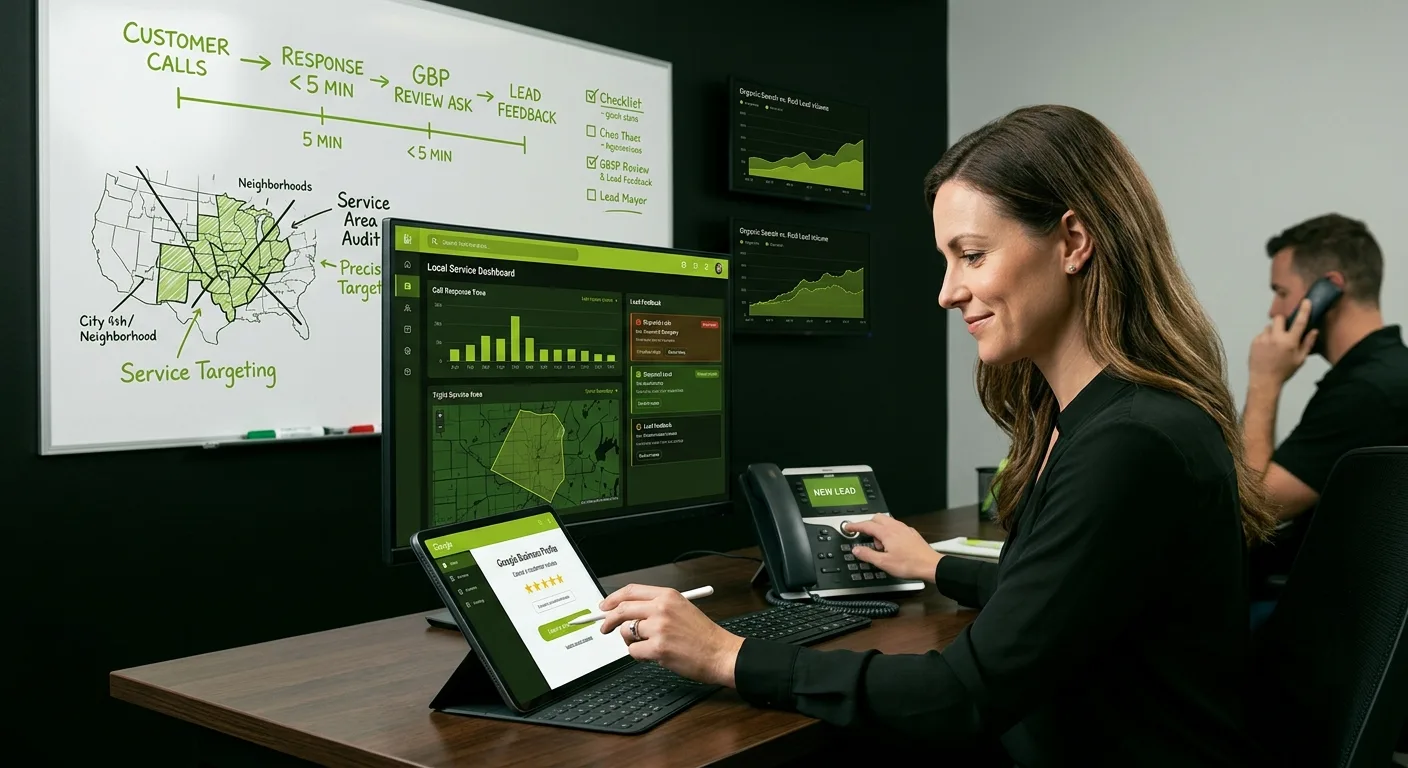
Service areas that are too broad result in leads outside your profitable geography. Review momentum fades. Lead handling slows down. Service area settings stay too broad. The account loses sharpness. Keeping your targeting tight and your profile current prevents this gradual performance decline.
What Business Categories Are Eligible for Google Local Services Ads?
Google has expanded the range of service categories available for Local Service Ads. Previously, LSAs were limited to a handful of service types, but now they have broadened their scope to over 70 business types.
Eligible categories include home services such as plumbing, contracting, and moving; business services such as lawyers, accounting, and real estate; health services such as dentists, optometrists, and primary care; learning services such as preschool and tutoring; care services such as child care and pet training; wellness services such as massage and yoga; beauty services such as aestheticians and hair stylists; and automotive services such as mechanics, installers, and body shops.
Is Asphalt Paving Eligible for Google Local Services Ads?
Yes. For paving contractors specifically, the relevant LSA categories include asphalt paving, driveway installation, sealcoating, and related services. Selecting the right ones determines which searches trigger your profile.
Google Local Services Ads are designed to boost local visibility for paving and masonry contractors. These ads prioritize proximity and positive reviews, helping potential customers quickly find and trust businesses in their area.
The economics are compelling for this trade. Asphalt paving jobs tend to be high ticket. A residential driveway repaving runs $3,000 to $7,000, and commercial parking lot projects can easily hit $20,000 to $100,000 or more. When your average job value is that high, paying $50 to $75 per qualified lead is a strong investment, even if you only close 20 to 30% of them.
Are Paving Contractors Eligible for Google Local Services Ads?
Yes, paving contractors are eligible. Originally limited in scope, Local Services Ads now cover over 70 industries, including paving and masonry. Since their launch in 2015, availability has expanded across many U.S. markets, as well as countries like the UK and Canada. However, access still varies by industry and location. To see if your business is eligible, use Google’s checker tool.
Is Printer Repair Eligible for Google Local Services Ads?
Printer repair as a standalone category is not currently listed among Google’s standard LSA eligible industries. However, certain technology repair and device repair categories, such as cell phone repair, have been added in recent expansions. Google has broadened their scope to over 70 business types, including new categories such as house cleaning, cell phone repair, and many more. Businesses in technology repair adjacent fields should check current eligibility directly at ads.google.com/local services by entering their zip code and business category, as Google continues to expand the platform regularly and eligibility can vary by market and region.
Google Local Services Ads vs. Traditional Google Ads: Key Differences
Understanding the distinction between these two platforms helps you make smarter budget decisions:
Google Ads are pay per click ads that appear in the section labeled “Sponsored” in regular search results. You bid on keywords, pay when someone clicks your ad, and then hope they contact you from your landing page. Local Service Ads appear at the very top of the page, above everything else, with a badge, your star rating, and a direct call or message button. You pay only when the customer initiates contact.
LSAs remove the landing page from the equation for the initial contact. This is a significant advantage for emergency and high intent service searches where customers want to call immediately rather than browse a website.
For most home service contractors running emergency intent searches, LSAs produce better ROI. For planned purchase searches with landing page control, Google Ads often perform better.
The most effective local service businesses use both. LSAs deliver fast, high intent leads. PPC offers broader keyword reach. SEO builds sustainable visibility over time.
The Verification Process: What to Expect
Before your Google Local Services Ads go live, your business must pass a verification process. Requirements vary by industry, but typically include:
Business license verification: Google checks that you hold the appropriate licenses for your trade and location.
Insurance documentation: You must provide proof of current liability and, in many cases, worker’s compensation insurance.
Background screening: You must pass a background check. Google uses third party screening to verify the legitimacy of your business and its operators.
Google Business Profile: As of November 2024, Google made Google Business Profile verification mandatory. It is important for businesses to include all relevant and up to date information in a valid GBP to ensure compliance.
This process can feel demanding, but it works in your favor. Every business that passes verification enters a smaller, more credible competitive pool. The badge your profile earns tells every potential customer that Google has reviewed and approved your operation, which is a trust signal that no amount of ad spend alone can replicate.
Setting Up Your Google Local Services Ads Account
Follow this proven process to launch your LSA profile correctly from the start:
Verify your Google Business Profile first.
Everything else in your LSA account builds on top of your GBP data, including your reviews, your business category, your service area, and your contact information.
Check eligibility for your trade and location.
Visit ads.google.com/local services, enter your zip code and job category, and confirm that LSAs are available for your specific combination of service type and geography.
Create your LSA account.
Sign in at ads.google.com/local services, select your business information, and pull your details directly from your Google Business Profile to ensure consistency across platforms.
Complete the verification steps promptly.
Complete all verification steps, including background check, license, and insurance, as quickly as possible. Delays in this phase delay your ability to start receiving leads.
Set your budget using the Maximize Leads strategy.
Set your budget using the Maximize Leads strategy and be prepared to wait several weeks for leads to ramp up. The platform needs time to learn your business profile before lead volume reaches its full potential.
Build your review foundation before going live.
Build up your review count. Google compares your reviews directly against your competitors. If everyone around you has 200 reviews and you have 12, you are starting at a disadvantage before you even turn on ads.
Common Mistakes That Hurt LSA Performance
Knowing what not to do is just as valuable as knowing what to do:
Slow lead response.
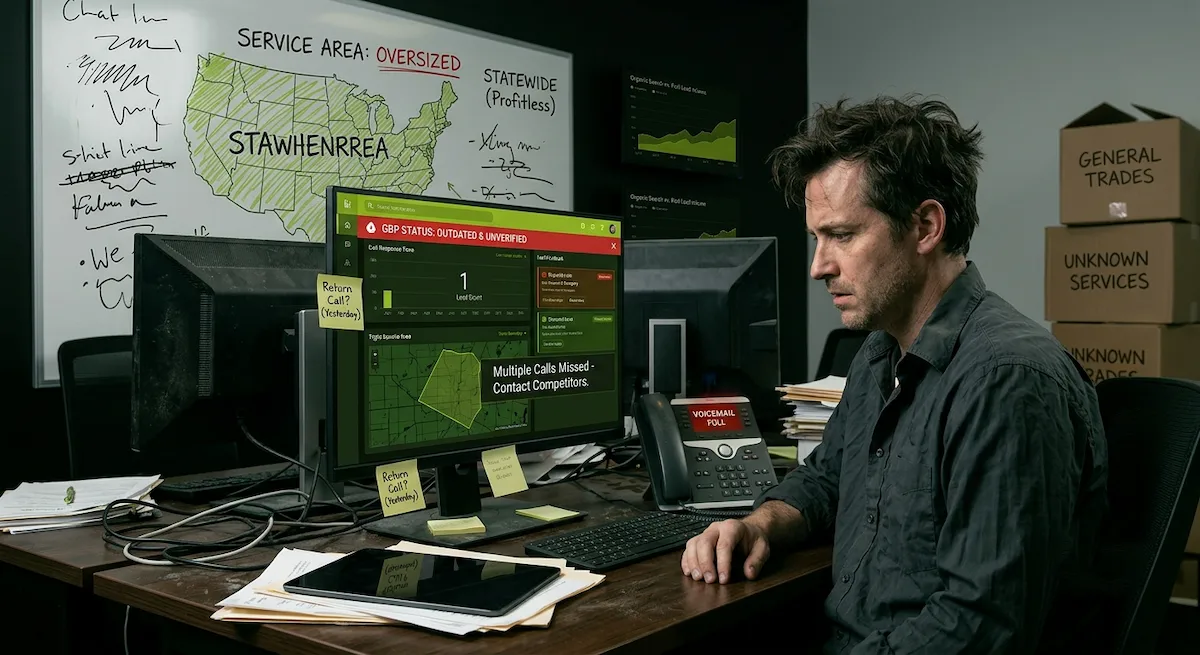
Missing calls or taking hours to return messages signals low availability to Google and sends potential customers to your competitors within minutes.
Inaccurate service categories.
Selecting too many or irrelevant job types results in leads that do not match your actual services, wasting your budget and damaging your profile’s lead quality signals.
Ignoring lead feedback.
Not flagging mismatched or low quality leads means Google’s system has no signal from which to improve the leads it sends you.
Letting GBP go stale.
As of November 2024, Google made Google Business Profile verification mandatory for all Local Services Ads advertisers. Businesses must have a verified, public GBP with accurate, up to date information to maintain LSA eligibility. Outdated hours, wrong phone numbers, or unverified profiles can pause your ads entirely.
Setting service areas that are too broad.
Covering entire states or oversized metro areas generates leads outside your profitable territory. Keep your radius tight and profitable.
Why Google Local Services Ads Deliver Exceptional ROI for Service Businesses
The combination of top placement, pay per lead pricing, and verified trust signals makes this platform one of the highest ROI advertising channels available to local service businesses today.
Businesses using Local Services Ads report a 75% increase in lead generation efficiency compared to traditional advertising approaches.
Leads have already seen your reviews, business hours, and trust signals before they reach out. LSAs show up above organic results and traditional PPC ads, which gives you immediate visibility. You are not fighting for attention through ad copy or landing pages. The customer has already evaluated your credibility and chosen to call you. That is the highest quality point of entry any advertising platform can deliver.
The real world winning approach for many service businesses is this: use Google Local Services Ads to capture high intent direct leads, use local SEO and Google Business Profile optimization to strengthen trust, visibility, and review velocity, and use search campaigns where keyword control and full funnel flexibility add value on top.
When all three layers are working together, local service businesses build a lead generation system that is both immediately productive and compounding in value over time.
Frequently Asked Questions About Google Local Services Ads
What are Google Local Services Ads?
Google Local Services Ads are a pay per lead advertising format that places verified local service businesses at the very top of Google Search results, above all traditional paid ads and organic listings, charging only when a customer calls or messages through the ad.
Where do Google Local Services Ads appear?
Local Service Ads appear at the very top of the page, above everything else. They also now appear within Google Maps results on mobile devices, expanding reach beyond search alone.
What are Google Guaranteed Ads?
Google Guaranteed Ads were the former name for what is now called Google Local Services Ads carrying the Google Verified badge. The new badge unifies Google Guaranteed, Screened, and License Verified under one label, streamlining the trust signal customers see across all Google surfaces.
Are asphalt paving contractors eligible for Google Local Services Ads?
Yes. The relevant LSA categories for paving contractors include asphalt paving, driveway installation, sealcoating, and related services. Eligibility is confirmed at ads.google.com/localservices by entering your zip code and service category.
How do I generate more leads from Google Local Services Ads?
Respond to every lead immediately, build a consistent flow of five star reviews, keep your Google Business Profile fully optimized and verified, set accurate service areas and business hours, and use the Maximize Leads bidding strategy within your LSA account.
How much do Google Local Services Ads cost?
You pay per lead, not per click. Cost per lead varies by industry, location, and competition. Paving contractors in competitive markets typically see lead costs in the $25 to $75 range, while other industries may see higher or lower figures based on job value and local market dynamics

Atif Khan is a highly experienced Local SEO Expert and Strategic SEO Consultant who helps businesses turn their websites into powerful lead-generating assets. With hands-on experience optimizing and ranking over 100 websites across competitive industries, he specializes in building data-driven SEO systems that improve local search visibility, attract qualified traffic, and convert visitors into customers. His expertise spans Google Business Profile optimization, technical SEO, keyword research, content strategy, and conversion-focused website optimization, ensuring every project is aligned with measurable business outcomes. Atif focuses on creating complete local search ecosystems, combining website authority, relevance, and trust signals to help businesses dominate in their target locations. Beyond rankings, he develops scalable growth strategies that drive calls, inquiries, and long-term revenue. His approach is rooted in ethical, white-hat SEO practices, continuous optimization, and performance tracking, ensuring sustainable results. As a consultant, he works closely with businesses and agencies to align SEO with revenue goals, improve digital presence, and build long-term organic acquisition systems.