
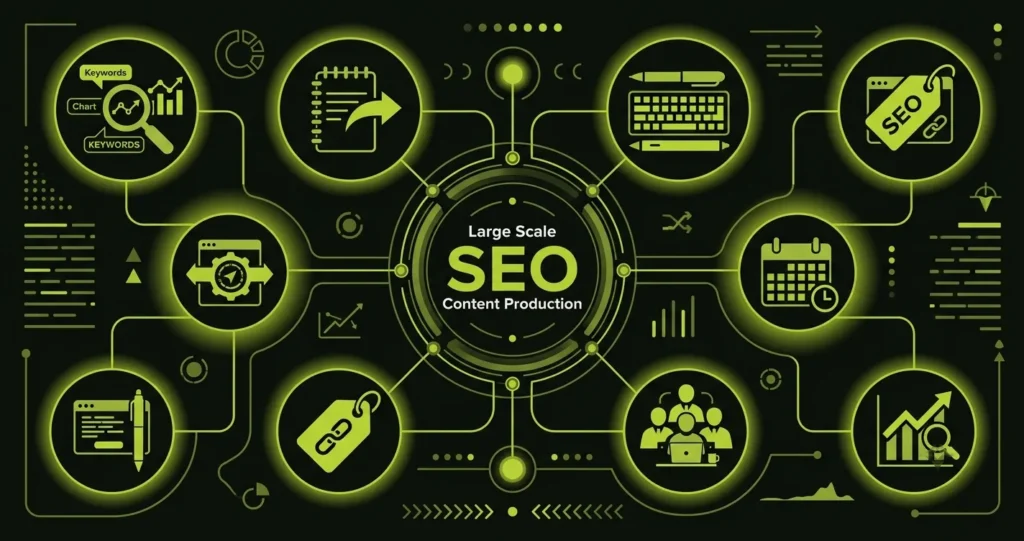
Agencies coordinate large scale content production for SEO by combining structured workflows, specialized roles, and dedicated tools that turn keyword research into published, search ready content on a consistent schedule. This coordination is what separates a handful of scattered blog posts from a true content engine that compounds visibility month after month. If you have ever wondered what can SEO do for your business when content is produced at scale and in a disciplined way, the honest answer is that it becomes a predictable growth channel rather than a guessing game. Our team supports this kind of coordinated content production worldwide, working with brands across every time zone to plan, write, optimize, and publish content that earns rankings and drives qualified traffic.
Producing content at scale is not simply about writing more articles. It requires a content supply chain where strategists, writers, editors, and technical specialists all work from the same plan, supported by tools like Notion, Airtable, or Monday.com for project tracking and platforms like Semrush, Ahrefs, SurferSEO, and Clearscope for research and optimization. When this system runs smoothly, businesses see steady gains in organic visibility, stronger topical authority, and a healthier pipeline of leads.
Why SEO Matters For Your Business
Search engines like Google and Bing remain one of the most consistent sources of intent driven traffic available to any business. People searching for a product, service, or answer are already expressing interest, which makes organic search one of the highest value channels a brand can invest in.
So what can SEO do for your business in practical terms? It helps your website appear in front of people actively looking for what you offer, builds long term brand credibility through demonstrated expertise, and reduces your dependence on paid advertising over time. Unlike a paid campaign that stops the moment the budget runs out, well structured SEO content continues to attract visitors for months or years after it is published.
SEO also strengthens how search engines and readers perceive your brand through Experience, Expertise, Authoritativeness, and Trust, commonly referred to as EEAT. Agencies that understand this principle design content that genuinely informs readers, cites credible information, and reflects real subject matter knowledge rather than thin, generic writing.
How SEO Drives Business Growth
Growth from SEO rarely comes from a single article. It comes from a body of content that works together to satisfy search intent across an entire topic area. This is where the Pillar and Cluster model becomes valuable. A central pillar page covers a broad topic in depth, while supporting cluster articles address specific subtopics and link back to the pillar. Search engines reward this structure because it signals topical authority and makes crawling and indexing more efficient.
Several factors influence how much business growth content can generate.
Search Intent Alignment
Content that matches what a searcher actually wants to accomplish, whether that is learning, comparing options, or making a purchase, tends to rank higher and convert better than content written only around a keyword.
Internal Linking and Site Structure
A thoughtful internal linking strategy connects related articles, passes authority between pages, and helps both users and search engine crawlers navigate a website efficiently. Many agencies also ask how many external links in content seo should include, and the honest answer is that quality matters more than quantity. A small number of links to authoritative, relevant sources such as Search Engine Journal or Search Engine Land can support credibility, while excessive linking dilutes focus and may distract readers from your own message.
Technical Health
Even excellent writing struggles to rank if a website has crawl budget issues, broken schema markup, or indexing errors. Tools such as Screaming Frog, ContentKing, and Google Search Console help technical SEO specialists identify and resolve these issues before they limit content performance.
Consistency Over Time
Search engines tend to favor websites that publish helpful content consistently rather than in occasional bursts. This is precisely why agencies build repeatable systems for ongoing content creation instead of relying on one off projects.

Our SEO Process
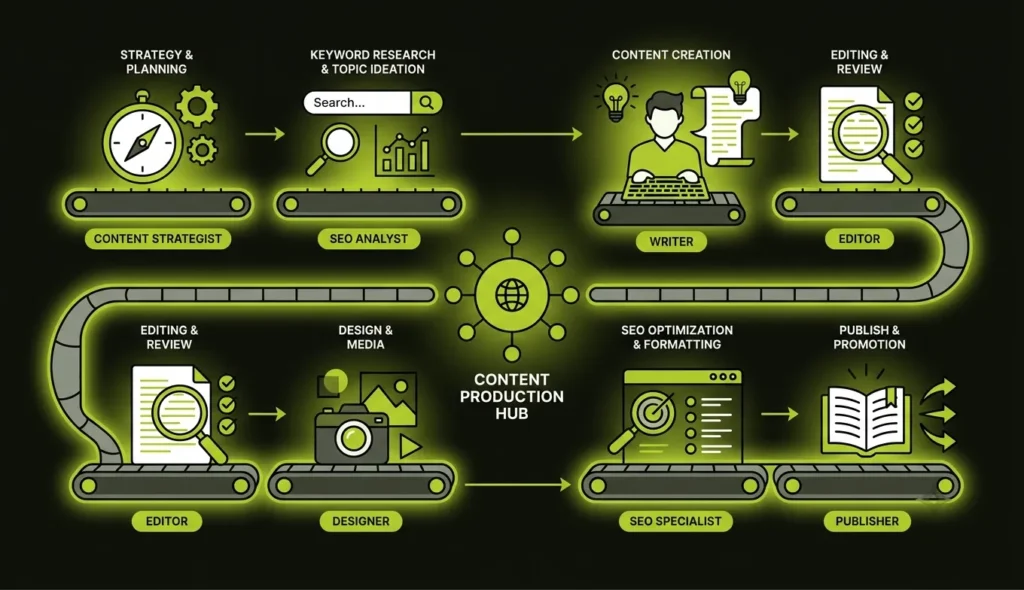
Coordinating large volumes of SEO content requires a clear, repeatable process. Here is how our team structures that process from research through publication and beyond.
Step One: Research and Strategy
Every engagement begins with keyword research, competitor content audits, and search intent analysis using platforms like Semrush and Ahrefs. This stage identifies topic clusters, content silos, and keyword clustering opportunities that will guide the entire content calendar.
Step Two: Planning and Briefing
Once strategy is set, an SEO strategist and content strategist collaborate to build detailed content briefs. These briefs outline target keywords, search intent, recommended structure, and semantic terms to include, often validated through SurferSEO or Clearscope to ensure strong topical coverage.
Step Three: Assignment and Production
Briefs are assigned to vetted freelance writers or in house content creators through project management tools such as Notion, Airtable, Monday.com, or Adobe Workfront. This is how content agencies ensure SEO compliance at scale, since every brief includes guidelines on tone, structure, and on page optimization requirements before a single word is written.
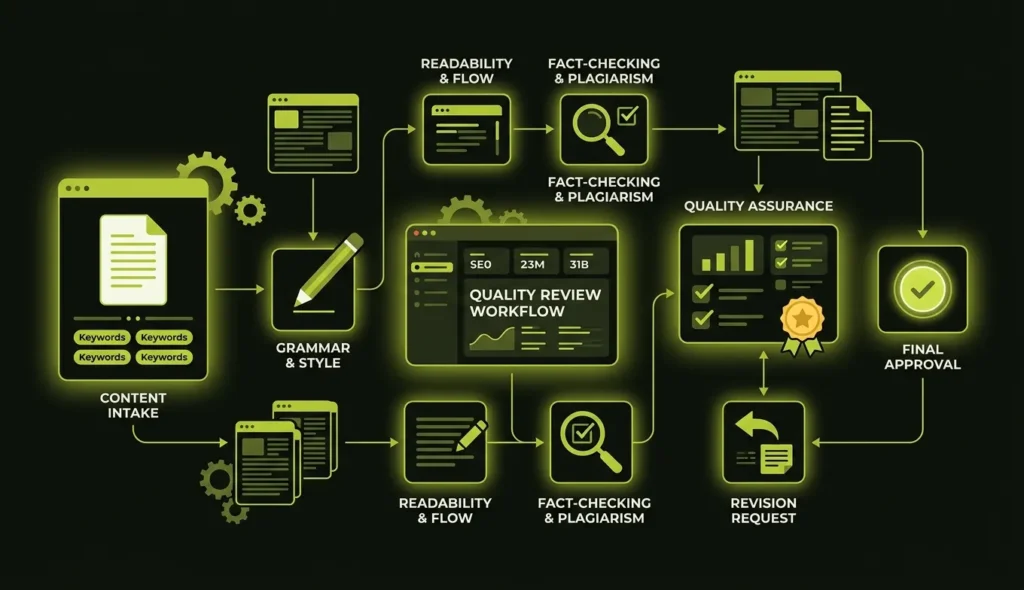
Step Four: Editing and Quality Review
A managing editor reviews each piece for accuracy, readability, and brand voice, while a technical SEO specialist checks for proper heading structure, schema markup opportunities, and internal linking. This dual review is central to how agencies support ongoing SEO content creation without sacrificing quality as volume increases.
Step Five: Publishing and Technical Optimization
Content is published with structured data, optimized metadata, and submitted through tools like IndexNow and Google Search Console to encourage faster discovery and indexing by search engines.
Step Six: Performance Tracking and Refinement
Using Google Analytics and Google Search Console, an SEO analyst monitors rankings, traffic, and engagement, feeding insights back into future content briefs so the entire system keeps improving.
Who Should Be On Your SEO And Content Marketing Team
A common question among growing brands is who should be on your SEO and content marketing team to support this kind of coordinated production. A well rounded team typically includes:
- An SEO Strategist who sets keyword and topic direction
- A Content Director who oversees overall content quality and brand alignment
- A Content Strategist who builds detailed briefs and topic clusters
- A Managing Editor who reviews and refines drafts before publication
- Freelance Writers or staff writers who produce the content itself
- A Technical SEO Specialist who manages schema markup, crawl budget, and site health
- A Link Building Specialist who develops authoritative backlinks
- An SEO Analyst who tracks performance through Google Analytics and Google Search Console
- A Project Manager or Account Manager who keeps timelines, budgets, and communication on track
Some businesses build this team internally, while others partner with agencies that already have these roles in place and ready to scale.
How Do SEO Optimization Agencies Compare For Content Planning
When evaluating how do SEO optimization agencies compare for content planning, look closely at three things: their research process, their editorial standards, and their reporting transparency. Agencies that rely on data driven platforms such as Semrush, Ahrefs, and SurferSEO tend to produce more targeted briefs than those relying on guesswork. Established names in the industry, including Brafton, Omniscient Digital, Propllr, Rock The Rankings, Single Grain, Stramasa, BRIX Agency, and WordAgents, have each built reputations around different strengths, whether that is technical SEO, content volume, or creative storytelling.
The right comparison point is not which agency is largest, but which one aligns with your industry, your goals, and your desired pace of publication. A brand that needs fifty articles a month has very different needs than a brand publishing four in depth pillar pages per quarter.
How Brands Can Bridge SEO And Creative Content
One of the more delicate parts of coordinating content at scale is making sure optimization does not come at the expense of creativity. How brands can bridge SEO and creative content successfully usually comes down to collaboration rather than compromise. Content strategists provide the keyword and structural framework, while writers and editors are given room to bring personality, storytelling, and genuine expertise into the piece. The goal is content that reads naturally to a human while still satisfying the structured signals that search engines and answer engines look for, including clear headings, well organized information, and direct answers to common questions.
Platforms like HubSpot, ClearVoice, and Contently are often used to manage this collaborative workflow, giving creative and technical contributors a shared space to review drafts and provide feedback before publication.
Benefits Of Choosing Our Agency
- Worldwide service delivery, with experience supporting brands across multiple regions and time zones
- A complete team structure covering strategy, writing, editing, technical SEO, and reporting
- Use of leading tools including Semrush, Ahrefs, SurferSEO, Clearscope, Screaming Frog, and Google Search Console
- Transparent reporting through Google Analytics so you always know what is working
- Scalable production systems that support everything from a handful of articles to hundreds per month
- Strong focus on EEAT, topical authority, and genuine search intent satisfaction
- Editorial quality control at every stage, never sacrificing readability for keyword density
- Programmatic SEO capabilities for brands that need content at significant scale, such as ecommerce catalogs or location based pages
Industries We Serve
Our coordinated content production process adapts to the needs of many industries, including:
- Ecommerce and retail brands seeking product and category page optimization
- Software and technology companies building topic clusters around complex solutions
- Healthcare and wellness brands that require careful accuracy and EEAT focused writing
- Financial services and fintech companies navigating sensitive, high trust topics
- Travel and hospitality brands publishing destination and experience focused content
- Professional services firms looking to demonstrate expertise through pillar content
- Education and online learning platforms building structured topic silos
- Manufacturing and industrial businesses translating technical knowledge into accessible content
Wherever your business operates, our worldwide service model means location is never a barrier to building a strong content strategy.
Frequently Asked Questions
How do agencies coordinate large scale content production for SEO?
Agencies coordinate large scale content production for SEO by combining structured briefs, defined team roles, shared project management tools, and consistent quality review so that every piece of content aligns with keyword strategy, search intent, and technical SEO standards.
What can SEO do for your business?
SEO can increase qualified organic traffic, build long term brand authority, reduce reliance on paid advertising, and create a content asset base that continues generating visibility well after publication.
How many external links should SEO content include?
There is no fixed number, but most well optimized articles include a small set of links to genuinely authoritative and relevant sources rather than a high volume of links that could distract readers or dilute the page’s focus.
Who should be on an SEO and content marketing team?
A strong team typically includes an SEO strategist, content director, content strategist, managing editor, writers, a technical SEO specialist, a link building specialist, an SEO analyst, and a project or account manager.
How do agencies ensure SEO compliance across content?
Agencies ensure SEO compliance by building detailed content briefs that specify target keywords, structure, and semantic coverage, then reviewing every draft against these requirements before publication.
How can brands balance SEO requirements with creative writing?
Brands can balance both by treating SEO guidelines as a framework rather than a restriction, allowing writers to bring genuine voice and storytelling within a structure that still satisfies search intent and technical best practices.
Do you provide this service worldwide?
Yes, our content production and SEO coordination services are available worldwide, supporting brands across different regions, languages, and time zones.
Ready To Build A Content Engine That Performs
If you are ready to see what can SEO do for your business when content production is planned, coordinated, and executed by an experienced team, we would love to talk. Reach out today to discuss your goals, and let us show you how agencies coordinate large scale content production for SEO in a way that is organized, transparent, and built to grow with your business, wherever in the world you operate.

Wali Shah is the Founder and CEO of SkillsHeaven, a digital growth agency specializing in Local SEO, Google Ads, and conversion-focused website development. With over 8+ years of experience, he has helped scale 170+ businesses, including 93+ limousine companies globally, by building structured, lead-generating digital systems. His expertise spans local search optimization, paid media strategy, and high-performance website development, all aligned with measurable business growth. Known for a data-driven and ethical approach, Wali focuses on creating scalable marketing systems that increase visibility, generate qualified leads, and drive long-term revenue for service-based businesses.