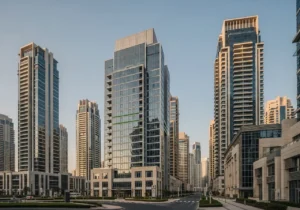
The UAE property market moves at a pace most global markets can only envy. The Dubai Land Department (DLD) recorded over 226,000 real estate transactions in 2024, a figure that broke every previous annual record, with a combined value exceeding AED 761 billion. Behind every one of those transactions, a buyer began their journey with a search engine.
Google search data shows that more than 74% of UAE property buyers now research online before ever speaking to an agent. Mobile searches for Dubai real estate terms have increased year-on-year, driven by the UAE’s world-leading smartphone penetration rate of over 97%.
And yet, the majority of real estate websites in the country are leaving the top of Google’s page one and the leads that come with it to portals like Property Finder, Bayut, and Dubizzle.
SEO for real estate companies in UAE is not a luxury or a long-term experiment. In 2026, it is the single highest-ROI marketing channel available to brokerages, developers, and individual agents. The question is not whether to invest it is whether to do it right.
At Skills Heaven, we have helped real estate businesses across Dubai, Abu Dhabi, and the Northern Emirates earn first-page visibility for their most competitive commercial keywords.
This guide shares everything we have learned including eight competitor gaps that no other SEO guide currently covers so you can build an SEO strategy that actually generates leads.
Why UAE Real Estate SEO Is Different From the Rest of the World
Most generic SEO advice was written with the US or UK market in mind. Apply it verbatim to a UAE real estate website and you will miss the mark not because the fundamentals are wrong, but because the context is completely different.
Here is what makes the UAE market unique, and why your SEO strategy must account for it.
A Multilingual, Expat-Driven Market
The UAE’s population is approximately 90% expatriates, drawn from over 200 nationalities. The property buying audience is not a single demographic it is a mosaic. Your SEO strategy must reflect this reality:
- English: The dominant language for international buyers, expats from Europe, South Asia, and the West.
- Arabic: Essential for GCC nationals, Emirati buyers, and investors from Saudi Arabia, Kuwait, and Egypt.
- Russian: A high-growth segment, particularly in Dubai Marina and Palm Jumeirah, where Russian buyers represent a significant share of luxury transactions.
- Mandarin Chinese: An increasingly important investor language following Golden Visa uptake from Chinese nationals.
A UAE real estate SEO strategy that targets only English keywords is by definition ignoring the majority of the market.
RERA, DLD & Regulatory Trust Signals That Affect SEO Rankings
The Real Estate Regulatory Agency (RERA) and the Dubai Land Department (DLD) are not just compliance bodies, they are trust signals that Google’s quality raters and algorithms actively look for when assessing real estate content.
Google’s E-E-A-T framework (Experience, Expertise, Authoritativeness, Trustworthiness) is particularly sensitive in the real estate vertical, which is classified as a ‘Your Money or Your Life’ (YMYL) topic. Pages that reference RERA registration numbers, DLD transaction data, and regulatory compliance signals will consistently outperform those that do not.
Practical implication: Every page on your site especially agent profile pages and listing pages should display RERA license numbers prominently. This serves both compliance and SEO purposes.
The Portal Ecosystem: Property Finder, Bayut & Dubizzle
Property Finder, Bayut, and Dubizzle dominate the first page of Google UAE for almost every high-volume real estate keyword. They have decades of domain authority, thousands of inbound links, and enormous content databases. Competing with them head-to-head on their primary keywords is a losing battle for most agencies.
However, the portals have significant blind spots:
They cannot rank for hyperlocal, long-tail keywords specific to individual developments or micro-neighbourhoods.
They have no incentive to create educational content that builds buyer trust.
Their listing pages are thin, duplicated, and weak on E-E-A-T signals.
They do not optimize for Golden Visa, investment, or regulatory-intent keywords.
The strategic answer is not to avoid portals you need to list there for visibility but to use your own website to capture traffic the portals cannot and do not want to chase.
Keyword Research for UAE Real Estate: Finding What Your Buyers Actually Search
Effective keyword research for UAE real estate goes far deeper than plugging ‘Dubai apartments for sale’ into a tool. Understanding the intent behind searches and the unique search behaviors of UAE buyers is the foundation of every successful campaign.
A broader digital marketing perspective ensures these keywords are supported by the right content, ad targeting, and conversion-focused funnels that turn search interest into actual property enquiries.
Transactional, Informational & Local Intent: A UAE Keyword Framework
| Intent Type | Example Keywords | Page Type to Create |
| Transactional | buy apartment Dubai Marina, off-plan villas Abu Dhabi | Listing / collection pages |
| Informational | how to buy property in Dubai as a foreigner, RERA fees explained | Blog posts, guides |
| Local | real estate agent JBR, property broker Downtown Dubai | Local landing pages |
| Investor | Dubai Golden Visa property investment 2026, UAE real estate ROI | Investment guides, calculators |
| Comparative | Property Finder vs Bayut which is better, best areas to invest Dubai | Comparison content, area guides |
Arabic Keyword Research: How Search Behaviour Differs for GCC Buyers
Arabic keyword research is one of the most consistently overlooked areas in UAE real estate SEO and therefore one of the highest-opportunity areas. GCC buyers particularly from Saudi Arabia and Kuwait represent a growing share of off-plan and luxury property investment in the UAE, and they predominantly search in Arabic.
Key differences to understand:
- Dialectal variation: Search queries from Egyptian buyers differ from Saudi buyers in phrasing. Gulf Arabic is dominant but not universal.
- Modern Standard Arabic (MSA) vs colloquial: Property-related terms tend to use MSA (e.g., ‘شراء شقة في دبي’), but neighbourhood names are often transliterated.
- Right-to-left technical requirements: Your Arabic pages need proper RTL HTML attributes, Arabic fonts, and separate hreflang tags more on this in the technical SEO section.
Tools like Google Keyword Planner (set to Arabic, UAE) and Semrush’s language filters can reveal Arabic keyword volumes that your English-focused competitors are completely ignoring.
Golden Visa & Investment Keyword Opportunities
The UAE Golden Visa programme — which grants long-term residency to property investors who purchase qualifying assets — has created an entirely new category of search intent that barely existed three years ago.
‘Dubai Golden Visa property investment’ — significant search volume, virtually no strong organic competition
‘UAE residency by property investment 2026’
‘which emirates qualify for golden visa property’
‘minimum property value for UAE golden visa’
These terms attract high-intent investors who are ready to commit significant capital.
A well-optimised landing page targeting Golden Visa investment keywords combining regulatory information, specific DLD-registered qualifying properties, and a clear call to action can generate some of the highest-quality leads in the real estate vertical.
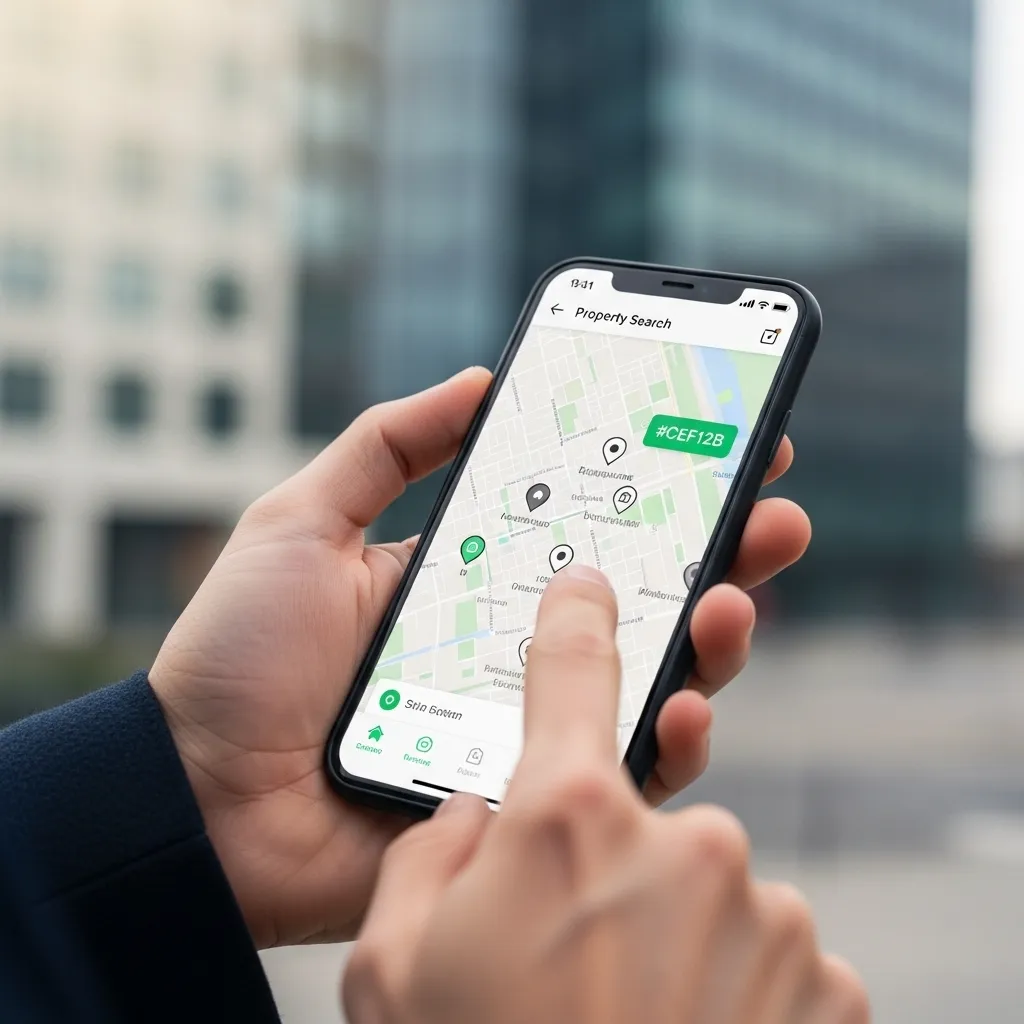
On-Page SEO for Real Estate Websites in UAE
On-page SEO is where strategy becomes execution. The principles are universal, but the application to UAE real estate requires specificity and local knowledge.
Title Tags, Meta Descriptions & Header Structure
Every page on your website should follow a clear, intent-led structure. Here are UAE-specific examples:
Homepage title: ‘Dubai Real Estate Agency | Buy, Sell & Rent Property in UAE [Agency Name]’
Area page title: ‘Apartments for Sale in Dubai Marina | 2026 Listings & Prices’
Blog post title: ‘Dubai Golden Visa: Property Investment Requirements Explained (2026)’
Meta descriptions should be under 155 characters, include the primary keyword naturally, and contain a clear value proposition or call to action. For UAE audiences, specificity, price ranges, location, DLD registration performs better than generic language.
Your H1 should match (or closely mirror) the page’s primary keyword. Do not use your agency name as the H1 on interior pages — Google uses H1 to understand page topic, not brand identity.
Property Listing Page Optimisation: Beyond Duplicate Content
The greatest on-page SEO challenge in real estate is listing page content. If your listings pull from a shared MLS feed or portal API, the descriptions are likely identical across dozens of websites a significant duplicate content risk that can suppress your rankings.
The Skills Heaven approach to this problem:
Unique introductory summaries: Write a 150–200 word original paragraph for each listing that covers location context, lifestyle appeal, and investment rationale. This alone distinguishes your page from duplicated portal content.
Neighbourhood context sections: Add a ‘Living in [Area]’ section beneath each listing. Cover schools, transport links, dining, and property price trends.
Investment data integration: Pull in DLD transaction averages for the building or community. This adds E-E-A-T, provides value to buyers, and creates unique content at scale.
Agent-authored commentary: A brief, first-person note from the listing agent adds Experience signals — a core E-E-A-T pillar.
Bilingual On-Page SEO: Hreflang, Arabic RTL Pages & Localised Content
Running a bilingual website (English and Arabic) is one of the most powerful SEO advantages available to UAE real estate companies — and almost no agency is doing it correctly.
Implementation requirements:
Hreflang tags: Declare the language and regional targeting of each page using hreflang tags in the HTML head. For example: <link rel=’alternate’ hreflang=’ar-AE’ href=’https://yoursite.com/ar/page/’ />
Separate URL structure: Use /en/ and /ar/ URL subdirectories (preferred over subdomain) for clean crawlability.
RTL CSS and HTML: The <html> tag must include dir=’rtl’ lang=’ar’ for Arabic pages. Use a dedicated Arabic stylesheet and do not attempt to force LTR layouts into RTL with text-align alone.
Translated not just transliterated: Machine-translated Arabic content will be penalised by quality-sensitive algorithms. Invest in native Arabic copywriting, particularly for high-value pages.
Technical SEO for UAE Real Estate Websites
Behind every high-ranking real estate website in UAE is a solid web development foundation that ensures speed, scalability, and seamless user experience across both desktop and mobile devices.
Technical SEO is the foundation that determines whether all your content and link-building effort actually gets indexed and ranked. UAE real estate websites have specific technical challenges driven by large property databases, multilingual requirements, and a mobile-first audience.
Core Web Vitals, Site Speed & CDN for UAE Audiences
Google’s Core Web Vitals Largest Contentful Paint (LCP), Interaction to Next Paint (INP), and Cumulative Layout Shift (CL are confirmed ranking signals. For property websites, the biggest offenders are:
Uncompressed property images (often 5–15 MB per photo)
JavaScript-heavy search and filter interfaces that delay interactivity
Font loading that blocks rendering
Third-party chat widgets and lead capture scripts
For UAE audiences specifically, server location matters. A website hosted only on a US server will have measurable latency for Dubai-based users. Using a CDN with Middle East edge nodes (Cloudflare, AWS CloudFront with Bahrain or UAE region) can reduce Time to First Byte (TTFB) by 200–400ms a significant improvement for both user experience and ranking signals.
Use Google PageSpeed Insights (set to ‘Mobile’) and Search Console’s Core Web Vitals report to identify and prioritise your technical fixes.
RealEstateListing Schema Markup with Code Example
Schema markup is structured data that tells Google precisely what your page is about. For property listings, the RealEstateListing schema is the most relevant and almost no UAE agency is implementing it correctly.
Validate your schema using Google’s Rich Results Test and Schema.org Validator before deploying across all listing pages. Implement via Google Tag Manager for scalability.
XML Sitemaps, Crawlability & Indexing for Large Property Databases
Property websites with thousands of listings face crawl budget challenges Google may not crawl and index all your pages if the site architecture is not optimised.
Segmented XML sitemaps: Create separate sitemaps for listings, area guides, blog posts, and agent profiles. Submit all via Google Search Console.
Pagination handling: Use rel=’next’ and rel=’prev’ for paginated listing pages. Avoid infinite scroll unless you implement proper URL fragment handling.
Expired listing management: Redirect sold or removed listings to the relevant area collection page. Never let them return 404 — this wastes crawl budget and destroys accumulated link equity.
noindex for thin pages: Apply the noindex meta tag to pages with minimal unique content (e.g., duplicate filter/sort variations of the same listing set).
Mobile-First Design for Dubai’s Smartphone-Heavy Audience
The UAE has one of the world’s highest smartphone penetration rates. Google indexes the mobile version of your website first — meaning if your mobile experience is poor, your rankings suffer regardless of how good your desktop site is.
Critical mobile requirements for UAE real estate websites: fast-loading property galleries (use WebP format), thumb-friendly filter interfaces, click-to-call buttons prominently placed, and WhatsApp integration (the dominant messaging platform for buyer-agent communication in the UAE).
Off-Plan Property SEO: Ranking Projects Before They’re Built
Off-plan property is the lifeblood of the UAE development market. Emaar, DAMAC, Meraas, Sobha, and hundreds of smaller developers launch projects continuously — and the buyers who invest in them begin their research online, often 12–24 months before handover. This creates a remarkable and underexploited SEO opportunity.
How to Structure Off-Plan Project Landing Pages
An off-plan project page is not a listing page it is a campaign page, and it needs to be built accordingly:
Dedicated URL: Create a permanent, project-specific URL (e.g., /projects/emaar-beach-vista-dubai) from the moment of launch announcement.
Project name as primary keyword: Optimise the H1, title tag, and meta description around the project name buyers will search it directly once it is announced.
Location + development type keywords: Also target ‘[Project Name] price’, ‘[Project Name] payment plan’, ‘[Project Name] floor plan’, which are all high-intent long-tail searches.
Master plan visuals with alt text: Developer CGIs are powerful visual assets. Optimise image file names and alt attributes with the project name and location.
FAQ section: Off-plan buyers have consistent questions. Answer them on the page: payment structure, DLD fees, service charges, handover date, RERA registration status.
Lead capture with context: Include a ‘Register Your Interest’ form above the fold. Off-plan buyers are often in early research mode, capturing their details early and nurturing via email.
Pre-Launch Keyword Strategy for New Developments
The window between a project being announced and going on sale is a critical SEO opportunity. Competitors who do not act quickly will watch the developer’s own website and major portals monopolise the rankings.
Within 48 hours of a major project announcement:
Publish a news-style article covering the development, citing the developer’s official announcement
Create the project landing page (even if it redirects to a ‘coming soon’ version)
Add the project to your sitemap and submit for indexing via Google Search Console
Begin internal linking from related area guides to the new project page
This early-mover advantage can result in rankings that take competitors months to displace.
Developer SEO vs Agency SEO: Key Differences in Strategy
Developers and agencies have different SEO objectives, and the strategy should reflect this:
| Factor | Developer SEO | Agency SEO |
| Primary goal | Rank project pages, drive registrations | Rank for buyer search terms, generate leads |
| Content focus | Project features, payment plans, renders | Area guides, market analysis, buyer advice |
| Keyword priority | Project name + off-plan variants | Location + property type + intent |
| Link strategy | PR-led, news coverage of launches | Local directories, community portals |
| Technical priority | Fast-loading campaign pages | Large listing database optimisation |
Local SEO Across All 7 Emirates — Not Just Dubai
Dubai rightfully commands the most attention in UAE real estate SEO but it is also the most competitive battleground. Abu Dhabi, Sharjah, Ras Al Khaimah, Ajman, Fujairah, and Umm Al Quwain represent underserved local SEO markets with strong demand and far weaker competition.
Google Business Profile Optimisation for UAE Real Estate
Your Google Business Profile (GBP) is the most important local SEO asset you have and it is free. For UAE real estate agencies, a fully optimised GBP drives enquiries directly from Google Maps and the Local Pack that appears at the top of local search results.
Category selection: Choose ‘Real Estate Agency’ as your primary category. Add relevant secondary categories: ‘Real Estate Consultant’, ‘Property Management Company’.
Emirates-specific keywords in description: Your GBP description (750 characters) should naturally include your emirate, specialisations, and target buyer types.
Photo optimisation: GBPs with 100+ photos receive significantly more profile views. Upload exterior photos of your office, team photos, and property listing photos regularly.
Weekly Google Posts: Use the Posts feature to share new listings, market updates, and blog content. This keeps your profile active and feeds Google indexing signals.
Review strategy: Reviews are a confirmed local ranking signal. Implement a systematic post-transaction review request process. Respond to every review within 24 hours.
Q&A management: Seed your own Q&A section with the most common buyer questions and authoritative answers. This content appears in search results and builds trust.
The most effective local SEO content for UAE real estate is neighbourhood-level area guides. These pages serve dual purposes: they provide genuine value to buyers researching locations, and they are the exact type of content that a portal which focuses on listing volume rarely creates well.
Hyperlocal SEO: Neighbourhood-by-Neighbourhood Content Strategy
A high-performing UAE area guide typically covers:
Average property prices (citing DLD data from the most recent quarter)
Property types available and most popular unit sizes
Rental yield data and investment outlook
Schools, hospitals, transport links (RTA metro, bus routes), and retail
Community lifestyle overview who lives there, what the vibe is
Property trends is the area appreciating, stabilising, or correcting?
Aim for 1,500–2,500 words per area guide, structured with clear H2/H3 headings. Interlink all area guides to relevant listing collection pages and to each other where neighbourhoods are adjacent.
Abu Dhabi, Sharjah & RAK: The Untapped Local SEO Opportunity
While every agency fights for Page 1 on ‘apartments for sale Dubai Marina’, terms like ‘apartments for sale Khalifa City Abu Dhabi’ or ‘villas for rent Sharjah Al Zahia’ have meaningful search volumes with dramatically less competition.
Ras Al Khaimah is particularly notable: following significant foreign investment announcements in 2024 and 2025, including major hospitality and residential developments, RAK has seen search interest for its property market grow substantially.
Agencies that build RAK-specific content now include area guides, investment analyses, rental yield pages are positioned to dominate a market that larger competitors are ignoring.
The approach at Skills Heaven is to map each emirate’s search demand before recommending content investment priorities. For many agencies, a three-month focus on Abu Dhabi and Northern Emirates content can generate more qualified leads than the same effort spent competing in hyper-saturated Dubai verticals.
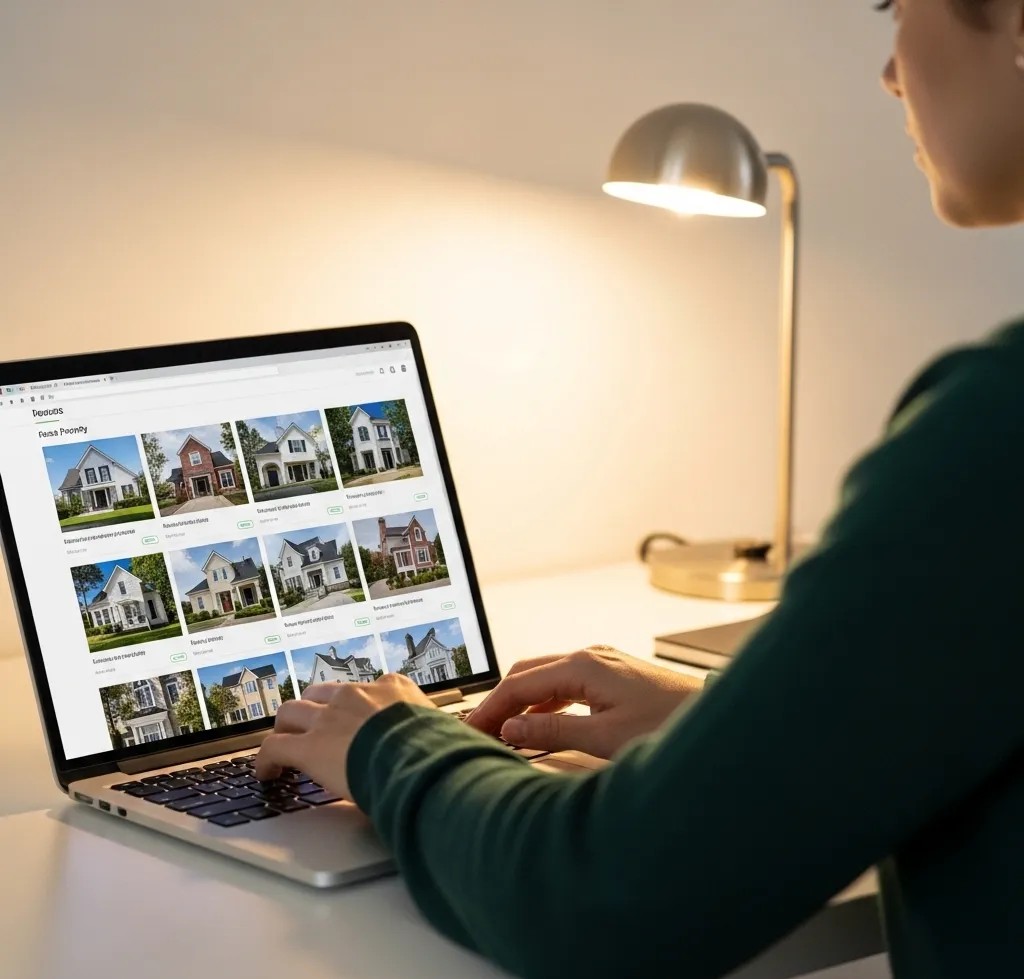
Portal SEO vs Website SEO: The UAE Real Estate Dilemma
Every UAE real estate professional eventually asks the same question: if Property Finder and Bayut are generating my leads anyway, why invest in my own website’s SEO? The answer is business resilience — and long-term cost per lead.
Property Finder vs Bayut vs Dubizzle: SEO Strengths & Weaknesses
| Factor | Property Finder | Bayut | Dubizzle |
| DA / Authority | Very high | Very high | High |
| UAE ranking strength | Dominant | Strong | Moderate |
| Lead quality | High intent | High intent | Mixed |
| Monthly cost | High | High | Lower |
| Your branding | Minimal | Minimal | Minimal |
| Content depth | Listing-focused | Listing-focused | Listing-focused |
| Long-tail gaps | Many | Many | Many |
All three portals share the same fundamental weakness from an SEO perspective: they cannot build the trust, expertise, and relationship signals that convert a browsing buyer into a committed client. Your website can.
How to Drive Traffic From Portals Back to Your Own Website
Portals are a top-of-funnel awareness tool. Your website is where the relationship is built. Here is how to close the loop:
Consistent branding: Your portal profile should be as polished as your website. Buyers who see you on Property Finder will Google your agency name make sure your brand search results are excellent.
Content the portals don’t have: Your blog, area guides, investment calculators, and market reports give buyers a reason to visit your website after finding you on a portal.
Email capture via value exchange: Offer a free ‘Dubai Area Investment Report’ or ‘Off-Plan Buyer’s Guide’ PDF in exchange for an email. This converts portal-sourced interest into direct relationships.
WhatsApp and direct contact prominence: Make your direct contact details — phone, WhatsApp, email the most prominent elements on every page. Buyers who want to talk to a human do not want to fill in a portal form.
Content Marketing for UAE Real Estate: What Actually Ranks in 2026
Content is the fuel of real estate SEO. Without a consistent publishing strategy, even technically excellent websites stagnate in rankings as fresher, more active competitors pull ahead. The good news is that creating the right content does not require publishing every day it requires publishing strategically.
Pillar + Cluster Content Model for Real Estate Agencies
The most effective content architecture for UAE real estate websites is the pillar-cluster model. A pillar page is a comprehensive, authoritative piece on a broad topic (e.g., ‘The Complete Guide to Buying Property in Dubai’). Cluster pages are more specific articles that link back to the pillar (e.g., ‘Dubai DLD Transfer Fee Explained’, ‘Off-Plan vs Ready Property in Dubai: Which Is Better?’).
This structure accomplishes three things simultaneously: it signals topical authority to Google, it creates a logical internal linking structure, and it matches the full spectrum of buyer intent — from early research to final decision.
Recommended pillars for UAE real estate agencies:
• Complete guide to buying property in [Emirate]
• UAE real estate investment guide (for international buyers)
• Off-plan property in UAE: everything buyers need to know
• UAE Golden Visa through property: complete guide
• Dubai real estate market report [current year]
12-Month UAE Real Estate Content Calendar
| Month | Theme | Content Ideas | Keywords to Target |
| January | New Year market outlook | 2026 Dubai property market predictions; best areas to invest | Dubai property market 2026 |
| February | International buyers | How to buy UAE property as a UK/US/EU resident; mortgage guide | how to buy property in Dubai foreigner |
| March | Ramadan preparation | Ramadan property deals UAE; how market moves during Ramadan | real estate Ramadan UAE |
| April | Q1 market data | Dubai DLD Q1 transaction report analysis; top communities | Dubai property prices Q1 2026 |
| May | Summer investment | Best off-plan investments launching before summer; payment plans | off-plan Dubai 2026 |
| June | Golden Visa | Golden Visa property guide; qualifying properties by emirate | UAE golden visa property 2026 |
| July–Aug | Expat arrivals | Moving to Dubai guide; school catchment area property guide | buy apartment Dubai expat |
| September | Back-to-market | September price trends; best areas for families; rental market | Dubai rental market 2026 |
| October | Cityscape preview | Preview: projects launching at Cityscape Global; trends to watch | Cityscape Dubai 2026 launches |
| November | Cityscape coverage | New launches roundup; developer payment plan analysis | new off-plan projects Dubai |
| December | Year-end investment | Year-end tax considerations; best Q4 deals; 2027 preview | property investment UAE year end |
Seasonal SEO: Ramadan, Post-Summer Expat Arrivals & Dubai Property Events
UAE real estate has clear seasonal rhythms that your content calendar and your SEO must reflect. Publishing content 4–6 weeks before seasonal peaks ensures it has time to rank before demand surges.
Ramadan: Transaction volumes traditionally slow during the holy month but investor inquiries often increase. Content targeting patient, research-oriented buyers performs well.
September–October: The single most important season for the UAE property market. Summer-weary expats return, new residents arrive for the academic year, and developers time many launches to coincide with the energy of the return. Your September content strategy should be live in August.
Cityscape Global (October/November): The UAE’s premier property exhibition drives an enormous spike in property-related searches. Pre-event content (‘What to expect at Cityscape 2026’, ‘Best off-plan launches expected at Cityscape’) earns significant organic traffic.
Year-end: International investors make portfolio decisions before year-end. Content addressing UAE property as a tax-efficient investment vehicle targets this high-net-worth segment.
Video SEO & Visual Search for UAE Property
Video content is one of the most powerful — and most underutilised — SEO assets in UAE real estate. At a market where buyers frequently purchase off-plan or from overseas, video does the job that a physical viewing cannot.
YouTube SEO for Property Walkthrough Videos
YouTube is the world’s second-largest search engine, and for UAE real estate, it is a largely unclaimed channel for organic discovery. A well-optimised property walkthrough video can rank both on YouTube itself and in Google’s video results.
YouTube SEO essentials for UAE property:
Title: Include the property type, number of bedrooms, building/community name, and price range (e.g., ‘3BR Apartment Tour | Emaar Beachfront | AED 3.2M’)
Description: Write 300+ words including neighbourhood overview, DLD registration info, agent contact, and links to your website listing
Tags: Include emirate, community, property type, and relevant investment terms
Chapters: Add timestamped chapters (Living Area 0:30, Kitchen 1:45, Master Bedroom 2:30) — these appear as rich snippets in Google
Thumbnail: Custom thumbnails with property exterior and price overlay significantly improve click-through rate
Playlist: Organise videos into location-based playlists to improve session time and channel authority
Image SEO & Google Lens Optimisation for Property Photos
Google Lens and visual search are growing rapidly, and property photography represents a significant opportunity. When buyers see an attractive building or interior, they increasingly search visually for more information.
File naming: Do not upload images as ‘IMG_4892.jpg’. Name files descriptively: ‘dubai-marina-2br-living-room-sea-view.jpg’
Alt text: Every property image should have descriptive alt text that includes the property type, location, and key feature. This serves both accessibility and SEO.
Image sitemaps: Include property images in your XML sitemap with the <image:image> extension to help Google discover and index them.
WebP format: Convert all property photos to WebP format. It delivers 25–35% smaller file sizes than JPEG at equivalent quality — critical for Core Web Vitals performance.
Structured data: The RealEstateListing schema includes an ‘image’ property. Populating it correctly signals to Google which image represents the property, improving visual search discovery.
AI Content & SEO Risks: What UAE Real Estate Companies Must Know
Generative AI has made it possible to produce property descriptions, area guides, and market analysis at scale with minimal human effort. The temptation to do so is understandable but the risks are significant, and they are not yet fully understood by most agencies in the UAE market.
The Danger of AI-Generated Listing Descriptions at Scale
Google’s 2024 and 2025 Helpful Content updates have shown consistent patterns: websites that rely heavily on AI-generated content particularly where that content is generic, unverifiable, or indistinguishable from thousands of similar pages suffer ranking suppression across the entire domain, not just on the affected pages.
In real estate, AI-generated content risks are compounded by:
Factual accuracy: AI models can hallucinate property details, price figures, or regulatory information. In a RERA-regulated market, inaccurate property content is both an SEO risk and a legal liability.
Duplicate signals: AI models trained on similar data tend to produce similar outputs. Multiple agencies using the same AI tool to describe the same development will generate near-identical content — exactly the duplicate content signal Google penalises.
Missing local knowledge: AI cannot observe that a specific building’s pool is currently under renovation, that the neighbourhood has a new school opening in Q3, or that a specific tower has service charge controversy. These details are the texture of genuinely helpful real estate content.
Human + AI Hybrid Content Strategy That Google Rewards
The solution is not to avoid AI — it is to use it at the right stage of content production. The Skills Heaven approach:
AI for research and structure: Use AI to generate content outlines, research relevant DLD statistics, and identify common buyer questions in your market segment.
Human for writing and expertise: Have licensed agents and local market experts write the actual content, drawing on the AI-generated research. This ensures accuracy, authenticity, and the distinctive voice that builds brand trust.
AI for editing and optimisation: Use AI tools to check keyword density, readability, and meta tag optimisation after the human draft is complete.
Human for E-E-A-T signals: Author bylines with RERA licence numbers, first-person market commentary, and agent-attributed insights cannot be faked by AI — and these are precisely the signals Google rewards most.
Answer Engine Optimisation (AEO) for ChatGPT & Google SGE
Search behaviour is evolving rapidly. Google’s AI Overviews (formerly Search Generative Experience) now appear at the top of results for many informational queries. ChatGPT’s web browsing feature means buyers are increasingly asking AI assistants property-related questions and receiving answers drawn from publicly indexed content.
To appear in AI-generated answers, your content must:
Answer specific questions clearly and concisely — ‘How much are DLD transfer fees in Dubai?’ should be answered definitively within the first paragraph of relevant content
Use structured formatting (H2/H3 headings, bullet points, tables) that AI can parse and extract
Be cited by authoritative sources — content that earns backlinks from news sites, government portals, and industry bodies is most likely to be drawn upon by AI systems
Include verified statistics with clear source attribution (DLD, RERA, government data) — AI answers favour verifiable claims

Link Building for UAE Real Estate: Local Authority Sources
Backlinks remain one of Google’s most powerful ranking signals. In the UAE real estate context, the most valuable links are those from locally relevant, authoritative domains — not generic guest post farms or offshore directory submissions.
Specific UAE Directories, Portals & Media to Target
Here are the highest-priority link-building targets for UAE real estate companies:
| Source Type | Example Targets | Strategy |
| Government portals | DLD, RERA, Dubai.ae, ADGM | Register your business, contribute data |
| UAE news media | Gulf News, The National, Khaleej Times, Arabian Business | Issue press releases on launches or market data |
| Property portals | Property Finder, Bayut, Dubizzle | Maintain verified agent/agency profiles |
| Business directories | YellowPages UAE, Emirates Yellow Pages, Connect Middle East | Complete business listing with website link |
| Expat community sites | ExpatWoman, Expat.com, InterNations UAE chapters | Contribute property guides, answer questions |
| Developer partner pages | Emaar, DAMAC, Sobha preferred agent pages | Register as preferred agent — many include backlinks |
| Industry associations | RERA registered broker directories, HAAD, CBRE, JLL reports | Contribute data or commentary to industry research |
| Podcast & YouTube | UAE finance and property podcasts, YouTube real estate channels | Guest appearances with website reference |
Link building in UAE real estate is most effective when it is PR-led — earned through genuine news (project launches, market data analysis, expert commentary) rather than purchased. A single link from Gulf News or Arabian Business carries more ranking weight than 100 links from generic directories.
Common UAE Real Estate SEO Mistakes & How to Avoid Them
Targeting only Dubai keywords: Abu Dhabi, Sharjah, and RAK have meaningful search demand and far less competition. Expand your geographic targeting.
Portal-only strategy: Over-reliance on Property Finder and Bayut creates business risk. Your own website should generate at minimum 30% of your leads.
No Arabic SEO: Ignoring Arabic-language search leaves the GCC buyer segment completely untapped.
Generic AI listing descriptions: Scale without quality is a long-term liability. Invest in unique content on your highest-value listing and area pages.
Ignoring Core Web Vitals: Slow, image-heavy property websites lose rankings and lose buyers. Mobile performance is not optional.
No schema markup: RealEstateListing schema is trivial to implement and consistently overlooked. It provides direct ranking and rich result advantages.
Inconsistent NAP: Your agency’s Name, Address, and Phone number must be identical across your website, Google Business Profile, and all directory listings.
Neglecting Google Business Profile: An incomplete or inactive GBP profile is a missed local SEO opportunity. Treat it as a second website.
No content calendar: Publishing intermittently three posts one month, nothing for two months sends inconsistency signals. Commit to a realistic but consistent publishing schedule.
Expired listings returning 404: Every 404 from a removed listing wastes crawl budget and loses link equity. Redirect to the relevant area or type collection page.
Measuring SEO ROI for Real Estate in UAE: KPIs That Matter
SEO is a medium-to-long-term investment. Understanding which metrics to track and which to ignore is essential for maintaining organisational commitment to the channel.
| KPI | What to Track | Tool |
| Organic traffic | Sessions from organic search, by page and by country | Google Analytics 4 |
| Keyword rankings | Position tracking for primary + secondary keywords, weekly | Ahrefs / SEMrush |
| Local visibility | GBP profile views, direction requests, call clicks | Google Business Profile Insights |
| Organic lead volume | Form submissions, WhatsApp clicks, calls from organic traffic | GA4 + CRM attribution |
| Cost per organic lead | SEO investment divided by leads generated organically | Manual calculation |
| Core Web Vitals | LCP, INP, CLS scores for mobile | Google Search Console |
| Backlink growth | New referring domains per month, domain authority trend | Ahrefs |
| Crawl health | Index coverage, crawl errors, sitemap status | Google Search Console |
| Conversion rate | Organic visitors to leads — benchmark 1.5–3% for UAE real estate | GA4 |
The single most important metric for real estate SEO ROI is cost per organic lead compared to cost per portal lead. In most UAE markets, an organic lead generated through your own website has a blended cost 60–80% lower than a portal-sourced lead once SEO investment is amortised across a 12-month period.
Track this comparison rigorously. Present it to decision-makers quarterly. It is the most persuasive argument for sustained SEO investment.
To explore how Skills Heaven can improve your bilingual SEO strategy, contact us today.
Frequently Asked Questions
How long does SEO take to show results for a UAE real estate website?
For a new website with little existing authority, expect meaningful ranking improvements within 4–6 months and significant organic lead generation within 9–12 months. Websites with existing traffic and authority can see results within 60–90 days of implementing technical and on-page improvements.
Is it worth investing in Arabic SEO for a UAE real estate website?
Yes, categorically. GCC buyers represent a significant and growing segment of UAE property transactions, and they predominantly search in Arabic. Arabic SEO targets an audience with minimal competition from most English-focused agencies, and Arabic-speaking buyers often have higher purchasing power than average.
Should a UAE real estate agency hire an in-house SEO specialist or an agency?
For most agencies, an SEO agency with UAE real estate experience, such as Skills Heaven, offers greater value than a single in-house hire. Agency teams bring technical SEO, content strategy, link building, and analytics expertise that would require multiple specialist hires to replicate internally. The exception is large developers with complex, multi-market digital operations who can justify an in-house function.
What is the difference between SEO for a developer and SEO for a brokerage?
Developer SEO focuses on project-specific landing pages, pre-launch keyword strategy, and PR-led link acquisition around project announcements. Brokerage SEO centres on area guides, buyer intent keywords, local SEO, and building long-term authority as a trusted market resource. Both require technical foundations and consistent content, but the content priorities and keyword strategies differ significantly.
How important are online reviews for real estate SEO in UAE?
Very important for local SEO. Google Business Profile reviews are a confirmed local ranking signal. Beyond rankings, reviews serve as social proof that converts organic searchers into enquiries. Implement a systematic review request process after every successful transaction. Respond to all reviews positive and negative, promptly and professionally.
What Google algorithm updates should UAE real estate companies watch?
The most impactful updates for real estate are Google’s Helpful Content system updates (which reward expertise-driven, human-written content and penalise scaled AI content), Core Updates (which reassess E-E-A-T across the site), and local search updates (which affect Google Business Profile rankings). Monitor Google Search Status Dashboard and subscribe to Search Engine Land or Search Engine Roundtable for update analysis.
Can I do SEO myself, or do I need an agency?
Basic on-page SEO title tags, meta descriptions, Google Business Profile optimisation can be implemented by a non-specialist with guidance. However, technical SEO (Core Web Vitals, schema markup, crawlability), competitive keyword strategy, and link building require specialist knowledge and ongoing investment. Most UAE real estate businesses generate a better return by partnering with an experienced agency than attempting to build all capability in-house.
How much does real estate SEO cost in UAE?
SEO investment for UAE real estate ranges from AED 3,000–8,000 per month for smaller agencies doing essential optimisation, to AED 15,000–40,000+ per month for large developers or agencies pursuing aggressive multi-emirate ranking strategies. The right investment level depends on your market size, competitive intensity, and revenue goals. Skills Heaven offers a free website audit to help you understand where the highest-impact opportunities lie before any investment commitment.

M. Awais Khan is a Business Development and Digital Growth Strategist at SkillsHeaven, specializing in SEO, local search optimization, and performance-driven digital marketing. With experience supporting 100+ businesses, he develops and implements data-driven strategies that help companies increase online visibility, generate qualified leads, and drive sustainable revenue growth. His expertise spans Local SEO, Google Ads, social media marketing, and conversion-focused website optimization, ensuring every project is aligned with measurable business outcomes and long-term success.