Technical SEO is the infrastructure layer of your website that determines whether Google can find your pages, read their content, evaluate their quality, and rank them efficiently. No amount of well-researched keywords or carefully written content produces competitive rankings if the technical foundation is broken. For businesses in Dubai, technical SEO has specific dimensions beyond the global standard: bilingual hreflang for English and Arabic websites, mobile performance benchmarks for a market with over 96% smartphone penetration, Core Web Vitals optimisation for image-heavy professional service websites, and the specific structured data requirements that apply to the YMYL industries dominant in this market. This guide covers every technical layer that determines whether your website ranks, in the sequence that produces the fastest commercial results when fixed.
What Technical SEO Is and Why Content Quality Cannot Compensate for Its Absence
Technical SEO is the discipline of ensuring Google can access, read, interpret, and rank your website’s pages efficiently. It is the prerequisite layer that on-page and off-page SEO cannot substitute for.
A website with excellent content, strong keywords, and valuable backlinks will still underperform if Googlebot cannot crawl its pages, if those pages load too slowly on mobile, or if duplicate versions of the same content confuse Google about which URL to rank. Technical failures do not prevent content quality from existing. They prevent it from being visible. Skills Heaven runs a technical audit before recommending any content or authority-building activity because addressing the wrong constraint first wastes every resource invested in it.
The distinction between technical SEO, on-page SEO, and off-page SEO is often presented as a hierarchy. In practice, it is a dependency structure.
Technical SEO is the foundation. On-page SEO builds relevance and quality on top of that foundation. Off-page SEO builds authority on top of the relevance. A failure at any layer prevents the layers above it from producing their full commercial return. The practical implication is direct: before investing in content creation or link building, verify that the technical foundation the investment depends on is sound.
Google’s own documentation confirms that crawlability and page experience are evaluated before content relevance and authority in its ranking process.
A page that Google cannot crawl cannot be indexed. A page that cannot be indexed cannot rank. A page that ranks but loads in six seconds on mobile loses most of its visitors before they read the first sentence. Each of these failures is independent of content quality and each one produces the same commercial outcome: invisibility or irrelevance in search results.
KEY TAKEAWAYS
→ Technical SEO is the prerequisite for everything else. Content and authority cannot compensate for a broken foundation.
→ The dependency order is: technical first, then on-page, then off-page. Failures at lower layers undermine everything above them.
→ Skills Heaven audits technical foundations before recommending content or link-building investment.
→ Crawlability, indexation, speed, and mobile performance are separate failure points. Passing one does not guarantee passing another.
H2: Crawlability, Indexation, and the Signals Google Reads Before Anything Else
Before Google can rank a page, it must find it, read it, and decide it is worth storing. Each of these steps can fail independently, and each failure has a different fix.
Robots.txt and XML Sitemaps: The First Things Google Checks
The robots.txt file is the instruction document that tells Googlebot which pages it is and is not allowed to crawl. A misconfigured robots.txt can block Googlebot from the most important pages on a website, and because the error is in a text file that most website owners never review, it can persist undetected for months. The first action in any technical audit Skills Heaven runs is checking the robots.txt for incorrectly blocked paths.
An XML sitemap is the roadmap that helps Googlebot discover all the important pages on a website, particularly those that are not easily reachable through internal links.
A sitemap should be submitted to Google Search Console and should contain only the pages you want indexed: clean canonical URLs, no noindex pages, no redirect URLs, and no paginated or filter variations. A sitemap containing broken URLs or noindexed pages confuses the crawl signal and wastes crawl budget on pages that should not be there. Most websites built on standard CMS platforms generate a sitemap automatically, but automatic generation does not guarantee that the sitemap is correctly configured for SEO purposes.
Core Web Vitals: The Performance Standards That Directly Affect Rankings
Core Web Vitals are not aspirational benchmarks. Google uses them as direct ranking signals. Failing them costs rankings relative to competing pages that pass them.
Core Web Vitals are Google’s standardised measurements of the page experience a visitor has when loading your pages. They consist of three metrics: LCP, INP, and CLS.
Core Web Vitals: What They Measure and What to Target
| Metric | What It Measures | Good Score | Common Cause of Failure |
| LCP | How fast the largest visible content element loads | Under 2.5 seconds | Large unoptimised hero images, slow server response |
| INP | How quickly the page responds to user interactions | Under 200 milliseconds | Heavy JavaScript execution, third-party scripts |
| CLS | How stable the layout is while the page loads | Under 0.1 | Images without set dimensions, late-loading ads or banners |
In the Dubai market, LCP failures are the most common Core Web Vitals issue Skills Heaven identifies across business websites, driven primarily by large uncompressed hero images on service and homepage sections.
Healthcare clinic websites, hospitality businesses, private school sites, and real estate companies consistently carry large, visually prominent photography that is never compressed for web delivery. A hero image of 3MB loading in a browser creates an LCP score that fails Google’s threshold and reduces ranking performance relative to competitors who have addressed the same issue. Image compression, next-generation format serving (WebP or AVIF), and lazy loading for below-the-fold images are the three most impactful fixes for LCP failures in this market.
Mobile-First Indexing: Why Mobile Performance Is Non-Negotiable
Google’s mobile-first indexing means it uses the mobile version of your website as the primary basis for indexing and ranking, not the desktop version.
Smartphone penetration in this market exceeds 96%. Most searches are conducted on mobile devices. A website that delivers a strong desktop experience and a mediocre mobile experience is being indexed and evaluated primarily on its mediocre version. Every business that has not specifically tested and optimised its website on mobile is accepting a ranking disadvantage that is entirely avoidable.
The most common mobile SEO failures Skills Heaven identifies on Dubai business websites are text that is too small to read without zooming, interactive elements that are too close together to tap accurately, and content that is hidden or inaccessible on small screens.
Google does not reward mobile pages that hide content behind accordions or tabs compared to their desktop versions. If a desktop page displays full practitioner credentials and a mobile version shows only a brief summary, Google indexes and ranks based on the mobile summary. Parity between mobile and desktop content is a mobile-first indexing requirement, not a design preference.
Duplicate Content, Canonicals, Redirects, and Hreflang: The Technical Issues That Quietly Destroy Rankings
Duplicate content, incorrect canonical tags, broken redirect chains, and hreflang errors are the four technical issues that most consistently suppress rankings on Dubai business websites without triggering obvious errors that the website owner notices.
Duplicate Content and Canonical Tags
Duplicate content occurs when the same or substantially similar content is accessible at more than one URL. This happens most commonly through HTTP and HTTPS versions of the same page, www and non-www variations, trailing slash and non-trailing slash URLs, and filter or parameter URLs generated by e-commerce or directory platforms. When Google finds duplicate content, it must decide which version to index and rank. It frequently chooses the wrong one.
Canonical tags solve the duplicate content problem by explicitly telling Google which URL is the preferred version of a page.
A self-referencing canonical tag on every page, pointing each page to its own URL as the canonical version, is a defensive technical practice that prevents accidental duplication from creating indexation confusion. When a page exists in multiple versions (for legitimate reasons such as printer-friendly versions or AMP variants), the canonical tag should point all variations to the primary URL. Canonical tag errors are among the most common technical SEO issues Skills Heaven identifies during initial website audits in this market, and they are also among the easiest to fix once identified.
Redirect Management: Chains and Loops That Waste Crawl Budget
Every redirect reduces the authority passed through a link. A chain of three or more redirects loses a meaningful proportion of that authority at each step.
A redirect chain occurs when URL A redirects to URL B, which redirects to URL C, which is the final destination. Each hop in the chain consumes crawl budget and reduces the link equity transferred. On websites that have been rebuilt or relaunched without careful redirect mapping, redirect chains accumulate over time as old URLs redirect to intermediate pages that have themselves since been redirected. Auditing and consolidating redirect chains to single-hop direct redirects is a standard technical fix that improves crawl efficiency and preserves ranking authority.
Website migrations without proper redirect mapping are the single most common cause of dramatic ranking drops on Dubai business websites that Skills Heaven is called in to diagnose and recover.
A business that rebuilds its website and changes URL structures without implementing 301 redirects from every old URL to its new equivalent loses all the ranking authority those old URLs had accumulated. Google treats the new URLs as brand new pages with no history. The rankings that took months to build disappear within weeks of the relaunch. The recovery process is slow and expensive. The preventive process, a comprehensive redirect map built before any migration, requires a fraction of the time and cost.
Hreflang for Bilingual UAE Websites: The Technical Requirement Most Agencies Get Wrong
Incorrect hreflang is worse than no hreflang. It actively confuses Google about which language version to serve to which search audience.
For websites serving both English and Arabic audiences in this market, hreflang is the most commercially significant technical SEO element, and the most consistently misconfigured.
Hreflang tags are the code that tells Google: “this page is in English for English-speaking audiences, and this alternate page is in Arabic for Arabic-speaking audiences.” Without them, Google may rank the English version of a page for an Arabic search query, delivering a language mismatch that the Arabic-speaking visitor immediately bounces from. The Arabic content investment, the translated service pages, the Arabic keyword research, the native Arabic copywriting, produces a fraction of its potential value if the hreflang implementation is absent or incorrect.
The five most common hreflang errors Skills Heaven identifies on Dubai bilingual websites are: missing return tags, incorrect language codes, hreflang pointing to redirected URLs, hreflang on noindexed pages, and hreflang implemented only in the HTML head but not in the sitemap.
Each of these errors partially or completely negates the hreflang signal. Hreflang must be implemented as a complete, reciprocal set, every English page pointing to its Arabic equivalent, and every Arabic page pointing back to its English equivalent. The language codes must be correct: “en” for English, “ar” for Arabic, with regional variants (“en-ae” and “ar-ae”) where the content is specifically targeted at audiences in this country. Skills Heaven validates hreflang implementation using Google Search Console and structured data testing tools as part of every bilingual website audit.
Structured Data and HTTPS: The Technical Trust Signals Google Evaluates
HTTPS is a confirmed Google ranking signal and a basic security requirement. A website without HTTPS is penalised in rankings and flagged as “Not Secure” in browsers, a trust failure that costs conversion rates as directly as it costs rankings.
Most modern websites are served over HTTPS as a default. The technical issue Skills Heaven more commonly encounters is mixed content: pages served over HTTPS that load some resources such as scripts, images, stylesheets, over HTTP. Mixed content generates browser security warnings, disrupts the visual appearance of pages, and reduces the HTTPS trust signal. Auditing for mixed content errors is a standard step in any technical review.
Structured data which is schema markup implemented at the technical level, enables rich results in Google search and provides explicit entity information that supports E-E-A-T evaluation for YMYL businesses.
Local Business schema on the homepage tells Google the business name, address, phone number, category, and operating hours in a standardised format that directly populates Knowledge Panels for branded searches. MedicalOrganization schema for healthcare businesses, EducationalOrganization schema for schools, and InsuranceAgency schema for insurance brokers provide the sector-specific structured signals that Google uses when evaluating the authority and relevance of YMYL content. FAQ schema on service pages activates accordion-style question-and-answer dropdowns in search results, increasing click-through rate for the same ranking position. All of these implementations are validated using Google’s Rich Results Test tool before going live.
KEY TAKEAWAYS
→ Canonical tags are defensive technical practice. Every page should have a self-referencing canonical to prevent accidental duplication.
→ Redirect chains on relaunched or migrated websites quietly drain ranking authority from every page they affect.
→ Hreflang must be a complete reciprocal set. Partial implementation is often worse than no implementation.
→ HTTPS is a ranking factor. Mixed content errors undermine it. Both require explicit auditing, not assumption.→ Structured data is the technical implementation of the trust signals that support YMYL rankings in professional service markets.
Suspect your website has technical SEO issues but not sure where to start?
Skills Heaven runs a complete technical audit across all layers: crawlability, Core Web Vitals, mobile indexing hreflang, duplicate content, and structured data, and delivers a prioritised fix list in a face-to-face session.
Button: Book a free technical audit meeting now
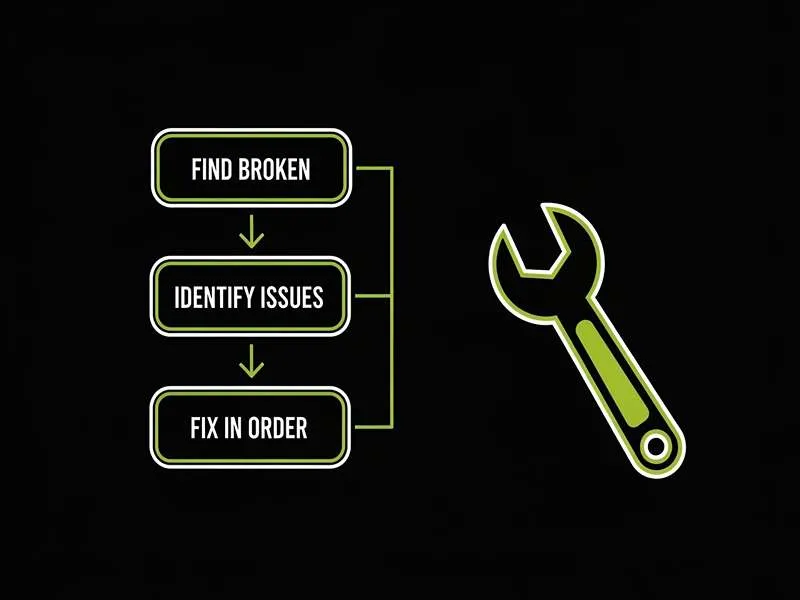
The Technical SEO Audit Process: How to Find What Is Broken and Fix It in Order
A technical SEO audit is the structured process of identifying every technical issue that is limiting a website’s ranking performance, prioritised by commercial impact relative to fix effort.
Not all technical issues carry equal weight. A robots.txt error that blocks Googlebot from the entire website is a catastrophic failure requiring immediate remediation. An image without alt text on a single blog post is a minor optimisation that can wait. The audit process exists to distinguish between these categories and produce a prioritised fix sequence that generates the fastest commercial return from the available development resource.
Tools for Technical SEO Auditing in This Market
Google’s own free tools provide the most accurate and actionable technical SEO data for any website, because they reflect how Google itself sees and evaluates the site.
Google Search Console.
The primary diagnostic tool for indexation issues, crawl errors, Core Web Vitals data, mobile usability warnings, and hreflang validation errors. Every website should have Search Console configured and should be reviewed monthly as a minimum.
Google PageSpeed Insights.
Provides Core Web Vitals scores for both mobile and desktop, along with specific recommendations for improving each metric. Run on every key service page and the homepage. Mobile scores take priority.
Google Rich Results Test.
Validates structured data implementation and confirms which rich result types a page is eligible for. Essential for any business that has implemented schema markup.
Screaming Frog SEO Spider.
The most practical crawl audit tool for identifying broken links, redirect chains, duplicate content, missing title tags and meta descriptions, and canonical tag errors across the entire website. Available in a free version that covers up to 500 URLs.
Ahrefs or Semrush Site Audit.
Cloud-based crawl audit tools that identify a broader range of technical issues and track them over time. Useful for ongoing monitoring after the initial audit has been addressed.
The Technical Audit Priority Sequence
Technical issues should be fixed in the order that produces the greatest ranking improvement per unit of development effort. They are listed on the bases of priorities below:
- Crawlability and indexation. Fix any robots.txt blocks on important pages. Resolve noindex tags applied incorrectly. Submit a clean XML sitemap. Verify indexation status for all key pages in Search Console. These fixes are prerequisites for everything else.
- HTTPS and mixed content. Ensure the entire website is served over HTTPS with no mixed content errors. This is a baseline ranking factor and a conversion trust signal that affects every page simultaneously.
- Mobile performance and Core Web Vitals. Compress images. Implement lazy loading for below-the-fold media. Reduce JavaScript execution time. Fix layout shift issues from elements loading without set dimensions. These fixes improve rankings directly and reduce mobile bounce rates simultaneously.
- Duplicate content and canonicals. Audit for duplicate URL variations. Implement self-referencing canonical tags on every page. Consolidate redirect chains to single-hop redirects. Ensure parameter URLs are handled correctly.
- Hreflang for bilingual websites. Validate the complete reciprocal hreflang set for English and Arabic pages. Fix language code errors. Ensure hreflang is consistent between HTML head tags and XML sitemap entries. Verify that hreflang does not point to redirected or noindexed URLs.
- Structured data. Implement Local Business schema. Add FAQ schema to appropriate service and guide pages. Implement sector-specific schema for YMYL businesses. Validate all implementations using the Rich Results Test.
This sequence is the one Skills Heaven follows when working with a new client on technical SEO remediation. The exact priority may shift for individual websites where a specific issue has caused a disproportionate ranking impact, which is precisely why the audit comes before the fix sequence, not after. A face-to-face session with the Skills Heaven technical team covers the audit findings in plain language, explains the commercial significance of each issue, and agrees the fix sequence based on the specific constraints of the business’s development resources.
Technical SEO Is the Foundation. Without It, Everything Else Is Built on Sand.
The businesses in Dubai that generate the most consistent organic search leads are rarely those with the biggest content teams or the most backlinks. They are the ones whose websites Googlebot can crawl without obstruction, whose pages load in under two seconds on mobile, whose bilingual hreflang is correctly implemented, and whose structured data gives Google explicit signals about the nature and quality of their content. These are engineering disciplines, not marketing ones. They require a different kind of attention from the content and keyword work, but they produce ranking improvements that compound across the entire website simultaneously rather than one page at a time.
Skills Heaven approaches technical SEO the same way it approaches every other part of a client engagement: in person, in plain language, with a clear commercial rationale for every fix recommended. The audit identifies what is broken. The plain-language session explains what each issue means for rankings and leads. The prioritised fix list ensures development resource is applied where it produces the most commercial return first.
Book a free technical SEO audit consultation with Skills Heaven now.
Frequently Asked Questions
What is technical SEO and how is it different from on-page SEO?
Technical SEO covers the infrastructure and performance elements of a website that determine whether Google can find, read, and evaluate it efficiently: crawlability, indexation, site speed, mobile performance, HTTPS, redirect management, and structured data. On-page SEO covers the content and relevance elements on individual pages like title tags, headings, keyword usage, and content quality. Technical SEO is the prerequisite layer. On-page SEO builds on top of it. A failure in technical SEO limits the commercial return from any investment in on-page quality.
How do I know if my website has technical SEO problems?
Start with Google Search Console. Check the Coverage report for pages with errors or warnings. Check the Core Web Vitals report for mobile and desktop scores. Check the Mobile Usability report for specific mobile rendering issues. Check the Enhancements section for structured data errors. Run Google PageSpeed Insights on your homepage and main service pages. Any failures in these tools represent technical issues with direct ranking consequences. Skills Heaven runs a structured audit across all of these tools as the starting point of every new client engagement.
How do I implement hreflang correctly for an Arabic and English website in Dubai?
Each English page should contain a hreflang tag referencing itself as “en” or “en-ae” and its Arabic equivalent as “ar” or “ar-ae.” Each Arabic page should contain the reciprocal tags pointing back to both versions. Every page in the set must reference every other page in the set, this reciprocity is what makes hreflang valid. The tags should appear in the HTML head section and be reflected consistently in the XML sitemap. They must point to canonical, indexable URLs, not to pages that redirect or carry noindex tags. Validate the implementation using Google Search Console’s International Targeting report.
What causes Core Web Vitals failures on Dubai business websites?
The most common cause is large uncompressed images, hero photography, product images, and background visuals served at full resolution without compression or format optimisation. Converting images to WebP or AVIF format and compressing them below 200KB each resolves most LCP failures. CLS failures are typically caused by images without explicitly set width and height attributes, and by content that shifts when ads, chat widgets, or cookie banners load after the initial page render. INP failures are usually caused by heavy third-party scripts, analytics, chat tools, and marketing pixels that execute on page load.
What is a redirect chain and why does it damage rankings?
A redirect chain occurs when a URL redirects to a second URL that also redirects before reaching the final destination. Each additional hop reduces the authority passed through the redirect and increases the crawl budget consumed. On websites that have been redesigned or migrated multiple times, redirect chains can become long and complex. The fix is to update all redirects so they point directly to the final destination URL in a single hop. Screaming Frog identifies all redirect chains on a website in a single crawl.
Does HTTPS affect SEO rankings in Dubai?
Yes. HTTPS is a confirmed Google ranking signal. A website without HTTPS is ranked lower than equivalent content served over HTTPS, and browsers display a “Not Secure” warning that reduces visitor trust and conversion rates independently of rankings. Beyond the basic HTTPS requirement, mixed content errors, where an HTTPS page loads some resources over HTTP, generate security warnings and partially undermine the HTTPS signal. Both issues are identified in Google Search Console and browser security audits.
How long does it take to see results from technical SEO fixes?
Crawlability and indexation fixes produce the fastest results, typically within two to four weeks as Googlebot recrawls and reindexes the corrected pages. Core Web Vitals improvements appear in Search Console data within 28 days of the rolling measurement window. Hreflang corrections produce visible improvements in language-targeted ranking within four to eight weeks. Structured data rich result eligibility appears within days of correct implementation being validated by Google. The overall ranking improvement from a comprehensive technical fix is typically visible within six to ten weeks of completion.

M. Awais Khan is a Business Development and Digital Growth Strategist at SkillsHeaven, specializing in SEO, local search optimization, and performance-driven digital marketing. With experience supporting 100+ businesses, he develops and implements data-driven strategies that help companies increase online visibility, generate qualified leads, and drive sustainable revenue growth. His expertise spans Local SEO, Google Ads, social media marketing, and conversion-focused website optimization, ensuring every project is aligned with measurable business outcomes and long-term success.