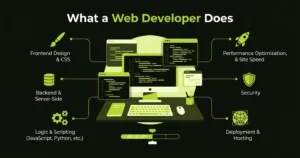
A web developer builds, codes, and maintains the websites and web applications people use every single day, turning ideas and designs into working digital products through programming, testing, and ongoing maintenance. Whether it is a small business landing page, a large online store, or a complex web application, understanding what a web developer does helps you see how modern websites actually come together behind the scenes. In simple terms, web development consists of writing code, structuring content, building user interfaces, connecting databases, and making sure everything runs smoothly across devices and browsers.
This guide breaks down exactly what a web developer does, the tools they rely on, the different types of developers you might work with, and how the entire web development process unfolds from start to finish.
What Does Web Development Involve
Web development involves a wide range of tasks that go far beyond simply writing code. It includes planning the structure of a website, designing how pages connect to one another, building the visual interface users interact with, and setting up the behind the scenes systems that power features like logins, search, and checkout pages.
When people ask what does web development mean, the simplest answer is this: it is the process of creating, building, and maintaining websites and web applications so they function correctly, look good, and load quickly for every visitor. This process typically includes:
- Writing the markup and styling that defines how a page looks, using HTML and CSS
- Adding interactivity and dynamic behavior with JavaScript or TypeScript
- Building reusable components with frameworks such as React, Angular, or Vue.js
- Setting up servers, databases, and application logic on the back end
- Testing the site across browsers and devices to confirm everything works as expected
- Deploying the finished product and maintaining it over time
So when someone asks what a web developer can do, the honest answer is quite a lot. A single developer might touch every layer of a project, or focus deeply on just one part of it, depending on their specialty.
What a Web Developer Does Day to Day
A common question is what does a web developer do all day, especially for people outside the tech industry who are curious about the daily reality of the job. While no two days look identical, a typical day for a web developer often includes a mix of the following:
Writing and reviewing code. Most of the day centers around writing new code or improving existing code, whether that means building a new feature, fixing a bug, or refactoring something to run more efficiently.
Collaborating with designers and stakeholders. Developers regularly meet with designers, product managers, and clients to understand requirements, review mockups, and confirm that the website matches the intended user experience and business goals.
Testing and debugging. Quality assurance is a constant part of the job. Developers test new features, check for cross browser compatibility, and debug issues that pop up during development or after launch.
Using version control. Developers track every change they make using tools like Git, and they store and share their code through platforms such as GitHub or GitLab, which makes teamwork and rollback far easier.
Attending team meetings. Many development teams follow agile development practices, including daily standups, sprint planning, and scrum meetings, to stay aligned on priorities and deadlines.
Maintaining live websites. Once a site is live, developers continue to monitor performance, apply security updates, and handle ongoing website maintenance to keep everything running smoothly.
This gives a clearer picture of what does a web developer do in a company setting, where the role often blends hands on coding with communication, planning, and long term upkeep.
The Three Main Types of Web Developers
One of the best ways to understand what a web developer does is to look at the three core specialties within the field. Each type focuses on a different layer of a website or web application.

Front End Development
Front end development covers everything a visitor sees and interacts with directly in their browser. Front end developers focus on user interface design, layout, animations, and making sure the site feels intuitive and responsive. They commonly work with:
- HTML for structuring content
- CSS for styling and visual design
- JavaScript and TypeScript for interactivity
- Frameworks and libraries such as React, Angular, and Vue.js
- Styling frameworks like Bootstrap and Tailwind CSS
Responsive web design and mobile first design are central to this work, since a front end developer needs every page to look great and function properly on phones, tablets, and desktop screens alike.
Back End Development
Back end development happens behind the scenes and powers the logic, data, and security that a website depends on. Back end developers build and manage:
- Web servers, often using software like Apache or Nginx
- Application logic written in languages such as PHP, Python, Java, C#, or Ruby
- Frameworks including Laravel, Django, Ruby on Rails, Express.js, and ASP.NET
- Databases such as MySQL, PostgreSQL, and MongoDB
- REST API and GraphQL connections that allow different systems to communicate
This is the layer that handles things like user accounts, payment processing, and storing information securely, even though visitors never see it directly.
Full Stack Development
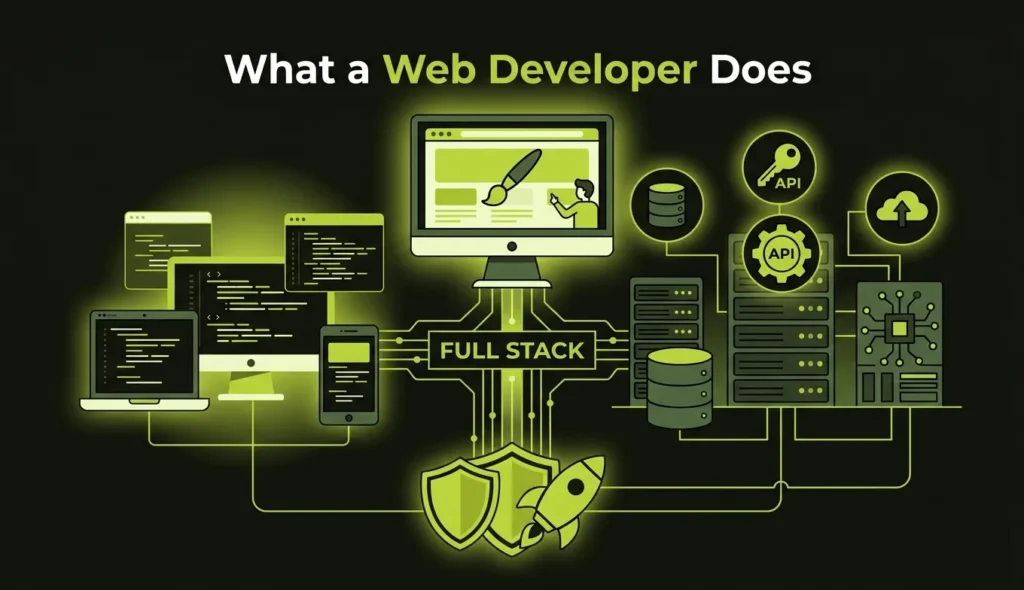
Full stack development combines both front end and back end skills. So what does full stack mean in web development? It simply means the developer is comfortable working on both the parts users see and the systems running behind the scenes. A full stack web developer can take a project from initial concept through to a fully working, deployed website, handling everything from interface design to database setup along the way.
What Is a Web Developer Versus a Web Designer
A frequent point of confusion is what is a web developer vs web designer, since the two roles often overlap but focus on different parts of the same project.
A web designer concentrates on the visual layout, color choices, typography, and overall user experience of a site, often working in design tools before anything is built. A web developer then takes that design and brings it to life through code, handling the technical structure, functionality, and performance of the finished product. Many professionals blend both skill sets, but the core distinction comes down to design versus implementation.
What Tools and Software Do Web Developers Use
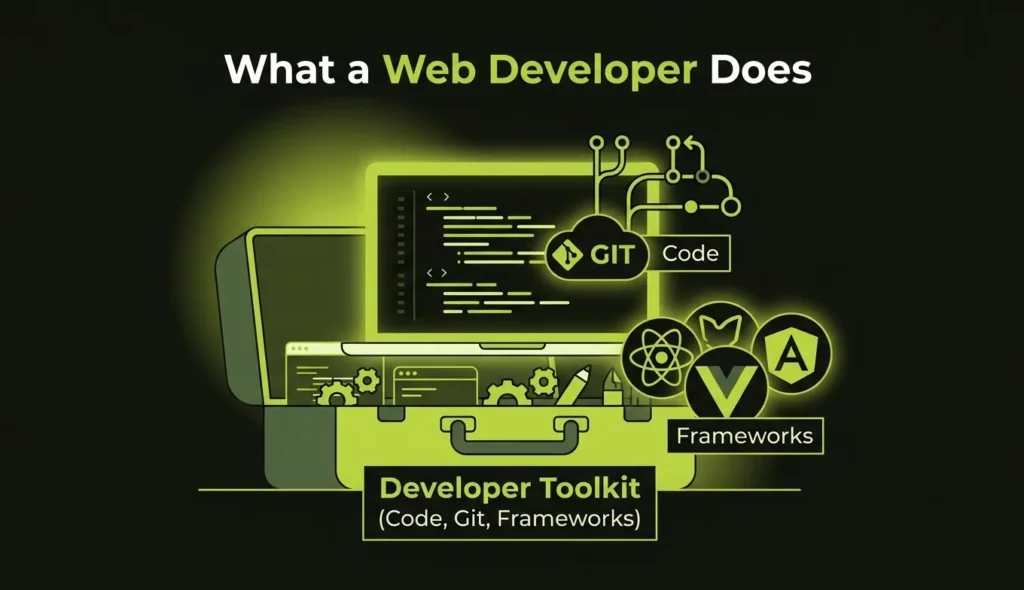
Another common question is what tools do web developers use, or more specifically, what software do professional web developers use to get their work done efficiently. The everyday toolkit usually includes:
- Code editors, most commonly Visual Studio Code, for writing and organizing code
- Version control systems like Git, paired with platforms such as GitHub or GitLab
- Frameworks and libraries, including React, Angular, Vue.js, Node.js, and Express.js
- Content management systems such as WordPress, Shopify, WooCommerce, Drupal, and Joomla, which allow faster website building without coding everything from scratch
- Cloud hosting platforms, including AWS, Google Cloud, and Microsoft Azure, for deploying and scaling applications
- Testing and debugging tools built into browsers and development environments
- API integration tools to connect a website with payment gateways, third party services, and external data sources
So when someone asks what do web developers use to build websites, the answer is a combination of coding languages, frameworks, design systems, and cloud infrastructure, all working together to create a finished, functioning product.
Do Web Developers Build Websites From Scratch or Use Templates
This is a question with a flexible answer. Some projects call for a fully custom build, where a developer writes every line of code to match specific business needs. Other projects rely on templates or themes, especially when using a content management system like WordPress, where a developer customizes an existing structure rather than starting completely from zero.
In short, do web developers build websites from scratch? Yes, when the project demands it. Do web developers use templates? Also yes, especially for smaller budgets or faster timelines. A skilled developer knows which approach fits a given project best, balancing cost, timeline, and long term flexibility.
Can a Web Developer Create an App
Many people also wonder, can a web developer create an app, beyond just building websites. The answer is yes. Many web developers build progressive web apps, which behave like mobile apps but run directly in a browser, as well as full web applications that handle complex tasks like booking systems, dashboards, or ecommerce platforms. Some developers also branch into mobile app development, applying similar programming logic across different platforms.
What Does a Web Development Company Do
Beyond individual freelancers, many businesses turn to a dedicated team to handle larger projects. So what does a web development company do that an individual developer might not? Typically, a company offers:
- A full team covering front end, back end, and full stack development
- Project management and a dedicated web development manager overseeing timelines and quality
- Quality assurance testing across multiple browsers and devices
- Ongoing website maintenance, security monitoring, and performance optimization
- Support for larger scale needs like ecommerce platforms, custom web applications, and API integrations
A web development manager typically coordinates between developers, designers, and clients, making sure projects stay on schedule, within scope, and aligned with business goals.
Skills That Support What a Web Developer Does
Strong technical skills are essential, but the most effective developers also bring a set of supporting skills to the table, including:
- Problem solving and logical thinking
- Attention to detail during debugging and testing
- Clear communication with non technical team members and clients
- Adaptability, since tools, frameworks, and best practices evolve constantly
- An understanding of accessibility standards such as WCAG, so websites work well for everyone, including users relying on assistive technology
Industries That Rely on Web Developers
Nearly every industry depends on skilled developers to maintain a strong online presence, including:
- Retail and ecommerce businesses building online stores and checkout systems
- Healthcare providers offering patient portals and appointment scheduling
- Education platforms delivering online courses and learning management systems
- Finance and banking services requiring secure, high performance applications
- Hospitality and travel companies managing booking engines and customer portals
- Nonprofits and small businesses building portfolio websites and landing pages to reach new audiences
This wide reach is exactly why understanding what a web developer does matters, even for people who never plan to write code themselves.
Frequently Asked Questions
What is the job of a web developer?
The job of a web developer is to design, build, test, and maintain websites and web applications by writing code, solving technical problems, and ensuring a smooth experience for every visitor.
What is the work of a web developer on a typical project?
The work of a web developer on a typical project usually starts with planning and design review, followed by coding the front end and back end, testing across devices, and then launching and maintaining the finished site.
How do web developers make websites?
Web developers make websites by combining structured code such as HTML and CSS with interactive elements built using JavaScript, then connecting everything to servers and databases when dynamic features are needed.
How does web development work from start to finish?
Web development typically works through several stages: gathering requirements, designing the layout, writing the code, testing thoroughly, deploying the site live, and then maintaining it with updates and security checks over time.
What is a web application developer?
A web application developer focuses specifically on building interactive, app like experiences within a browser, often handling more complex logic, data handling, and user interaction than a typical static website.
What does web development include beyond coding?
Web development includes coding, but it also includes planning, user experience considerations, performance optimization, security, accessibility, search engine optimization, and ongoing maintenance after launch.
Do web developers code every single day?
Most web developers spend a significant portion of their day writing or reviewing code, though the exact balance shifts depending on meetings, testing, planning, and collaboration with other team members.
Ready to Work With a Skilled Web Developer
Now that you have a clear picture of what a web developer does, you can see how much thought, skill, and ongoing care goes into building a website or web application that truly works for your business. Whether you need a brand new website, a custom web application, or support maintaining an existing platform, working with an experienced developer makes all the difference in performance, security, and long term growth.
If you are ready to bring your project to life, reach out today and start a conversation about what your website or application truly needs to succeed.

Wali Shah is the Founder and CEO of SkillsHeaven, a digital growth agency specializing in Local SEO, Google Ads, and conversion-focused website development. With over 8+ years of experience, he has helped scale 170+ businesses, including 93+ limousine companies globally, by building structured, lead-generating digital systems. His expertise spans local search optimization, paid media strategy, and high-performance website development, all aligned with measurable business growth. Known for a data-driven and ethical approach, Wali focuses on creating scalable marketing systems that increase visibility, generate qualified leads, and drive long-term revenue for service-based businesses.