
What is content gap analysis in SEO? It is the strategic process of comparing your existing content against competitor content, search query data, and audience needs to find the topics, keywords, and questions you have not yet covered, so you can fill those gaps and grow your organic visibility. At Skills Heaven, we offer professional SEO and content strategy services across Dubai and the wider UAE, plus clients worldwide, so this guide explains exactly what content gap analysis is and how to put it to work.
In a search landscape where topical completeness now shapes rankings, content gap analysis has become one of the highest return activities in SEO. It replaces guesswork with evidence, showing you precisely where the opportunities sit. Below you will find what content gaps are, how to perform a content gap analysis step by step, and how related concepts like pillar content and content siloing strengthen the whole strategy.
What Is a Content Gap in SEO?
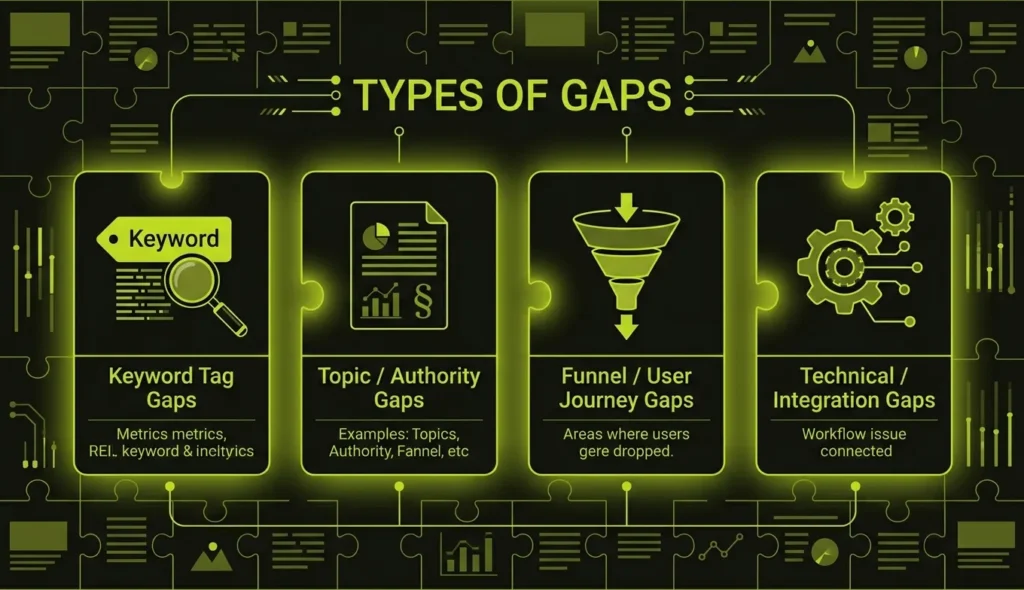
A content gap is any topic, keyword, question, or funnel stage where competitors have published relevant, ranking content that your site has not yet addressed. Identifying these gaps reveals the missing pieces in your content library, the spots where your audience is searching but your site does not yet provide the answer.
There are a few common types of gaps worth knowing:
- Keyword gaps: Search terms competitors rank for in the top results
- while your pages sit far lower or absent.
- Topic gaps: Subjects or subtopics your competitors cover
- thoroughly that your library skips.
- Funnel gaps: Stages of the buyer journey, such as consideration or
- decision content, where your coverage is thin.
- Technical gaps: Cases where you have relevant content, yet
- crawling, indexing, or structure keeps it from performing.
Recognizing which type of gap you face points you straight to the right fix, whether that means creating new content or refining what you already have.
Why Content Gap Analysis Matters for SEO
Search engines increasingly reward topical completeness, meaning a site that covers a subject thoroughly from every useful angle earns stronger authority across its entire cluster. When you fill gaps systematically, you signal that your site is an exhaustive resource, which lifts the rankings of your existing pages alongside the new ones.
The return goes beyond rankings. Closing gaps, especially high intent ones near the decision stage, tends to lift conversion rates and make your content budget far more efficient. Instead of guessing what to publish next, content gap analysis hands you a data backed roadmap, turning content creation into a precise growth engine.
How to Perform Content Gap Analysis for SEO
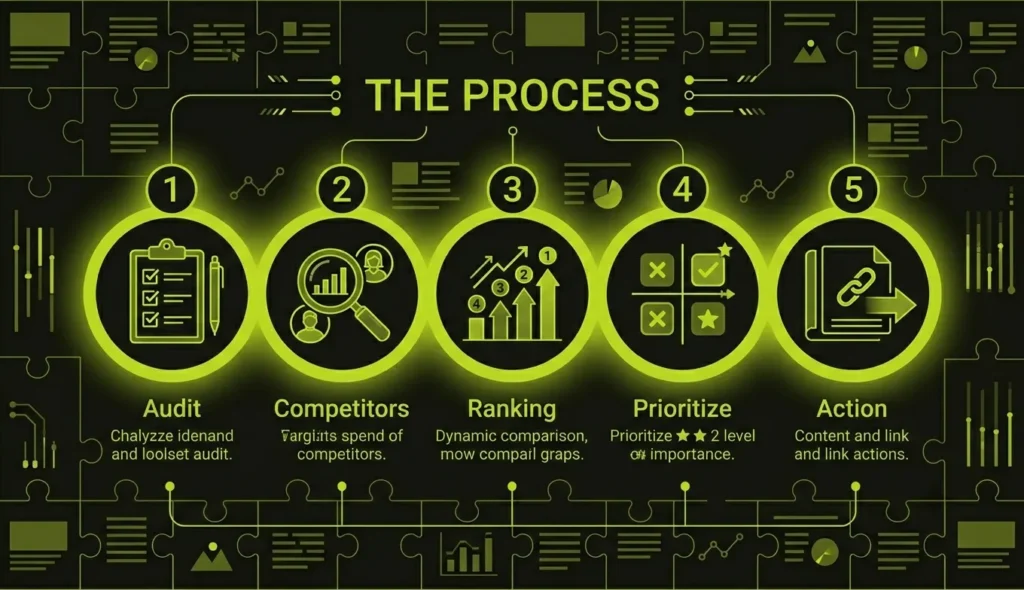
Learning how to perform content gap analysis for SEO comes down to a clear, repeatable process. These steps keep the work focused and effective.
Step 1: Audit Your Existing Content
Start by building a full inventory of your blog posts, landing pages, and resources. Note how each piece performs on traffic, rankings, and engagement, and flag content that is strong, content that needs a refresh, and content ready for consolidation. A clear baseline shows you what you already own.
Step 2: Identify Your True SERP Competitors
Your real competitors are whoever occupies the search results for your topics, which may include business rivals, comparison sites, forums, and video results. Search your priority keywords and note which domains consistently appear on the first page.
Step 3: Compare Rankings Side by Side
Place your keyword rankings next to your competitors’ rankings. Look for terms where competitors rank in the top ten while you sit outside the top thirty, and for page two keywords where a small improvement could move you onto page one. Those near misses are often the quickest wins.
Step 4: Prioritize the Gaps
Not every gap deserves equal attention. Plot opportunities by potential value and ease of execution, tackling high value, low difficulty gaps first. High intent terms close to a purchase decision often deliver the strongest results even at lower search volume.
Step 5: Create and Connect New Content
Fill each prioritized gap with thorough, original content that adds genuine value, then link it into your existing pages right away. Internal links help new content rank faster and reinforce the topic cluster it belongs to.
What Is Pillar Content in SEO?
Pillar content is a comprehensive, authoritative page that covers a broad topic in depth and serves as the central hub for a cluster of related articles. When a content gap analysis reveals that several weak pages overlap, combining them into one strong pillar page often fills a major gap and consolidates authority. Pillar content anchors your topic clusters, giving both readers and search engines a clear, complete resource to rely on.
How Content Siloing Improves Website SEO
Content siloing is the practice of grouping related content into clearly organized clusters, with a pillar page at the center and supporting articles linking back to it. This structure shows search engines how your topics connect, which strengthens relevance and authority across the whole group. Understanding how content siloing improves SEO helps you turn a collection of scattered posts into an organized library, where internal links pass value efficiently and users move smoothly from one related topic to the next. A well siloed site makes your topical completeness obvious, which supports stronger rankings throughout the cluster.
How Interactive Content Can Boost Your SEO Strategy
Interactive content, such as calculators, quizzes, assessments, and comparison tools, invites genuine participation and keeps visitors engaged longer. Knowing how interactive content can boost your SEO strategy is valuable because longer, more satisfying visits signal quality to search engines, and useful tools naturally earn links and shares. Interactive elements also help answer the secondary questions a reader may have, which keeps them on your page rather than returning to search. Adding interactive content to gap filling pages can make them stand out and perform even better.
Do Content Sprints Work for SEO?
Content sprints are focused, time boxed pushes where a team produces a batch of related content quickly, often to fill a cluster of gaps at once. So do content sprints work for SEO? Yes, when they are organized around a clear gap analysis roadmap and paired with quality control. Sprints help you build topical depth rapidly, covering a subject from multiple angles in a short window, which strengthens authority faster. The key is pairing speed with substance, so each piece adds real value and connects into your existing structure through internal links.
How Algorithm Updates Affect SEO Content Relevance

Search algorithms continue to evolve toward rewarding helpful, expert led content and topical authority. Understanding how algorithm updates affect SEO content relevance helps you stay resilient, since updates increasingly favor content that offers genuine value, original insight, and complete coverage. Regular content gap analysis is a natural defense here, because it keeps your library fresh, fills emerging gaps as your industry shifts, and emphasizes the kind of depth and expertise that updates reward. By focusing on total content quality rather than sheer volume, your strategy stays aligned with where search is heading.
You can deepen your understanding through Google Search Central, explore content strategy fundamentals with Moz’s beginner guide to SEO, and review broader industry insights through Search Engine Journal, all authoritative sources that reinforce the value of complete, helpful content.
Frequently Asked Questions
What is content gap analysis in SEO in simple terms? It is the process of finding topics, keywords, and questions your competitors cover and your audience searches for, but your site has not addressed yet, so you can create content to fill those gaps.
How do I perform a content gap analysis for SEO? Audit your existing content, identify your true SERP competitors, compare rankings side by side, prioritize the highest value gaps, then create and internally link new content to close them.
What is the difference between content gap analysis and keyword research? Keyword research starts from scratch to find relevant terms, while content gap analysis starts from what you already have and pinpoints what you are missing relative to competitors.
How often should I run a content gap analysis? A full review every six to twelve months works well, with automated rank tracking alerts in between so you can act when competitors start to outrank you.
What is pillar content and how does it relate to gap analysis? Pillar content is a comprehensive hub page on a broad topic, and gap analysis often reveals chances to combine thin pages into one strong pillar that fills a major gap.
How does content siloing improve SEO? Content siloing groups related content into organized clusters with internal links, which clarifies your topical relevance for search engines and strengthens rankings across the group.
Final Takeaway
So, what is content gap analysis in SEO? It is the evidence based practice of finding and filling the missing pieces in your content library so your site becomes the most complete, helpful resource in your space. Pair it with strong pillar content, smart content siloing, engaging interactive elements, and a steady publishing rhythm, and you build a durable strategy that adapts gracefully to algorithm updates. Run content gap analysis regularly, prioritize the gaps that matter most, and you will turn your content into a precise, compounding engine for organic growth.

Wali Shah is the Founder and CEO of SkillsHeaven, a digital growth agency specializing in Local SEO, Google Ads, and conversion-focused website development. With over 8+ years of experience, he has helped scale 170+ businesses, including 93+ limousine companies globally, by building structured, lead-generating digital systems. His expertise spans local search optimization, paid media strategy, and high-performance website development, all aligned with measurable business growth. Known for a data-driven and ethical approach, Wali focuses on creating scalable marketing systems that increase visibility, generate qualified leads, and drive long-term revenue for service-based businesses.